Showing posts with label World Mission Sunday. Show all posts

Tuesday, October 17, 2023

Give to God what belongs to God

Twenty Ninth Sunday in Ordinary Time Year A


When you are a Catholic priest, most people often think that you are a walking encyclopaedia, which is a myth. It is just that we have learnt how to “wing it.” Once in a while, I’m presented with a gotcha question, a sort of Catch 22 situation, that is intended to be a trap. The price of pretending to be Mr Know-It-All. Here’s the dilemma - you will get into trouble if you give the right but unpopular answer, but you would also most likely be caught for being insincere if you give the polite answer, albeit the wrong one. It always seems to be an arbitrary choice between speaking the truth and lose friends or tell a lie, to escape trouble, although you may risk being found out eventually.


In today’s gospel, an alliance of Pharisees and Herodians, who were traditional enemies, ganged up to set a trap for the Lord. Notice how they attempt to butter up the Lord with flattery and insincere praise before springing the trap: “Master, we know that you are an honest man and teach the way of God in an honest way, and that you are not afraid of anyone, because a man’s rank means nothing to you. Tell us your opinion, then.” Despite their insincerity, their description of the Lord is accurate and valid. Our Lord Jesus is not only “an honest man” or a teacher who teaches “the way of God in an honest way,” He is the Way, the Truth and the Life. For us mortals, honesty is a virtue. For Christ, Truth is His very nature.

After stating that our Lord is an honest man of God who does not pander to the crowds, they introduce their Catch 22 scenario, “Master … Is it permissible to pay taxes to Caesar or not?” What is this tax due to Caesar? To a 21st century reader who often complains about being subjected to a myriad of taxes, from income tax to service taxes, the people who lived during our Lord’s time would have also laboured under various taxes. There was the temple tax which amounted to half a shekel levied upon every Jew, 20 years and above. There was the income tax: one percent of one’s income was to be given to Rome, and then, the ground tax or property tax: one tenth of all grain and one fifth of all oil and wine were to be paid in kind or in coinage to Rome. Finally, to further humiliate the colonised, there was the poll tax: a denarius or a day’s wage was to be paid to Rome by all men ages 14-65 and all women ages 12-65, to remind them of their subjugated status. The tax referred here as being due to Caesar would most likely belong to the last category of taxes - the poll tax.

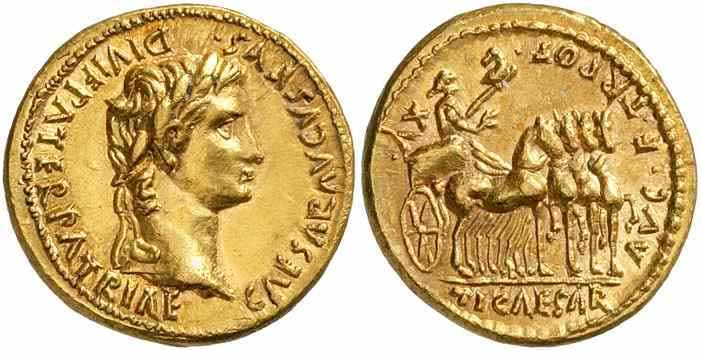
A rejection by Jesus of the poll tax would have been reported as treason to Rome. On the other hand, if Jesus had agreed to pay it, the Pharisees would have accused Him of betraying His own people, since it would be acquiescing their continued subjugation under Roman rule. Furthermore, anyone dealing with the coin could also be accused of blasphemy and idolatry because the coin displayed an image of Caesar who is a self-proclaimed god. Discerning a plot of entrapment, our Lord cuts through the hypocrisy and political differences to the very heart of the matter, “Give back to Caesar what belongs to Caesar, and to God what belongs to God.”

This saying does three crucial things. First, it acknowledges that Caesar, denoting any public authority, does have rights; that a difference does exist between the concerns of God and the concerns of Caesar. But second, our Lord desacralises – in effect, He demotes – Caesar by suggesting that Caesar has no rights over those things that belong to God. Caesar is not god. Our politicians and government are not gods. Only God is God. And thirdly, the Lord remains silent about what exactly belongs to either God or Caesar. Figuring all that out belongs to us. Now, this can be hard work because no detailed map exists because while human nature doesn’t change, human circumstances change all the time.

This saying provides us with a framework for how we should think about religion and the state even today. The Lord reminds us that Caesar does have rights. Scripture tells us that we owe secular leaders our respect and prayers; respect for the law; obedience to proper authority; and service to the common good. But it’s a rather modest list of duties. And we need to remember that “respect” for Caesar does not mean subservience, or silence, or inaction, or excuse-making or acquiescence to grave evil. Sometimes, Christians suffer from a phony unwillingness to offend civil authority that poses as prudence and good manners, but in truth, this is only a guise for cowardice. It is true that human beings owe each other respect and appropriate courtesy, but we also owe each other the truth!

In fact, the more we reflect on today’s passage, the more we realise that everything important about human life belongs not to Caesar but to God: our intellect, our talents, our free will, the people we love, Truth, the beauty and goodness in the world, our soul, our moral integrity and of course, our hope for Eternal Life. These are the things worth struggling to ennoble and defend, and none of them came from Caesar or anyone or any government who succeeded him. We owe civil authority our respect and appropriate obedience. However, that obedience is limited by what belongs to God. In reality, all belongs to God and nothing — at least nothing permanent and important — belongs to Caesar. Why? Because just as the coin bears the stamp of Caesar’s image, we bear the stamp of God’s image in baptism. We belong to God, and only to God.

All of us, Christians and non-Christians are called to be honest and persons of integrity, to speak truth even to those in power. But more than anything else, we Christians must proclaim the truth about Christ. Pope Benedict once gave this powerful exhortation to a group of pilgrims to Rome: "We cannot stoop to compromises with the love of Christ, his Word, the Truth. The Truth is the Truth and there is no compromise. Christian life requires, so to speak, the daily "martyrdom" of fidelity to the Gospel - that is the courage to let Christ grow in us and direct our thinking and our actions.” So, give to God what belongs to God … which is everything.

Tuesday, October 18, 2022

Recovering the Sense of Sin

Thirtieth Sunday in Ordinary Time Year C


In a 1946 Radio Address, Pope Pius XII said this: "The greatest sin today is that men have lost the sense of sin.” Note that this claim was made 76 years ago, during a more innocent and religious time of our grandparents and great-grandparents. The Pope must have been prophetic. If that was true then, then how more so is this statement true today.


There has been no great moral awakening since the good pope uttered those words so that what was begun has found its completion in our age. The widespread loss of a sense of sin has led to a great spiritual malaise in which any semblance of shame has been lost and sins are demanded as rights. Abortion, the killing of innocent and defenceless babies in the womb, is today regarded as a fundamental right and its denial as a major sin. Sodomy and paedophilia, or the sexual attraction to children, are being normalised as different facets along a wide spectrum of sexual orientations which should be socially acceptable. Even members of the Catholic Church seem to have lost their way as well as their sense of sin. Communion lines grow longer, while Confession lines grow shorter and even public sinners are given Communion as a right.

The pride which blinds us to our own sins is represented by the Pharisee in today’s gospel and the solution to Pharisaism is the humility of the publican. The publican had no doubt he was a sinner. He saw the gravity of his sins and they overwhelmed him. There was no self-sufficiency in him. “A humble and contrite heart, thou, O God, will not despise” (Psalm 51:17).

This humility, this acknowledgement of our utter neediness, is the heart of true repentance. In God’s order of justice, only those who accuse themselves of their sins and confess like common criminals can find forgiveness, just as the one with leprosy can only find healing when he runs to the nearest physician. It is only when we are condemned in our own eyes that we find pardon. The truth is, we are all desperately in need of God’s healing and forgiveness.

Notice that it was the Pharisee who denied sin in himself and left unredeemed, while it was the publican who acknowledged personal culpability in sin who left vindicated. But in today’s world with its upside-down perspective of values and skewed assessment of what is right and wrong, the admission or the reminder of sin is often labelled as being Pharisaical.

On this Sunday, which is World Mission Sunday, we are reminded that mission is the primary activity of the Church. We often hear that the mission of the Church is to preach the good news of salvation but let us not forget that one of her essential tasks is also to preach the bad news of sin. In fact, the Church has no mission if there is no sin, or at least if there is no sin to be forgiven. Salvation would be meaningless if there is nothing we are to be saved from. Just as the Father sent the Son into the world for the forgiveness of sins, so the Son sends the Apostles and their successors. To omit the reality of sin from the Gospel renders the Good News utterly senseless and salvation an empty concept.

This is the reason why we need to recover a sense of sin, not because the Church is busy in giving guilt trips to her followers but because she understands that the path to salvation can only happen when one humbly and honestly acknowledges one’s sinfulness and chooses to repent. That we can develop a healthy sense of sin is itself Good News because it frees us from not only rationalisation but also scrupulosity. Both of these ensnare us because they leave us closed to the reality of God’s mercy. They render His mercy toothless and mere platitude. What then would a healthy sense of sin consist in?

The first step would be to call a spade a spade, or in this context, to call sin - sin. We live in a politically correct world where words no longer hold their original meaning and are subject to slick reimagining to escape culpability and guilt. Sin is an offence against God, disobedience against His Holy sovereign will. Refusing to recognise this is as bad as a person who denies he is suffering from some terminal illness and thus refusing to take the remedy. This was the problem of the Pharisee. It was not just hubris which made him congratulate himself for his outstanding righteousness but also his refusal to acknowledge that he too was a sinner, like the publican and the rest of humanity, in need of redemption.

Only by recognising sin can we then take the next step - taking responsibility. The publican humbly confessed that he was a sinner because he understood that his sin was his own doing. There is no blaming of others, excusing oneself with rationalising, but simple and humble acknowledgment that we deserve just punishment for our sins. But the amazing surprise is that the moment we confess our guilt and take responsibility for our actions, we will be rewarded with God’s mercy rather than His wrath.

Lastly, a healthy sense of sin or a healthy conscience can only be cultivated through prayer, regular examination of conscience and frequenting the sacrament of penance. Failure to observe and cultivate these spiritual exercises will certainly lead to a lax conscience which is desensitised to sin. You wouldn’t even know what hit you even if sin looked like a 20-ton trailer on a head-on direct collision course with you. Making regular sacramental confession enables us to stay focus on doing what is pleasing to God and avoiding what displeases Him.

Unlike what many modern age pop psychologists would advocate, we don’t have to pretend to be good to make ourselves feel good. Ironically, it is when we acknowledge that we are bad but still loved by a wondrously good God, that we have the potential of becoming good, in fact sanctified and saintly. Servant of God John Bradburn, a candidate for canonisation who had worked among the lepers of Rhodesia, often proudly declared: “I am so useless, and clueless and un-illustrious … That makes me more truly confident in the power and guidance of the Holy Spirit.” Saints were never individuals whose lives were impeccable, or were immune to sin and temptation, but they were certainly sinners who had humbly thrown themselves at the feet of God pleading His mercy, only to be rewarded with a clean slate and a new start in life. Sainthood is within reach because redemption is real and within the reach of every person, even the most hardened of sinners. As the old adage goes: every saint has a past and every sinner has a future.

Let’s embrace the spirit of the publican, and in our weakness and sinfulness, let us cry out to our Lord, “God, be merciful to me a sinner!” For He did not come to heal the healthy, but the sick, and if we do not acknowledge our sin, we have no part with Him. As the Lord Himself said, “It is not the healthy who need a doctor, but the sick. I have not come to call the righteous, but sinners to repentance.”

Thursday, October 21, 2021

Proclaim, Praise, Shout!

Thirtieth Sunday in Ordinary Time Year B


We’ve been taught since young, that shouting and yelling are rude and offensive. So, we’ve learnt measured speech, how to tone down and moderate the volume of our voice, speak in a hushed and muffled tone in public places, out of respect for others. We have been so good at this that we have forgotten that the essence of evangelisation, of proclaiming the Good News calls for the reverse. In the first reading, the Prophet Jeremiah tells the people to proclaim the good news of how God will rescue them in three imperative commands: “Proclaim! Praise! Shout!” Can you imagine if he told the people to do this: “Be quiet! Lower your volume! Whisper if you really have to say anything!” Thank God he didn’t. We wouldn’t be here today if Christians in past centuries had chosen to remain quiet.

Likewise, we see the example of the blind man Bartimaeus, in today’s gospel reading. He didn’t attempt to soften his voice when he wanted to get the Lord’s attention, thinking that politeness would win him an audience, No! He had the nerve to brazenly shout aloud, “Son of David, Jesus, have pity on me!” Our Lord took no offence in this man’s yelling and impassioned speech but His disciples did. They immediately tried to silence him. They were not only indifferent to his blindness but now wish to render him mute too. Our Lord would not have any of this!

The attempts of the crowds to quieten Bartimaeus only stoked the hunger in his soul. He wanted mercy, and he wanted vision, and ultimately, he wanted Jesus. The one thing Bartimaeus needed was the one thing only Jesus could provide— salvation. In a way, even before his healing at the hands of the Lord, Bartimaeus was already displaying one of the key characteristics of a disciple - he is one who will not shut up in the face of discouragement. Instead, he understands that he must proclaim, praise and shout the name of our Lord Jesus Christ and the Good News of salvation which the Lord brings. Despite the opposition and the efforts of others to suppress his voice, Bartimaeus was not daunted. Nothing was going to deter him. Nothing was going to silence him. If we only have a modicum of his resilience and tenacity when it comes to preaching the gospel.

Another proof that this man is an example of a true disciple is found at the end of the story. Our Lord having healed him, sends him on his way, but instead, this enlightened man decides to follow our Lord on the Lord’s way. This episode takes place just before the Lord’s triumphal entry into Jerusalem, the beginning of Holy Week which would climax in the passion, death and resurrection of the Lord. Where our Lord’s other disciples attempt to dissuade Him to take this path and each run off when the going gets tough, Bartimaeus chooses to follow the path of his master whom he has already proclaimed as “the Son of David.”

Many of us would find Bartimaeus’ yelling disturbing and irritating.  Why so much noise? We would prefer a quieter, civilised and highly sanitised method of conveying the same message, but perhaps it needs the shouting of Bartimaeus to break through the obtuse walls of modern society, who has chosen to be both blind and deaf to the message of the gospel. In fact, modern society seems to have erected an impenetrable wall to keep out the noise of the gospel and only the most fervent and impassioned proclamation of the gospel can penetrate this shell. The world can only hear the gospel, if we choose to be a nuisance.

We should be like St Paul, so emboldened by the gospel that we should never hesitate to proclaim it: “For I am not ashamed of the gospel, for it is the power of God for salvation to everyone who believes, to the Jew first and also to the Greek” (Rom 1:16). The problem is that most Catholics actually do feel ashamed of proclaiming the Good News of Christ. They do so because of the following reasons:

First, many of us believe that we would be rude and offensive if we were to share our faith with others. We believe that silence about our faith is the most respectful way we interact with people who do not share the same beliefs as ours. We do not wish to foist our ideas or values on them.

Second, many are ashamed, not so much of the gospel but of their lack of knowledge and depth of knowledge concerning their own faith. So, the truth is not that we are ashamed or embarrassed by Christ or the gospel, but with our own inadequacy.

Third, we actually believe that not sharing our faith with others is actually taking the cue from our Lord’s example. Many are convinced that He only challenged the religious self-righteous crowd and pretty much left sinners and Gentiles to their own devices.

But the reason why we must not be afraid of speaking about our faith is because it is the most loving thing to do. Preaching the gospel does not mean we hold others in disdain or that we are contemptuous of their current situation. Preaching the gospel is not smirky arrogant expression of triumphalism, that we are better than them. No, preaching the gospel is because they, just like us, have the right to hear the truth, the truth about salvation, the truth that will set us free from the shackles of sin and addiction. To be quiet is not charity. On the contrary, it is the exact reverse - choosing not to proclaim, praise and shout the Good News reveals our lack of charity and our twisted penchant for self-preservation.

It is good manners to refrain from yelling at others, whether publicly or privately, but it is never appropriate to remain quiet or couch the gospel in politically correct niceties. Do not be afraid to be labelled a nuisance. Our Lord was considered one too. In fact, calling attention to a sinking ship when everyone is sublimely enjoying themselves is not nuisance, but charity, and it takes courage to speak the life-saving Truth above the din and noise of lies and falsehoods that will sink us.

If preaching the Word is indeed a nuisance, let it be a positive nuisance - one that will shake us from our slumber, one that will move us to repentance, one that will ignite the fire of evangelical zeal within the hearts of our listeners. So don’t be silenced by detractors or choose to censor yourself - “Proclaim! Praise! Shout!” The world needs to hear the gospel! The world has a right to hear the gospel! “Proclaim! Praise! Shout!”

Thursday, October 18, 2012

Called to be Evangelistic Catholics


Twenty Ninth Ordinary Sunday Year B

The great American Catholic TV evangelist, who achieved fame on the tele-screen long before Billy Graham made it big, the Venerable Archbishop Fulton J. Sheen, once commented, “The first word of Jesus in the Gospel was ‘come’; the last word of Jesus was ‘go,’ and that pretty much sums up the primary occupation of the Church and every Christian. We are called to be disciples in order that we may become missionaries. In that magna carta setting out the evangelising mission of the Church in the modern world, ‘Evangelii Nuntiandi’, the Servant of God Paul VI wrote that “… the task of evangelising all people constitute the essential mission of the Church… Evangelising is in fact the grace and vocation proper to the Church, her deepest identity. She exists in order to evangelise, that is to say in order to preach and teach, to be the channel of the gift of grace, to reconcile sinners with God, and to perpetuate Christ’s sacrifice in the Mass…” (EN # 14)

Now, this may seem absolutely strange and foreign to you, given the fact that the idea of proclaiming the gospel of Christ and sharing your faith with a non-Catholic seem to make us Catholics feel most uncomfortable. If you are a Catholic – even if you are a “good” one – the sort who would unequivocally exclaim – “I was born a Catholic (if that is even possible) and I will die a Catholic!” – the chances are quite high that you have NEVER attempted the conversion of another, except maybe your non-Catholic spouse. Catholics are known for many things, such as novenas, devotions to saints, love for the Blessed Mother, going for confession and abstaining from meat on Fridays.  One thing that generally doesn’t come to mind when we hear the word “Catholic” is evangelisation. 

There are a number of reasons why Catholics shy away from evangelisation. The first reason is that Catholics have grown familiar with the bureaucratic subdivisions in Church which, unintentionally, results in the perceived professionalisation or specialisation of ministries. The work of evangelisation is often seen as the primary task of ‘professional’ missionaries, such as the priests and the religious, although this is a common misconception. Laity often believe that the extent of their contribution to missionary activities is confined to monetary and financial support. This is certainly one of those most unfortunate misconceptions in the Church today.  In fact, evangelisation is not only the responsibility of the religious and clergy; it is a requirement for the laity as well.  Every member of the Catholic Church is personally responsible for sharing the gospel message with others.  The Vatican II document, Lumen Gentium, which is the Dogmatic Constitution of the Church teaches that all baptised Christians “must profess before men the faith they have received from God through the Church and participate in the apostolic and missionary activity of the People of God”. 

The second reason for a lack of evangelistic spirit among Catholics is that they generally have an extremely positive view of other religions and non-Catholic Christians. Because Catholics see goodness in others and sincerely believe that God would not begrudge or withhold salvation from anyone, they often feel that it would not be proper or even the loving thing to impose their beliefs and thoughts on them. The vast majority of Catholics, therefore, view evangelisation as a negative thing.  There is a belief among many Catholics that our relationship with God is a highly personal matter and that “we shouldn’t impose our religious beliefs on others”. Political correctness is often mistaken as charity, whereas evangelisation is seen as triumphalism, a vestige of colonialisation, and outright condescension.  But it can never be repeated enough that Charity must always be in service to the Truth. Great wisdom can be derived in this area from another of Vatican II’s 16 documents, Nostra Aetate, the Declaration of the relation of Church to non-Christian religions. The document states that “the Catholic Church rejects nothing that is true and holy in these religions. She regards with sincere reverence those ways of conduct and of life, those precepts and teachings which, though differing in many aspects from the ones she holds and sets forth, nonetheless often reflect a ray of that Truth which enlightens all men. Indeed, she proclaims, and ever must proclaim Christ "the way, the truth, and the life" (John 14:6), in whom men may find the fullness of religious life, in whom God has reconciled all things to Himself.” In other words, evangelisation should never be interpreted as a gesture of hatred, disrespect or even condescension on the part of the Church. It is an act of charity, demanded by a God of love who wishes all to be saved and to come to the knowledge of the Truth.

When it comes to speaking of the Catholic Faith and expressing it publicly, many Catholics often find themselves walking on eggshells. Where could we start? Perhaps, our first reaction would sound something like this, “I evangelise by example not with words.” We may even quote St Francis of Assisi who said, “Preach the gospel of Christ always, used words if necessary.” Or maybe, it would be, “I would like to, but I’m not trained or knowledgeable enough to do it.”  Or finally, “I could never be like the Protestants.”

Before proceeding to suggest a simple action plan for mission, a clarification is called for in order to make a distinction between Protestant evangelism and Catholic evangelisation. Protestant evangelism is an ‘event’ where the preaching of the gospel leads to the moment where the unbeliever professes with his lips (the sinner’s prayer seems to be the most convenient formula) and believes in his heart that Christ has saved him, and so the same is realised. Voila! He’s a Christian! He’s saved. Catholics, on the other hand, are process people. That’s why we take so long to prepare someone for baptism, namely the RCIA journey. We speak of a growth in sanctification through a life dedicated to prayer, the sacraments, and good works. Catholics are also ‘big picture’ people. Evangelisation, the primary mission of the Church, is not just confined to a verbal proclamation of Jesus’ salvific identity and mission. It consists of many different but complimentary components.

First, one of the most widely used means is just the simple presence and living witness of Christian life. Christian witness lays the foundation for Catholic evangelisation.  Avoiding foul language, making the sign of the cross and saying grace before meals, having a positive disposition, and avoiding gossip, practicing ethical values in your workplace, school or neighbourhood.  People who see the ‘difference’ will begin to ask questions.
Second, Catholics are also called to the service of humankind and all forms of activity for social promotion and for the struggle against poverty and injustice. But simple life witness and service of humankind are not sufficient. We need to match words to deeds too.  The Servant of God Paul VI went on to explain in Evangelii Nuntiandi that “the Good News proclaimed by the witness of life sooner or later has to be proclaimed by the word of life. There is no true evangelisation if the name, the teaching, the life, the promises, the kingdom and the mystery of Jesus of Nazareth, the Son of God are not proclaimed.”
Following this, the third means of evangelisation is that of respectful dialogue. Sharing one’s religious faith in the context of mutual and respectful dialogue means being open to listen to the other’s story too. One does not seek to win arguments for argument sake, but rather, dialogue is an expression of deep respect and love for the other.
Fourthly, all the above ultimately leads us to the opportunity to proclaim Christ, the Way, the Truth and the Life. Catholics can rest assured that they don’t have to bang a Bible or the Catechism of the Catholic Church on the head of the other person. There are many painless (but effective) ways to verbally share our faith. For example, we can offer to say a prayer for a coworker who is sick or in a painful situation.  We can explain how our faith comforts or sustains us in time of need.  We can casually relate a message heard in a homily at Sunday Mass. We may then invite them to attend Mass with us. Liturgy is a powerful means of evangelisation because it is ultimately the Work of God, not the works of men. Ultimately, we are reminded that prayer is an essential component of evangelisation because conversion is never something humanly manufactured or manipulated, it is the gift of faith from God.

Evangelisation is not an optional add-on. It is at the very heart of what it means to be a Catholic. Evangelisation is never a form of self-aggrandisement. But true evangelisation — whatever form it takes — is born from a love for people and a desire that everyone on earth come to know the love of Christ and the blessings of living in his kingdom. As St.Paul once told the Corinthians: “The love of Christ impels us” to proclaim Christ (2 Corinthians 5:14). According to the post-Vatican II document, Evangelii Nuntiandi, “the presentation of the Gospel message is not an optional contribution for the Church. It is the duty incumbent on her by the command of the Lord Jesus, so that people can believe and be saved. This message is indeed necessary. It is unique. It cannot be replaced. It does not permit either indifference, syncretism or accommodation. It is a question of people’s salvation.”  In this Year of Faith, we are given an opportunity to be re-evangelised in order that we may evangelise. We must heed the summons of the Holy Father to deepen our faith and enter into an authentic and renewed conversion to the Lord, the one Saviour of the World so that we may once again with joy and enthusiasm communicate the faith of our fathers, the same faith we profess, celebrate and live today!