Showing posts with label martyrdom. Show all posts

Monday, March 30, 2026

A Fool's Feast

Maundy Thursday


I believe that none of you would need to be reminded that yesterday, the 1st of April, was April Fool’s Day. It’s a day when we traditionally pull pranks on each other, not maliciously but in jest. If a day’s pranking was not enough, sometimes it spills over to the remainder of the week. But sometimes pranks can test the limits of friendship. People can be the best of friends before this but after having suffered a prank in bad taste, even the closest of friends can from henceforth become sworn enemies.


How the world judges our actions as foolish is exactly how the world judges Christians from the early centuries of the Church until present day. Our liturgical celebrations, though it may not seem to be so, always had a certain edge to them, like those who engage in extreme sports who court death as they experience a rush of adrenaline. You may find this unbelievable. How could the Mass, which so many find boring, be a dance with death? Perhaps, the only danger we could perceive is to die of boredom.

We often forget the context of today’s celebration. Today we commemorate the Lord’s Last Supper, a Passover Feast and tomorrow, we commemorate His death. They are not two different events but a single one, for what our Lord celebrated today at His Last Supper, He will complete on the cross. The Holy Sacrifice of the Mass, the Mass of the ages is a bloodless re-enactment, re-presentation of the gruesome bloody sacrifice of our Lord at Calvary. Risk, death and danger have always been part of the DNA of the Holy Mass from the moment of its institution.

The juxtaposition of celebration and death is a constant reminder that the Church of Christ, our Church, is indeed a Church of Eucharistic fools because Christians were willing to do the craziest things in order to receive the most precious thing that could sustain them, not just in this life but for eternity. For example, there is the amazing story of the courageous martyrs of Abitene (in modern-day Tunisia). In 303, forty-nine Christians suffered torture and martyrdom because they defied the Roman Emperor’s order not to celebrate the Eucharist on Sunday. Despite this cruel law and the real prospect of death, this group of Christians risked everything to gather for Mass. When asked by the magistrate why they had disobeyed the emperor and put themselves at risk, one of them defiantly said, “Sine dominico non possumus” — “Without Sunday, we cannot live.” “Without the Eucharist, we cannot live.”

In fact, for nearly 2,000 years, Christians have risked their lives to participate at Holy Mass. During the Reformation in England, priests were martyred when caught offering Holy Mass clandestinely for English Catholics. Courageous lay people who gave their homes over as places of Catholic worship, and who harboured priests, suffered torture and death. This trend continued over the centuries. In the Twentieth century, Catholics in former Communist countries like the Soviet Union or Vietnam were persecuted for practicing their faith. Today, in places such as Egypt, China, North Korea, Iraq, Sudan, Saudi Arabia and countless other areas, Catholics risk their lives and travel for hours to attend Mass.

We rejoice that, unlike those in poor areas, we do not have to walk for miles, over hills or on dirt roads to attend. The vast majority of us can make a short drive to arrive at our beloved parish. In fact, we are spoilt for choices. But the ease, convenience, and accessibility of the Mass should not cause us to ever lose sight that the Mass is so precious that many of our Catholic brothers and sisters around the world are braving great inconvenience and persecution to receive what we, by God’s love, have available near us.

In his first Holy Thursday letter to priests, Pope Saint John Paul II touchingly recalled situations of the faith triumphing over persecution from his own personal experience of living under religious oppression, at a time when the priests were rounded up and there were none left to celebrate the Eucharist: “Sometimes it happens that [the lay faithful] meet in an abandoned shrine, and place on the altar a stole which they keep, and recite all the prayers of the Eucharistic liturgy: and then, at the moment that corresponds to the transubstantiation a deep silence comes down upon them, a silence sometimes broken by a sob … so ardently do they desire to hear the words that only the lips of a priest can efficaciously utter.”

I would like to close this evening with the words of Pope Emeritus Benedict XVI, at the 2005 World Youth Day in Cologne Germany:

“The Eucharist must become the centre of our lives. … This is because the Eucharist releases the joy that we need so much, and we must learn to grasp it ever more deeply, we must learn to love it. Let us pledge ourselves to do this – it is worth the effort! Let us discover the intimate riches of the Church’s liturgy and its true greatness: it is not we who are celebrating for ourselves, but it is the living God Himself who is preparing a banquet for us.”

Sunday, August 10, 2025

Fire and Baptism

Twentieth Sunday in Ordinary Time Year C


Most people who volunteer to serve in church are often moved by a sincere passion to do good, to make a difference and to contribute something to the building of the community. They would expect approval, appreciation, praise, and support for the time and energy that they dedicate or sacrifice for the Church. But unfortunately, that is an ideal very far from reality. They will soon have to deal with the adverse criticism, envy, and jealousy. Little do they realise that everything goes south pretty soon. The ease and speed with which opposition, skepticism, mockery, or hostility manage to douse the initial enthusiasm, dampen the ideals and render harmless the noblest teaching is surprising.

This is what Jeremiah, the doomsday prophet of the waning kingdom of Judah and the holy city of Jerusalem, had to face when he brought God’s dire warnings to His people. His message was not meant to be an insult but it was taken as such. His words were targeted at moving the insolent people to repentance but they had the opposite effect - their hearts grew more hardened. In trying to save the city and the kingdom, they viewed it as a threat of violence, perhaps even viewing Jeremiah as a spy planted by their enemies to discourage them. So, instead of welcoming this final warning with open eyes, they manufactured their own destruction by throwing the Lord’s prophet into a well and leaving him to die. No wonder there was no prophet left to warn Judah and the inhabitants of Jerusalem. The price one had to pay for telling the truth was just too costly and served as a deterrent to the rest.

So, what would we prefer? A sugar-coated lie or the stinging painful truth? Even though the sweetness of the former may be preferred to the bitterness of the latter, we must acknowledge that only the truth can save us, only the truth can set us free. Lies can only provide us with false security, and perhaps that is more dangerous than in seeing the truth and acknowledging the risk of what is to come.

Our Lord would not lie to those who wish to follow Him. He doesn’t promise them a bed of roses, a peaceful conflict-free existence but one which would be marked by violence and conflict. Not that Christians would be wielders of the sword except the sword of truth, but that many of them would suffer death and injury at the hands of others who will hold the sword of violence and hostility towards them and the message they bring. If this is the fate of the Master, what will be that of the disciples, the torchbearers of His fire? They too will provoke—ensures the Lord —dissensions, divisions, and hostility and have to reckon with painful lacerations within their own families

Our Lord uses two images to convey this truth - fire and baptism. Violence and destruction can be clearly discerned from the image of fire. But how about the benign image of baptism? A stark contrast is intended here. What do we need for baptism? Water, the opposite of fire. Water is lifesaving. It provides life and nourishment and it can douse the flames of fire. But scriptural reference to water is anything but benign. From the watery chaos before God’s work of creation, to the great flood of Noah’s time that carried out God’s judgment in destroying a wicked generation and a fallen world, water is meant to be a destructive force. But after the flood, the rainbow appears in the sky, a symbol of peace restored between heaven and earth. God swears: "Never again will all life be cut off by the waters of a flood, and never again will there be a flood to destroy the earth" (Gen 9:11). From this promise, a conviction is born and spreads in Israel that, to cleanse the world of iniquity, God would no longer use water but fire: "For by fire will the Lord execute judgment … against all mortals" (Is 66:16).

What is this fire all about? It is natural to think of the final judgment and eternal punishment that awaits the wicked. St John the Baptist speaks of the coming Messiah who will baptise us with “the Holy Spirit and fire ... . The chaff he will burn in everlasting fire" (Mt 3:11-12). The two brothers, James and John, wanted to call down fire from heaven against the Samaritans (Lk 9:54), but our Lord refused to do so. The fire of God is not intended to destroy or torture those who made mistakes. It is the instrument with which He wants to destroy evil and purify us from sin.

But the fire announced by the prophets and lit by the Lord also saves, cleanses, and heals: it is the fire of His Word; it is His message of salvation; it is His Spirit, that Spirit who, on the day of Pentecost, descended like tongues of fire on the disciples (Acts 2:3-11) and has begun to spread around the world like a beneficial and renewing blaze. Now we can make sense of the exclamation of the Lord: “I have come to bring fire to the earth, and how I wish it were blazing already!” (v. 49). It is the expression of His burning desire to see the weeds of the world soon destroyed. Malachi announced: "The day already comes, flaming as a furnace. On that day all the proud and evildoers will be burned like straw in the fire" (Mal 3:19). Jesus looks forward to the realisation of this prophecy.

Finally, we come to the most troubling statement of our Lord in this entire passage, which comes in the form of a rhetorical question which our Lord Himself provides the answer: "Do you suppose that I am here to bring peace on earth? No, I tell you, but rather division." A baffling statement because in the books of the prophets, it is written that the Messiah would be "the prince of peace"; during His reign, "peace will have no end" (Is 9:5-6); and St Paul writes in his letter to the Ephesians: "He is our peace" (Eph 2:14). Will the proclamation of the Gospel bring into the world, among peoples, in the families, harmony or discord?

It is true, the prophets promised peace for the messianic times but also announced conflicts and separations. When the Lord speaks of misunderstandings between generations (young and old) and among those living in the same house, He does nothing but quotes a passage from the prophet Micah (Mic 7:6). This should not come as a surprise because it has been prophesied. Conflict would be inevitable. There will be those who wished to preserve the status quo, hold onto sin, unjust structures, inhuman situations, every manner of vice, who would not wish to have these challenged or taken from them. Whoever feels threatened by the ‘fire’ will not remain passive. He will oppose the fire by all means. Truth and falsehood, virtue and vice cannot be bedfellows. This is the cause of division, conflict, persecution and violence.

Unity may not always be good. Unity must be sought from the Word of God, from the truth. Peace founded on lies and injustice cannot be favoured. It must at times provoke healthy divisions with much love and without offending anyone. One must not confuse hatred, violence, offensive, and arrogant words—which are incompatible with the Christian choice—with the honest challenge, disagreements that arise from following Christ. Don’t be disheartened when you meet with criticisms and challenges even from those you consider as family or who are members of your community. These are needed, even if painful, especially when we choose to live lives in conformity to Christ in a world that does not know Him and which has rejected Him.

Monday, June 23, 2025

Twin Pillars

Solemnity of Saint Peter and Saint Paul


Today’s feast is an important one in our Church’s calendar but is not one which gets the attention it deserves because it’s not always that the twenty ninth of June falls on a Sunday. So, don’t be surprised and think this is a new celebration in view of the fact that we have a newly minted Pope. It is a feast of not only one but two Apostles of the Lord, in fact, described in Tradition and in our liturgy as the Princes of the Apostles. St Peter, whose birth name was Simon, is one of the Twelve. St Paul, though not one of the Twelve and not one of the followers of the Lord while He was still on this earth, is also regarded an apostle of the Lord by his own designation in his letters. Some mistakenly believe that Paul also underwent a name change after his conversion, but he actually had two names - Saul was his Jewish name and Paul was his Latin name, since he was a Roman citizen.


Though Saints Peter and Paul were not martyred on the same day, they lived and died as twin giants for one Church and share a feast day, befitting their friendship and their leadership. There is something wonderful in these two holy heavyweights sharing a feast, forever shouldering each other like brothers in their zeal for the Father and acting as twin pillars of the Church. One of the reasons, among many, why they were paired from the earliest centuries of the Church, is not because of their association and encounters recorded in the Acts of the Apostles and Paul’s letters, but because they served as a new paradigm for the refounding of the city of Rome, contrasted with another set of siblings - the legendary twin founders of the Eternal City who were said to have been raised by a she-wolf.

According to legend, Romulus and Remus, the former after whom the city of Rome was named, were abandoned at birth and cast into the Tiber River where they were discovered by a she-wolf who nursed them. When they grew up, the twins embarked on a quest to found their own city. Romulus and Remus disagreed about which hill to build their city on. Eventually, Romulus just started digging a ditch around the Palatine Hill and built a wall to mark the boundaries. Remus mocked his brother’s work, and in a fit of anger Romulus killed him and then buried him under the wall which Romulus erected around the city. The story is reminiscent of the first account of fratricide in the Bible; Cain killed his brother Abel. It is also ironic that Rome and her empire were founded on fratricide.

Now contrast this with the re-founding of Rome through the spread of Christianity by Saints Peter and Paul. Although both were unrelated and came from vastly different backgrounds and places of origin, they would find a common home in the city of Rome where both will be martyred. It is more than coincidence that their places of martyrdom and burial would be separated by the ancient wall which had separated the two ancient founders of Rome. St Peter would be martyred and buried within the walls while St Paul would be entombed outside the walls. Two eponymous major basilicas sit above their respective tombs.

Like Romulus and Remus, Peter and Paul too had their disagreements. If anyone had a cause for strife and division, it was these two. They had little in common. Paul was the chief persecutor of the early Christians led by Peter. Even after Paul’s conversion, there were also heightened moments of tension and disagreement between the two, especially on how Gentile converts to Christianity should be treated. In fact, Paul speaks of confronting Peter to his face for backtracking on an earlier decision to welcome these Gentile converts without condition. It took divine action to make these enemies into brothers. Peter and Paul were ultimately bound together in a bond stronger than blood: the love of Christ.

It is in this love that Peter and Paul had the foundation of their relationship. Through Christ, these two men were closer than twins in the womb. Peter and Paul are often depicted together in iconography in a circle, embracing one another in a brotherly hug with expressions of affection, like a pair of twins in the womb of their mother. This orientation is also reflected in the two Roman basilicas built over their tombs. Instead of just facing East, the direction of the rising sun from which the Lord is said to return, the two basilicas face each other across the Tiber - as if perennially yearning to be united in an eternal embrace. In contrast, images of Romulus and Remus, the mythological twins, are usually facing away from each other, as one ended up killing the other.

Peter and Paul remind us that brothers can be born from unlikely sources and that the spiritual bonds of fraternity can be stronger than blood ties. What is stronger than the blood which runs through our veins is the blood shed for us on the cross, a blood which has inspired so many Christians to give up their own life’s blood in knowing that eternal glory awaits them on the other side of the threshold of death. Peter and Paul were united in such a death as this. Early Christian tradition tells us they were imprisoned together for nine months before their martyrdoms on the same day. If the Old Rome was built on fratricide, brother killing brother, the New Rome and her Kingdom were founded on fraternal love, brothers dying for each other.

Today, the effigies of these two great Apostles stand as guardians to the entrances of the major Basilica of St Peter, as stone lions would in front of Chinese temples in the East. If the stone lions were meant to keep evil and inauspicious forces out, our two saints beckon to welcome pilgrims of the world to enter. A pillar must always have a partner, and so Peter and Paul are the twin pillars that hold up the doorway of the Church. So staunch are they that the rest of the faithful must celebrate their feast days together as one. They shared their life for the Faith, and so, to this day, they share it also in the observation of their glorious entrance into life eternal. As we celebrate the Solemnity of Saints Peter and Paul, let us look to their model of fraternal correction and mutual love as we work to spread the gospel message in our own lives.

Monday, October 21, 2024

Broken but not Beaten

Thirtieth Sunday in Ordinary Time Year B


As much as we hope to see the Church grow in size and influence, Cardinal Joseph Ratzinger, the future Pope Benedict XVI, made this prophecy back in 1969 which has been proven to be true, at least in the West as we have witnessed, a free fall drop in members and vocations:

“From the crisis of today the Church of tomorrow will emerge — a Church that has lost much. She will become small and will have to start afresh more or less from the beginning. She will no longer be able to inhabit many of the edifices she built in prosperity. As the number of her adherents diminishes, so it will lose many of her social privileges (…) And so it seems certain to me that the Church is facing very hard times. The real crisis has scarcely begun. We will have to count on terrific upheavals.”

This prophecy seems to be in the vein of the doomsday prophecies so commonly uttered and recorded in the Old Testament - all fire and brimstone and destruction. On the surface, the words of Pope Benedict do little to inspire but rather can be a cause for despair. Perhaps, this is reflective of the life of the blind Bartimaeus before his chanced meeting with the Lord. Like Bartimaeus, when thinking about the terminal diagnosis given about the Church, it is easy to wallow in self-pity, to complain about our dire situation and view everything around us through the lenses of darkness. And yet the good news is that light shines brightest in the dark.

In the first reading, the Prophet Jeremiah is commanded by God to make the following announcement to the remnant population of a decimated nation: “Shout with joy for Jacob! Hail the chief of nations! Proclaim! Praise! Shout: ‘The Lord has saved his people, the remnant of Israel!’” In the midst of disaster and national tragedy, the prophet declares that God is the father to Israel, and in fact, Israel is His cherished first-born son - the sole heir to His inheritance according to the law of primogeniture. Who are these remnants? The idea of a “remnant” sounds either like the survivors of some Holocaust or a band of puritanical hold-outs who have kept themselves unsullied from the depravity of their present age. But this is not the biblical understanding of the word, even among the Jews.

According to an ancient Jewish tradition, the universe is sustained by the presence of at least thirty-six tzadikim, or “righteous ones”, in every generation. The story of Abraham’s intercession on behalf of the evil cities of Sodom and Gomorrah may have inspired this tradition. Just like any good apocalyptic prophecy which continues to maintain the suspense, no one knows the identity of those tzadikim. They are humble souls who quietly pray and perform good deeds for the benefit of the world. Just like the description given in Hebrews of the role of the High Priest, as someone who “has been taken out of mankind and is appointed to act for men in their relations with God, to offer gifts and sacrifices for sins.” And so, it is believed that God does not judge the world on account of these saintly “remnant” souls.

If the understanding of what a remnant means is connected to the presence of this mysterious group of righteous saints, a pattern seems to emerge here which should allow us to understand the nature and mission of the remnant. The remnant is neither the victim of God’s wrath nor do they delight in it. Quite the contrary: the remnant exists to appease it. They never take advantage of their status as righteous ones in the eyes of the Lord to call fire and brimstone to rain on the sinners’ heads, but they pity the sinners and sacrifice themselves for them, even the unrepentant ones. They are not harbingers of God’s justice, rather they are the emissaries of His mercy. Through them, God’s mercy becomes manifest to all mankind.

Therefore, the mission of a remnant Church is not resignation, nor is she to wallow in self-pity nor should she grow resentful in complaining about her plight. When we do this, we are like the crowd of by-standers and disciples who try to silence the cries of those who cry out like Bartimaeus. Rather than facilitating an encounter with the Lord, we act as His greatest detractors and become obstacles to others to make progress on the path to holiness. No, this is not the mission of the “remnant Church.” Rather than withdrawing into a cocoon of self-pity and safety, we are called to be intercessors and mediators. We should go out and redouble our efforts to share the gospel message and invite others to join the faithful remnant. We are called to uphold the true teachings of the gospel and be a beacon of light in a world seen as darkened by sin and apostasy. To those cowering in fear and shrouded in darkness like Bartimaeus, let us encourage them with this exhortation: “Courage, get up, He is calling you.”

So, let us not perceive the Church’s smallness with fear or reticence, but with faith and courage. Our voice may seem small but it is amplified with the roaring power of the Holy Spirit and Christ’s sanctifying grace working in and through the Church. Salvation will come not from success and efficiency measured by the standards of the world, but from Jesus Christ alone, who has promised never to abandon His Church. We must be joyful and content, for it is only when we’re weak that we’re strong (2 Cor 12:9-10). It is only by being the grain of mustard that we, as a Church, will be able to grow into the greatest tree in the field, where the birds from heaven will be able to roost, rest and sing (Mk 4:30-32).

In an interview, our Holy Father Pope Francis summarised the prophetic vision of Pope Benedict XVI in these words: “Pope Benedict was a prophet of this Church of the future, a Church that will become smaller, lose many privileges, be more humble and authentic and find energy for what is essential. It will be a Church that is more spiritual, poorer and less political: a Church of the little ones.” Rather than bemoan the passing of her bygone glory or seek to insulate herself in bubble-wrapping, we should rejoice at the grace of being tenderly pruned at the hands of a Loving Father, for what would emerge from this “smaller”, “humbler”, “more spiritual,” “less political” church is something that will continually surprise and excite us.

In the visionary words of Pope Benedict: “But in all of the changes at which one might guess, the Church will find her essence afresh and with full conviction in that which was always at her centre: faith in the triune God, in Jesus Christ, the Son of God made man, in the presence of the Spirit until the end of the world. In faith and prayer she will again recognise the sacraments as the worship of God and not as a subject for liturgical scholarship.” This is our conviction of faith and hope – that when we come to our Lord with the enduring faith of Bartimaeus, we are convinced that we will see again, we will be refreshed again, our vigour and excitement will be reignited again to follow Christ once more.

Tuesday, June 20, 2023

Do not be afraid!

Twelfth Sunday in Ordinary Time Year A


Anxiety is a part of being human. Fear, worry, and anxiety show up together and feed into each other in the various situations where danger, perceived or real, lurks. It can be frustrating, and sometimes you just have to deal with it on your own terms. But sometimes, anxiety can be so overwhelming to the point of crippling us, the bleakness and uncertainty of the future may paralyse us to the point that we are unable to make any decision, process any thought or take any action. Despite our best efforts to suppress the feeling and get a hold of ourselves, we don’t ever seem to completely overcome its harsh grip.


In the first reading, we have the prophet Jeremiah bewailing his pitiful situation where he is being persecuted and hemmed in from all sides by his detractors, some of whom had been his friends. He complains that the Lord had ‘seduced’ him so that he cannot stop prophesying disaster. His suffering, pain and anxiety are real - there is no doubt about this. He understands that if he stops proclaiming the truth, the persecution will stop, his friends will return, the situation will normalise. But then instead of giving up and giving in, Jeremiah proclaims his faith: “But the Lord is at my side, a mighty hero …Sing to the Lord, praise the Lord, for he has delivered the soul of the needy from the hands of evil men.”

Rather than allow his emotional and physical torment to move him to abandon his mission, Jeremiah doubles down on his resolve to remain faithful, to persist in trusting God, despite all the challenges that are thrown at him. His story is a lesson for us too. When our hearts align with God’s values, we will view the dangers around us differently. Death, discomfort, and dire circumstances don’t have the same sting when we have God’s eternal perspective. When God’s values and our values align, we will understand what is most important and live out the purpose we were created for.

Throughout the gospels and especially in today’s gospel passage, our Lord repeatedly tells us, “do not be afraid.” Do not be afraid of speaking the Truth; do not be afraid of intimidation from those who wish to silence you: do not be afraid of opposition, persecution and even martyrdom at the hands of your enemies; do not be afraid because we are of great worth in the eyes of God. At the end of the day, do not be afraid of proclaiming the gospel.

There is no denying that it is tempting to stop preaching the gospel or to soften the message in order to make things easier and protect ourselves from suffering and opposition. It may seem for now that whatever is the Truth may be passed off by society as a lie, but we are assured by the Lord that those who bravely proclaim and defend the Truth will experience vindication one day. Even if the Truth seems obfuscated in our lifetime, one day, “everything that is now covered will be uncovered, and everything now hidden will be made clear.”

Therefore, despite all the opposition and vilification which we will receive, Christians must continue to speak “in the daylight” and proclaim the gospel “from the housetops.” Such bold proclamations may lead to martyrdom, there is no denying that. But our Lord reminds us that the goal of a Christian witness is not just survival and personal safety but salvation. “Do not be afraid of those who kill the body but cannot kill the soul; fear him rather who can destroy both body and soul in hell.” Therefore, we should fear God more than our persecutors. Tell the truth and risk the wrath of the mob. But tell a lie and risk the wrath of God. We should prefer the former to the latter. The martyrs whom we have encountered will testify to this.

At the end of the day, the real motivation for our decisions, our actions and our speech should not be the fear of public reaction but rather, the judgment from God. Our Lord tells us that He will acknowledge us before His Heavenly Father, if we stand resolutely to acknowledge Him before His enemies. His enemies may harm our bodies, but God will save our souls. We may be “cancelled” by the angry mob, but we will be affirmed by our loving God. But be warned, less we take God’s patience and mercy for granted. God will not hesitate to “cancel” us, if we choose to placate the mob for our political survival, rather than stand for what is true and good and morally right, and be saved from eternal damnation.

So, let us heed our Lord’s exhortation once again: “do not be afraid.” If you feel that heeding this is humanly impossible, our greatest example to follow would be the one who walked this path most perfectly, Our Blessed Mother. This is why the meditations of the Most Holy Rosary, are not just meditations concerning our Blessed Mother, but they concern her Son. There is no one who entered our Lord’s Passion more completely, experienced His wounds more deeply, agonised more bitterly or suffered more grievously with Him than His Mother. Yet, she refused to allow whatever pain, anxiety and anguish cripple her from keeping vigil by the cross and remaining steadfast at the death of her Son, despite the fact that she is now left a childless widow in a society which cares little for her kind.

After Jesus, there is no one on earth who has or will ever sacrifice more for the salvation of mankind, than the one who gave up her Son and her God to the most brutal violence and death on our behalf. If we follow Mary to the foot of the Cross and take her as our Mother and Teacher, we will come to learn most perfectly how to love sacrificially, how to unite with Jesus in His Passion, adore Him in His pains, and receive the infinite love and mercy that He offers us.

In 1381, King Richard II in Westminster Abbey dedicated England to Our Lady as he sought the protection of Our Lady in the face of great political turmoil. At this point, England received the title ‘Mary’s Dowry’; meaning that England was ‘set aside’ as a gift, a dowry, for Our Lady under her guidance and protection. After 3 centuries of destruction and religious persecution and suppression, the bishops of England had rededicated England once again to Mary in the year 2020, right in the middle of a raging pandemic. That ceremony may have attracted little attention from the media and the world, unlike the recent coronation of King Charles III, but for Catholics, it was a most significant act of devotion and faith by the Catholics who regard her as Queen. It takes great faith to believe that the splendour of the Catholic faith can ever be restored to a nation which has strayed so far from the goodness, truth and beauty which comes from God. It might take more than great faith; it might even take a miracle. It will certainly require the intercession of the saints, and the constant praying of the Rosary for the conversion of sinners and hearts.

As we draw to the end of our pilgrimage, let us look back with joy and thanksgiving at our whole journey. Certainly there were many moments of joy, mirth and camaraderie. Today, let us ask for the intercession of Our Lady of Walsingham, Our Lady of the Rosary, that we grow deeper in love and friendship, not just among ourselves, but with the one who showed us the true extent of love by His sacrifice on the cross.

Wednesday, June 22, 2022

Come and Die

Thirteenth Ordinary Sunday Year C


One of the preliminary questions posed during the rite of marriage is this: “Are you ready, freely and without reservation, to give yourselves to each other in marriage?” The couples usually have no problems answering this question in the affirmative, but I doubt whether they fully understand the enormity of the demand made of them – that this irrevocable promise is unconditional (without reservation). I think the best analogy which could be used to stress the weight of this promise is to liken it to the couple volunteering to join a cruise on the Titanic. There’s no turning back. There are no life boats. There is no emergency reset button. You either sink, swim or drown together. That’s what it means to have no reservations, no regrets!


Most people would consider this example as hyperbole. No one really expects you to ‘burn your bridges.’ In fact, "not burning your bridges!" is often a piece of advice given to people who are going through major changes and significant moves in their life. Caution demands a tentative commitment - we need to have an ‘insurance policy’, a ‘Plan B’, just in case things don’t work out. It’s playing it safe and having a fallback. And that is often good advice when it comes to most matters. Whether you’re talking about employment, family, or money, the old adage applies. Don’t burn all your bridges. Keep your options open.

But, conventional wisdom is turned on its head when it comes to Christian discipleship. Those who are called by God, are often asked to burn their bridges. They are not called to do the safe thing; they are called to do the risky thing. There is no retreat. It’s taking the “leap of faith.” Following Jesus is like skydiving. Once you make the jump, you are totally committed! Those who are called by God are not called to do the easy, safe thing. They are called to burn their bridges. They are called to board the Titanic with their Master whom they have decided to follow. And it won’t sound as nice as Celine Dion’s classic song: “My heart will go on!”

And sometimes that feels more like judgment than Salvation. The first reading is about the call of Elisha to succeed Elijah as God’s prophet. God told Elijah to anoint Elisha as the next prophet of Israel. So Elijah found Elisha in the field, ploughing. Elijah then placed his cloak upon Elisha as a symbol that God had chosen Elisha to be Elijah’s successor. Elisha knew exactly what this meant. It meant that he would have to leave his job, his family and his friends to follow Elijah. And so, Elisha asked if he could perform a symbolic action of cutting off his connexion to the past by bidding farewell to his parents. Elijah agreed. But, Elisha did more than just say goodbye to his family. He had a barbeque for the whole community. He slaughters his oxen and uses his plough to fuel the fire. The cost of discipleship was high for Elisha. This was not just a meal. It was a symbolic way of accepting God’s call. He literally burned his bridges; he burned his only means of making a living in order to move on to a new way of life. It was a costly and risky thing to do. There is no going back for Elisha.

If you believe that this demand made of Elisha was severe, wait till you hear what the Lord does in today’s Gospel. A far greater demand is made for those who wish to be Christ’s followers – they have to risk homelessness and be deprived of family support. Our Lord had earlier outlined the meaning of discipleship. If anyone wanted to follow Jesus on the Way, our Lord wanted to make the consequences clear. They would have to take up their cross. They would have to share the sacrifice as well as the glory. Discipleship has a high price tag. When the disciples of Jesus take up the mantle of faith, they also take up a cross. The cross and the resurrection are always within the vision of Jesus. He knows what He faces, and He knows that anyone who goes with Him, must be totally committed. They too must be prepared to face the same odds. He will be rejected and His followers will be rejected as well. There is a foreshadowing of this rejection in today’s Gospel – Jesus is rejected by the Samaritans, as He will be rejected by the chief priests, the elders and religious leaders at Jerusalem.

It is not only the fear of what lies ahead that serves as an obstacle to us following Christ. The Gospel now focuses on what lies in the past, that hinders us from making this radical step of committing to discipleship. It boils down to the question: what are you prepared to give up? Is it our time, our income, our security? Is it our fear of commitment? Is it our fear of rejection by others or objection from our loved ones? The call of God overwhelms and overshadows everything else in the lives of Christian disciples. God’s call takes precedence not only over the worst things in our life but also, it takes precedence over even the best things in our life. Even life’s most important duties are nullified by the call to follow Christ.


Most of us dread that moment. We think that it would be better to have a faith that does not require so much of us. We think that it would be better to have a faith that allows us to remain comfortably entrenched in our old way of life. We would prefer a soft version of the Gospel. The Lord tells us this is not possible. He says that if we put our hand to the plough and then look back, we are not fit for the kingdom of God. When one is ploughing, it is always important to keep a fixed point that is far ahead of you in your sight. In this way, you are able to plough a straight furrow. The words of Jesus are another way of saying that disciples must always keep their eyes fixed on Him. As Pope Benedict reminded us in his first encyclical, God is Love, "Being Christian is not the result of an ethical choice or a lofty idea, but the encounter with an event, a person, which gives life a new horizon and a decisive direction.” Jesus is our new horizon, our destination.


And like Him we are encouraged to look beyond the shame and frustration of the moment, to the eternal hope of the Resurrection and Salvation. Remember the road to Jerusalem is not only about a crucifixion but also a resurrection. That was true for Jesus, and it is true for us as well.

The call of discipleship is often stark, demanding, and uncomfortable. Going with Jesus on the road to Jerusalem is always dangerous. Going with Jesus will change us and change is always painful and frightening. Dietrich Bonhoeffer, the German Lutheran theologian who gave up a safe asylum to teach in New York in order to return to his homeland to be imprisoned and executed once said, that when Jesus calls us to follow Him, what He's really saying is "come and die". And yet, despite the challenge, it is a journey worth taking. St Paul reminds us in his letter to the Galatians, that the call of Jesus is a call to liberty – Jesus by calling us to “come and die”, means to set us free from the “yoke of slavery” to sin, to liberate us from our addictive ‘self-indulgence.’ It is only through the long and difficult personal struggle to follow Jesus that we learn this paradoxical truth: “For anyone who wants to save his life will lose it; but anyone who loses his life for my sake, that man will save it.” To follow Jesus means that we have to burn our bridges – no turning back, no turning back.

Wednesday, May 4, 2022

The Shepherd who is a Lamb

Fourth Sunday of Easter Year C (Good Shepherd Sunday)


Frandishek Gasovnachek may not be a name which rings a bell for most people. He was one of the few lucky Jews who survived the infamous death camp of the Nazis in Auschwitz, Poland. The surviving inmates of those gruesome camps were finally liberated by the Allied forces in 1941. Every day Gasovnachek lived after 1941, he lived with the knowledge, "I live because someone died for me." Every year on August 14, he travelled to Auschwitz in memory of the man who took his place. We know that man as the Franciscan priest, St Maximilian Kolbe. This holy priest, a shepherd of souls, gave up his life to save Gasovnachek.


Similarly, this is what we must affirm every day of our lives: “I live because someone died for me.” It is Jesus the Good Shepherd who died for me. He is the Shepherd who sacrifices His life so that His sheep may live. Ordinarily, the shepherd’s calling was not to die for the sheep but to live for the sheep. In fact, when his own life was threatened, the shepherd may even be prepared to sacrifice one of his wards to escape the jaws of death. The life of the sheep was dispensable but not that of the shepherd. But our Lord Jesus’ charge was different and unique. He is the One who “lays down His life for the sheep” (John 10:11). His blood is spilt for the forgiveness of our sins. He sacrificed His own life so that His sheep may live.

The secret of this Shepherd’s willingness to die for His sheep is to be found in the second reading. The Book of the Apocalypse tells us that this Shepherd is also a lamb that has been sacrificed. We often fail to recognise the theological profundity of this switch. The Shepherd becomes one of the sheep whom He leads, the Creator chooses to become one of His creatures, God becomes man. And it is in this form which He chooses to save humanity.

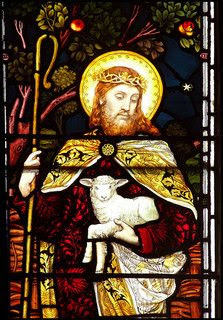
And this is no ordinary lamb or cute cuddly pet which He becomes. This is a special type of lamb which is meant to be offered at the Temple as a sin offering. It is interesting that this discourse on the Good Shepherd takes place within the Temple where animal holocausts were offered to atone for the sins of the petitioners. The mystery of the atonement is that Jesus uses the sacrificial system to defeat the sacrificial system. He lets Himself be a victim but He goes willingly, thereby showing humanity that the sacrifice system is powerless. Thus, we are saved through the one sacrifice which alone can atone for our sins, the sacrifice of the Lamb of God who takes away the sins of the world; the Lamb who is also a Shepherd.

This incredible transformation takes place on the cross. It would appear that on the cross, life is taken, victory is defeated, God is crucified. But our Lord did not stay on the cross. God died, but He rose again. The devil did not have the final say. Loss was thwarted. Victory reigned. The Lamb that was slain became the Shepherd again. The Book of the Apocalypse provides us with this amazing vision that the slain Lamb rules again, arrayed in glory and surrounded by His subjects who had also followed His path of sacrificing their lives, washing themselves in His blood, and now share in His glory. That's the message of Easter.

We also see how this beautiful title which we accord to Jesus has two sides to it. It does not only acknowledge with the Psalmist in Psalm 23 that “the Lord is my shepherd,” but also acknowledges as in today’s Psalm 99, that “we are His people, the sheep of His flock.” Notice the symbiotic relationship between the sheep and their shepherd. The shepherd lived and died for his sheep, likewise the sheep must do so for the shepherd. This relationship is marked by certain essential characteristics.

Our Lord makes it very clear that the first identifying mark of His sheep is that, they hear His voice. “Hearing” is not merely auditory perception in scriptures but a spiritual understanding that responds in faith. “The sheep that belong to me listen to my voice; I know them and they follow me. I give them eternal life; they will never be lost and no one will ever steal them from me..” On the other hand, those who are not His sheep do not believe, they do not listen to His voice. One cannot claim to be a sheep that belongs to the Lord if one refuses to obey and submit to His authority.

But, it is not enough that the Lord’s sheep should “listen” to His voice. He also calls them to follow, wherever He lovingly leads them. The mark of true disciples is that they follow their shepherd. This theme is sounded in the call of the very first Apostles. He said to them, “Follow Me, and I will make you fishers of men” (Matt. 4:19). Our Lord also emphasised that “if anyone wishes to come after Me, he must deny himself, and take up his cross daily and follow Me” (Luke 9:23). We begin to see that the cross is not just something which the Good Shepherd embraced for the sake of His sheep but also something which the sheep must be willing to accept, if they truly wish to belong to Him. Where the Shepherd goes, the sheep must follow.

It is here that we come to realise that being a sheep of the Good Shepherd is no benign image exuding cuteness and cuddliness. Rather, it carries a highly subversive connotation which may end in rejection, alienation and persecution from those who oppose the Shepherd. Some have the privilege of being called to die, as testimony of their faith or love for others, as in the case of St Maximilian Kolbe, while others are called to take the unpopular path of swimming against the mainstream current which is anti-Christian. St John Vianney once said, “Do not try to please everybody. Try to please God, the angels, and the saints—they are your public.” And often when we choose to please God, we end up displeasing others. But Christians are not called to be popular. We are called to be faithful.

Easter is about life that died to live again. It's about victory succumbing to defeat, only to be victorious again. It's about a God who left heaven to live on earth, to return to heaven again. It's about the Shepherd, who became a Lamb who became a Shepherd again. So, this is what we celebrate today, not just a Shepherd who guides and cares for His sheep, or gazes softly at us as if we were little teddy bears and cuddly lambs, but the One who became the sacrificial Lamb that took away our sins by dying for us in our place. He becomes the victim for all of us. And if we profess to be His sheep, then we must listen only to His voice in the midst of the confusion caused by a cacophony of worldly voices, and follow Him alone who can give us Eternal Life.

“Eternal Shepherd, thou art wont
To cleanse Thy sheep within the font,
That mystic bath, that grave of sin,
Where ransomed souls new life begin.”
(5th century Hymn used at Vespers, Eastertide)

Thursday, April 14, 2022

The Resurrection is no hoax

Easter Sunday 2022


One of the terms that has come back into vogue and has made its way into political vocabulary of late, is “gaslighting.” Gaslighting involves the perpetrator trying to convince the target (the one being gaslighted) that what he perceives is not actual reality. By convincing the target to doubt himself / herself, the gaslighter gains power through distortion, lies, and misinformation. Soon the target may come to depend on the gaslighter for “truth”, since the target no longer trusts his own senses, perceptions, or even basic reasoning ability. That’s basically the premise of the 40s movie “Gaslight” which gave rise to this term.


It may be argued by many, especially critics of Christianity, that the Church has been gaslighting her members and the world, with the story of the resurrection and the explanation behind the empty tomb. Since the empty tomb raises more questions than it can provide answers, these critics argue that the Church has jumped on this opportunity to manipulate the truth about Jesus Christ, in order to exert mind-control over her members and perpetuate the biggest gaslighting lie for centuries.

Yes, there was gaslighting involved surrounding the events that took place at Easter, but not in the way that the critics of Christianity would imagine. First, the enemies of Jesus who wanted to suppress the movement He had built during His lifetime, had decided to spread rumours and even concoct fake news that the body of Jesus had been stolen by His own disciples, as recorded in the Gospel of Matthew. Second, Mary Magdalene sought to gaslight, albeit unintentionally, the rest of the disciples by declaring: “They have taken the Lord out of the tomb … and we don’t know where they have put him.” Thirdly, the followers of our Lord, including the women, had gaslit themselves into believing that our Lord was truly dead. Despite what He had told them, to prepare them for this moment, and despite them seeing the empty tomb and the burial clothes left behind (now why would the body snatchers take the body but leave behind the embalming clothes), their minds were firmly locked in this conclusion that the Lord had truly died and that His cause had come to a definite end.

And yet, the empty tomb and the discarded burial clothes stand as bulwarks against this myriad display of gaslighting, thus refusing to allow the truth of the resurrection to be buried. They demand an explanation. They cast doubts on the various theories and rumours surrounding this event. They cast doubts on the doubts of all, who were trying to grapple with the mystery of the empty tomb. What could have happened? What does this mean?

Though there was no breakthrough for Mary Magdala and Peter, at this stage at least, a chink can be seen in the doubting shield of the beloved disciple. He alone “saw and he believed.” What was the nature and level of this belief? We are not told. But perhaps we can speculate that he has begun to doubt his own doubts and preconceived notions. He alone began to see something within the darkness of the empty tomb. For others, the empty tomb was just a mystery to be solved or a cul de sac with no way through.


But in truth, the empty tomb had its own reality to reveal. For some, the empty tomb was a source of disappointment. But for us believing Christians, the empty tomb is the sign par excellence of our hope and the path to life. The empty tomb is the irrefutable proof of God’s victory over death and sin. Here is the irony: when He was present and alive, His own disciples did not grasp His true identity. But now, after His death and in His physical absence in the empty tomb, they finally begin to make sense of all His words and deeds.


So, when the Risen Lord finally appeared to them, it changed everything. That is: His rising blew it all up. The gaslighting was finally exposed for what it is - a lie. The Light got in and everything was exposed. There was no going back. There is no longer any need to keep speculating and asking, “What happened?” We only need to ask, “What now?” Everything they had experienced, seen, and learned in the years, months, weeks, days, and hours leading up to our Lord’s arrest, torture, trial, and crucifixion was thrown into stark relief once He appeared to them post-death, very much Alive. And this transformed them, utterly. Borrowing another expression from pop-culture, they were finally “red-pilled.”

The objections to the Resurrection are not based on the evidence, and in this sense, they are the real attempts at gaslighting. Remember that famous aphorism: “the absence of evidence is not the evidence of absence”? Not being able to produce archaeological evidence of the corpse or remains of Christ is no proof that He did not exist, nor can it disprove that He rose from the dead. In fact, the absence of the corpse, may be one of the biggest proofs that our Lord did rise from the dead. To believe in the resurrected Christ is a very reasonable faith. To deny the Resurrection, one must either stick his head in the sand or take a blind leap into the dark. It’s like standing before a mob-wrecked burning building and exclaim: “mostly peaceful.”

In the days and weeks and years and centuries that followed, most of the Twelve apostles and thousands of Christians were martyred when the gaslighting by the State wasn’t enough to suppress this truth. They became victims of the same cowardly State that killed God, and they went to their deaths fearlessly preaching the Resurrection. Propagating this new faith, even in the most inoffensive and peaceful manner, garnered contempt, opposition and cruel deaths. Yet, this faith they zealously did propagate, and all these miseries they endured undismayed, nay rejoicing. As one after another was put to a miserable death, the survivors only continued their work with increased vigour and resolution proclaiming their Easter faith: Christ has Risen! He is Risen indeed! Alleluia!

So we must remember: our Lord’s Resurrection isn’t just an invitation to celebrate by throwing Easter parties for kids with Easter eggs. It is an invitation to uphold the dangerous and subversive truth of our faith against a legion of forces that wish to suppress that truth by gaslighting and by any other means. From the time of the Resurrection and even until now, the world is full of stories that cast doubts upon the power of God’s love. In a world that is sealed in tombs by false stories about Jesus and His love for us, we are sent to speak the truth that will set those around us free, so that they too can “follow the path to life” and rejoice in the fullness of joy, in the presence of Risen Love.

Our faith in the Resurrection may sometimes feel daunting and our testimony at times even be weak and terrifying. But it is, nevertheless, an electrifying call to rally against the powers of death which cannot beat God but will not ever stop trying. No matter what the world throws at us, no matter how much the world seeks to bury the truth and attempt to gaslight us and convince us that we are deluded, we will stand confidently and courageously with the Lord as we proclaim with Christians of past centuries: Christ has Risen! He is Risen indeed! Alleluia!

Thursday, April 7, 2022

Glory and Blood

Palm Sunday of the Passion of the Lord


The most visible accoutrement for this Sunday is the palm branch, and for good reason. The palm branch was a symbol of triumph and of victory in the ancient world, and in Jewish tradition. But having paid closer attention to the first Gospel taken from Luke, it is at least a little ironic to refer to this Sunday as “Palm Sunday.” Actually, only John (12:13) mentions “palm branches.” Matthew mentions “branches from the trees”, while Mark describes them as “leafy branches.” Luke mentions nothing about any foliage. So, if you didn’t manage to get your hands on a nice leafy palm, don’t complain.


Be that as it may, why “palms?” It was a common custom in many lands in the ancient Near East to cover the path of someone thought worthy of the highest honour. The Hebrew Bible reports that Joshua was treated this way. The Gospels of Mark, Matthew and John report that people gave our Lord this form of honour. In Matthew/ Mark they are reported as laying their garments and cut branches on the street, whereas John more specifically mentions palm fronds. Luke mentions only garments being spread on the road as a kind of ancient red-carpet reception to our Lord whom the people feted as their Messianic King.

As mentioned earlier, the palm as a symbol of victory predates both Jewish and Christian tradition. But in Christian iconography, the palm has taken on a radically new meaning of being a symbol of martyrdom. This association may have arisen from the natural habitat of palm trees. To travellers in the arid desert, palm trees were beacons of hope because of their association with oases and life. Where you find a palm tree in a desert, you are bound to find a water source. But it is not just the water that sustains the traveller but the fruits or dates from the palm tree. It was thought, that at the time the palm tree produced its fruits it died, hence it was meant as a sacrifice, as well as a symbol of the resurrection.

So, there is no contradiction between the earlier symbol of victory with the later Christian symbolism for martyrdom. For isn’t martyrdom victory of the spirit over the earthly and the flesh, as well as a symbol of rebirth and of immortality, which is victory over death? And isn’t this the paradoxical lens in which we must view the Lord in today’s liturgy? Although the Son of God appeared to be the least among men, He was born to be a king in the most admirable way. Though He was feted as an earthly king as He entered Jerusalem, it would only be from the throne of the cross where He will be revealed as King of the Universe in all His glory.

If Jesus’ triumphal entry into Jerusalem had been the peak and culmination of our faith story, would we be Catholic, would we even be here, would we have the crucifix on the walls of this church and our homes, would we prayerfully process to partake of His body and His blood, would the name of Jesus even be remembered after 2000 years? And the answer is simply ‘no’. Today, is not the climax of the story. We had an early teaser of the climax in our lengthy Passion Gospel reading but even then, the death of our Lord would be the anti-climax. What we experienced today, is but a pale shadow of what will happen next week, although today’s celebration seems openly public, God chose to have the resurrection of Christ at Easter experienced in mystery and in secret, only to be made known through the testimonies of those who have seen and touched the Risen Lord in the flesh.

But the Palms that you received remain a vital and meaningful part of our lives, and this is not just confined to Palm Sunday. They are more than ‘those Catholic things’ that we twist or braid and hang on the wall or behind a special picture and forget about. These palms are part of both our entry Gospel as well as the great account of our Lord’s Passion. But they are also a part of our story – yours and mine.

Two months ago, you were invited to bring the palms you received last year back to church. Six weeks ago, those palms were burnt outside this church. The resulting ashes were then further pulverised to prepare them for use on Ash Wednesday. Those ashes, made of palms we had with us for a year, reminded us of our mortality, our sinfulness and our need for reconciliation, conversion, and prayer. They remind us of the vanity and fragility of human glory. One day you are a hero in the eyes of others. Another day, you can descend into zero.

Today we begin again with new palms. These new palms should lead us to the question of how we have changed since we had ashes from those triumphal palms sprinkled on the crown of our heads. What have we learned since Ash Wednesday? How are we different, are we better people because of the efforts we put into this Lenten season?

Lent is bracketed, bookended, by palms; the loss, burning and destruction of them at its onset and then, the new green leaves this day, near the end. Ultimately that is what this sacred season is about, burning away, clearing out, purifying and cultivating something new.

Take the palm branches with you today; let them be a reminder that we are entering the holiest week of the year. The week that begins with the false triumphal entry into Jerusalem, ends with the true triumph over death at the cross. These palms challenge us to remember our role in our Lord’s Passion – that those great sufferings endured by our Lord were endured for each of us. They are our badge of honour, not trophies of success in human terms, but a reminder that we are called to share in the passion, death and resurrection of Christ. We are indeed called to be “martyrs,” “witnesses” as the Greek root “martyron” suggests.

Five weeks ago, we heard: Remember that you are dust and to dust you shall return. Those ashes on our heads have washed off, but these palms can stay with us, offering mute testimony and calling us to not forget who we are – sinners in need of our Lord’s grace, and what we can be – sinners who have placed our lives in the hands of our loving God. Reminders that it is in humility that we will find true glory, in death can we discover eternal life. Please take these palms with you today. Because in a sense, just like those palms, each of us this day also holds our future in our hands. Will we only choose to walk the path of human glory or follow our Lord faithfully on the way to the Cross?

Friday, October 29, 2021

Losers and Winners

Solemnity of All Saints 2021


Some of you may have been fans of the characters of the Peanuts comic strip created by Charles M. Schultz. Without a doubt, we have grown up enjoying, laughing with, sympathising and even hating the various individual comic personalities. My most endearing character is definitely Charlie Brown, the main male protagonist. The reason for this attraction is because Charlie Brown reminds me so much of myself growing up and even now, as an adult.

Personality-wise, he is gentle, insecure, and lovable. Charlie Brown possesses significant determination and hope, but frequently fails because of his insecurities, outside interferences, or plain bad luck. Although liked by his friends, he is often the subject of bullying, especially at the hands of Lucy van Pelt. Charlie is the proverbial Born Loser. He is described by his creator as “the one who suffers because he’s a caricature of the average person. Most of us are much more acquainted with losing than winning. Winning is great, but it isn’t funny.” We may laugh at Charlie’s bumbling expense, but as far as Charlie is concerned, losing isn’t funny either.

To be a Christian today often feels like being a loser. This is true, both as a matter of demographics and regarding the influence and respectability of traditional Christian values. There are fewer Christians even in traditionally predominantly “Christian” countries, and our neighbours think less of us because of our strange values and ideas. We are increasingly outsiders. And how we respond to this reality may be the defining question of our time.

The good news is that Christianity has always been a religion of losers. We have been persecuted, our beliefs have been ridiculed and rejected, our values have been maligned, sometimes driving us underground to practice our faith secretly. But though we may appear to be weak, powerless, failures, and losers in the eyes of the world, in the eyes of God we are victorious and winners! In this world we will have trouble; in this world we will lose; but take heart, Christ has overcome the world. And this is what the Saints in heaven declare in song and praise: “Victory to our God who sits on the throne, and to the Lamb.” These were the same figures who appeared to be defeated by anti-Christian forces, persecuted, tortured and martyred and yet, emerged victorious holding palms as trophies of their victory.

Nowhere is this truth more evident than in the Beatitudes. One could paraphrase the list of beatitudes as this: “Happy or Blessed are the losers!” This is what the paradoxical and counterintuitive values behind the Beatitudes seek to display. Our Lord and Saviour, just as the beatitudes would describe, had to experience poverty, pain, suffering, loss, persecution and death for the sake of righteousness in order to gain the victory and joyful blessedness of the resurrection and the gift of eternal life for all of us. This is the core of the Christian message - death before resurrection, loss before victory, last before first, poverty before riches. For in the Christian story, ‘success and failure’ is inverted.

Although we often describe the Saints in heaven as the Church Triumphant, those who have “run the race” and are crowned with glory in Heaven, it often doesn’t feel this way here on earth. Our earthly experiences of failure and loss make us doubt the promises of the beatitudes.

But if we take a deeper look at the promises which are proclaimed by the beatitudes, we begin to recognise the veracity of their claims even in this life without waiting for the next. The losers can discover something about themselves that winners cannot ever appreciate – that they are loved and wanted simply because of who they are, and not because of what they achieve. That despite it all, raw humanity is glorious and wonderful, entirely worthy of love. This is revealed precisely at the greatest point of dejection – our Lord’s death and resurrection. The resurrection is not just a magic trick at raising a dead body to life. That’s a neat and impressive trick. But it is so much more than that. It is a revelation that love is stronger than death, grace is stronger than sin, that human worth is not indexed to worldly success, but to one’s fidelity to the path laid out by Christ. The lives of the Saints are testimony to this. On this side of heaven, they may appear to be losers. But as the vision of St John in the first reading lifts the veil, we are given a glimpse of their true worth - they are winners and victors in the Kingdom of Heaven.

A successful Christian, if you can call him or her one, called to be a saint, ought to be hated rather than feted in this world. Yes, it does seem that the modernist forces seem to be attacking the Church from every angle, that orthodox Christian beliefs and values are aggressively under assault, yet this feast reminds us that we are not alone in our experience and that this epoch in history, is not that unique as the Church has always suffered derision, rejection, humiliation and condemnation from her inception. We often forget that until our Lord returns in glory as He brings judgment upon the earth, battles and wars will remain. So, no matter how peaceful we wish our lives could be, the truth is our lives, this side of heaven, will be tainted with conflict.

But despite the onslaught she experiences, not only from earthly enemies but also demonic forces, the vision described in the Book of the Apocalypse will be the final outcome. There, before the throne of the Lamb, we will know that we are conquerors, not losers and that failure will be redeemed by the victory won for us by the Lamb which was slain.

Wednesday, July 21, 2021

The Feast of Plenty

Seventeenth Sunday in Ordinary Time Year B


Malaysia, the Land of Plenty, a food paradise renowned for a variety of cuisines and culinary delights, had never known hunger on a large scale (except during WWII perhaps). Rather than wondering when the next meal will arrive, Malaysians often struggle with the myriad of choices that can drive one mad. Malaysians generally eat not because they are hungry, but as painful as it is true, we eat because we are greedy.

But these months of lockdown, with so many losing their jobs and their only source of income, hunger has become a reality. White flags can be seen flying outside homes and poverty relief organisations across Malaysia have been overwhelmed these past few weeks as citizens cry out for food and other assistance, amid the country’s latest seemingly never-ending lockdown. As some commentators have noted, the white flag is not a sign of surrender but has become a powerful sign of human solidarity, as people from all walks of life rush to give assistance to alleviate the suffering of their neighbours and fellow Malaysians. This uncommon sign of solidarity has strangely caused alarm to the authorities, with some even viewing it as a subversive symbol of defiance against the administration. “How dare common Malaysians do the job of the government?” The answer is simple. The government machinery, for all its boasts, has miserably failed.

As our political leaders endlessly theorise as to how to deal with this crisis, ordinary Malaysians and entrepreneurs have rushed into action. This seems reminiscent of the conversation which takes place between our Lord and His apostles in today’s gospel. While the apostles continue to debate on the next course of action, our Lord moves into action. The readings turn our attention to the problem of hunger and how God provides for His people. This is especially moving when we read it in the background of the ravages of COVID. After having contended with the Coronavirus for over a year, we now have to face the more lethal “virus” of starvation.

It is interesting how the apostles sound so much like our inept political leaders. Let’s be honest. Despite our complaints and arm-chair pontification, none of us have found a fail-safe solution to our present predicament. Like the apostles, we may be constantly arguing over the scarcity of resources and practicality of our responses. But the gospel draws our attention to the Lord and begs us to imitate Him - He sees the crowds, He recognises their need, He looks at what is available, and then trustingly surrenders it to God before He shares it with the people. And the amazing thing is that when we are no longer cracking our heads and worrying about our limited resources, we would be able to share it willingly with others and God will bless our gift and multiply it with abundance. The truth is that everyone can do something, even though it may seem as insignificant as five loaves and two fish. But this is way better, than doing nothing.

But the readings point to a deeper truth. As much as starvation and hunger are realities which must be combatted at every level, the world’s hunger for food will only be satisfied when man learns to live not simply for himself, but for others, as Christ did. It will be satisfied only when the inner law of love, and not merely self-interest and greed, governs our individual and collective existence, inspires our policies and regulates our social structures and institutions. The world’s hunger for food will only be satisfied when man learns to hunger for God.

And this is why we partake in the Feast of Plenty, the Eucharist, a taste of the heavenly wedding banquet. We partake in the Eucharist because we are hungry. Ours is an elemental hungering. We want sustenance. We crave nourishment beyond food and drink that sustain our physical lives. We hunger for life to be spiritually meaningful and for it to be redeemed from the evil and viciousness that all too often mar it. Our hunger is the human appetite to be in communion with one another. Like the thirst of which the psalmist spoke so long ago, it is also our inescapable longing for God.

The Eucharist is not a symbolic meal of intellectual concepts. It is real food and real drink, ordinary food made from wheat and grapes that we lift up to God, returns to us as the extraordinary sacrament of Christ. This is why the online Mass, though providing us with help for our prayer and spiritual lives, will never be an adequate substitute for the real thing. You cannot satisfy your hunger by reading a cook book or by watching Jamie Oliver on television. The Eucharist is not just to be admired from a distance, but to be consumed before it can release its greater power in us. In Holy Communion, our Lord unites Himself with us and we unite ourselves with others through our union with Him. It is made possible by Jesus’ act of complete surrender to the will of the Father, whereby He offers up His life, His love, and finally His body and blood on the Cross. With five loaves and two fish, our Lord feeds the crowd and satisfies their physical hunger. But with His body and blood, He feeds and saves the world!

The popular spiritual author Henri Nouwen wrote about this: “The great mystery of the Eucharist is that God’s love is offered to us not in the abstract, but in a very concrete way; not as a theory, but as food for our daily life. The Eucharist opens the way for us to make God’s love our own... Whenever you receive the body and blood of Jesus in the Eucharist, His love is given to you, the same love that He showed on the cross.” Just as food is consumed not just once but daily, we must continually go to Mass and receive the Eucharist.  It is something that gives daily nourishment and fulfilment.

Someone once suggested that in the post-COVID age of social distancing and online services, the Eucharist and Holy Communion have ceased to be relevant. But the truth is that the Eucharist will always remain relevant, it will always remain necessary as food for the journey, antidote to death, and sustenance for the soul. To paraphrase the reply of the martyrs of Abitene to the magistrate as they faced the sentence of death for attending Mass, a prohibited activity under Roman rule: “We cannot omit the celebration of the Divine Mysteries. The Christian cannot live without the Eucharist and the Eucharist without the Christian. Don’t you know that the Christian exists for the Eucharist and the Eucharist for the Christian? … The Eucharist is the hope and the salvation of Christians.”

Likewise, Christ’s miracle of the multiplication of loaves continues to have contemporary relevance. This world needs SHARING. But more importantly, this world needs SAVING. Let us not forget that it is only when, in faith and love, we give away the little that we have—a few loaves and fishes—that God blesses our poor efforts and, in His omnipotence, multiplies them to meet the hunger of the world. It is also through our little efforts of sharing our faith, that we can offer Christ’s gift of salvation to the world.

Wednesday, March 31, 2021

The Fools' Feast

 Maundy Thursday


I believe that none of you would need to be reminded that today is the 1st of April, April Fool’s Day. It’s a day when we traditionally pull pranks on each other, not maliciously but in jest. But sometimes pranks can test the limits of friendship. Well, I hope that what I’m going to say next would not be taken as excessive and cause you to walk out. But if you are going to take offence, blame me, don’t blame God or the Church. Okay, here goes nothing. Being in church today, in a closed, confined and congested area flies against all the public safety advisories during a pandemic. Are you crazy?!!! You must be a fool to be here. What more, on the day the Church celebrates the institution of the Holy Mass.

How the world judges our actions as foolish is exactly how the world judges Christians from the early centuries of the Church until present day. Our liturgical celebrations, though it may not seem to be so, always had a certain edge to them, like those who engage in extreme sports who court death as they experience a rush of adrenaline. You may find this unbelievable. How could the Mass, which so many find boring, be a dance with death? Perhaps, the only danger we could perceive is to die of boredom.

We often forget the context of today’s celebration. Today we commemorate the Lord’s Last Supper, a Passover Feast and tomorrow, we commemorate His death. They are not two different events but a single one, for what our Lord celebrated today at His Last Supper, He will complete on the cross. The Holy Sacrifice of the Mass, the Mass of the ages is a bloodless re-enactment, re-presentation of the gruesome bloody sacrifice of our Lord at Calvary. Risk, death and danger have always been part of the DNA of the Holy Mass from the moment of its institution.

The juxtaposition of celebration and death is a constant reminder that the Church of Christ, our Church, is indeed a Church of Eucharistic fools because Christians were willing to do the craziest things in order to receive the most precious thing that could sustain them, not just in this life but for eternity. For example, there is the amazing story of the courageous martyrs of Abitene (in modern-day Tunisia).  In 303, forty-nine Christians suffered torture and martyrdom because they defied the Roman Emperor’s order not to celebrate the Eucharist on Sunday. Despite this cruel law and the real prospect of death, this group of Christians risked everything to gather for Mass. When asked by the magistrate why they had disobeyed the emperor and put themselves at risk, one of them defiantly said, “Sine dominico non possumus” — “Without Sunday, we cannot live.” “Without the Eucharist, we cannot live.”

In fact, for nearly 2,000 years, Christians have risked their lives to participate at Holy Mass.  During the Reformation in England, priests were martyred when caught offering Holy Mass clandestinely for English Catholics. Courageous lay people who gave their homes over as places of Catholic worship, and who harboured priests, suffered torture and death. This trend continued over the centuries. In the Twentieth century, Catholics in former Communist countries like the Soviet Union or Vietnam were persecuted for practicing their faith. Today, in places such as Egypt, China, North Korea, Iraq, Sudan, Saudi Arabia and countless other areas, Catholics risk their lives and travel for hours to attend Mass.

We give thanks to God that we do not have to put our lives in jeopardy to attend Mass at our local parish, except assume the risk of contracting COVID 19. Yes, we should be prudent and not recklessly put ourselves and others in harm’s way. But I suspect that sometimes we seem to have substituted the primacy of salvation for the lesser need for safety.

Perhaps this is the reason why so many have little appreciation for this Sacrament until they were deprived of it. We rejoice that, unlike those in poor areas, we do not have to walk for miles, over hills or on dirt roads to attend. The vast majority of us can make a short drive to arrive at our beloved parish. In fact, we are spoilt for choices. But the ease, convenience, and accessibility of the Mass should not cause us to ever lose sight that the Mass is so precious that many of our Catholic brothers and sisters around the world are braving great inconvenience and persecution to receive what we, by God’s love, have available near us.

In his first Holy Thursday letter to priests, Pope Saint John Paul II touchingly recalled situations of the faith triumphing over persecution from his own personal experience of living under religious oppression, at a time when the priests were rounded up and there were none left to celebrate the Eucharist: “Sometimes it happens that [the lay faithful] meet in an abandoned shrine, and place on the altar a stole which they keep, and recite all the prayers of the Eucharistic liturgy: and then, at the moment that corresponds to the transubstantiation a deep silence comes down upon them, a silence sometimes broken by a sob … so ardently do they desire to hear the words that only the lips of a priest can efficaciously utter.”

In the months of lockdown, when our churches and chapels were closed and Masses suspended, many waited for the day they could return to Church to celebrate the “source and summit” of their Christian lives. But still others lost hope in waiting and some may never return. Of course, many are still not able to return because they fall within a high risk group. But many have chosen not to return by choice. If you are watching this Mass at home, this message is for you. Please know that we miss you, we love you, and we hope you will rejoin our Catholic family for our Masses. Some of you have drifted away from the Church and have been waiting for a good time to return.  I pray that you will consider this the time to join us on our faith journey toward Heaven.  We miss you, the Church misses you, Christ misses you - come home!

I would like to close this evening with the words of Pope Emeritus Benedict XVI, at the 2005 World Youth Day in Cologne Germany:

“The Eucharist must become the centre of our lives. … This is because the Eucharist releases the joy that we need so much, and we must learn to grasp it ever more deeply, we must learn to love it. Let us pledge ourselves to do this – it is worth the effort! Let us discover the intimate riches of the Church’s liturgy and its true greatness: it is not we who are celebrating for ourselves, but it is the living God Himself who is preparing a banquet for us.”