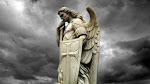
Ash Wednesday
Yesterday was the first day of Chinese New Year, just in case you missed it on your calendar. For those who had been celebrating, it would be close to two whole days of food binging, close to a Roman food orgy. I guess with the Malaysian food culture of having ‘loh-sang’ a month before the actual day, some of you may have been gouging for an entire month. But today it ends. The feasting has ended and the fasting has begun, except for those of you who are availing of the regional bishops dispensation of the obligation to fast, which is actually a deference rather than an outright cancellation of the obligation. Your sentence is reprieved till this Friday. Enjoy it while it last!
Fasting and feasting may seem like opposites on a spectrum. And in fact, some may feel guilty that you are still feasting despite the dispensation from the bishops while others would look on their neighbours with scrutinising judgment for having given in to the temptations of the flesh or stomach. But did you know that there is a deep connexion between the two, especially within Catholic theology and culture?
In many historically Catholic countries, the period that immediately precedes the Lenten season is marked by celebrations that are collectively known as Carnival or Carnivale. The Carnival typically involves a public celebration or parade combining elements of a circus, mask and public street parties. People often dress up or masquerade during this entire week of celebrations, overturning the often mundane norms of daily life. It often seems ironic and even scandalous that the austere, penitential and holy season of Lent is preceded by this orgiastic display of frivolous and drunken debauchery. It’s as if all the rich food and drink, pleasures and luxuries, and excesses of every kind, had to be consumed and disposed of in preparation for the Lenten fast and abstinence. The word "carnival" literally means "farewell to meat."
But there is a necessary juxtaposition of Carnival and Lent. There can be no Carnival without Ash Wednesday, and the significance of Ash Wednesday and Lent will be lost upon us if life did not have its Carnival. All things have their season – there is a season for feasting, and a season for fasting. This becomes most apparent this year when Ash Wednesday, the day of fasting, follows immediately after the cultural celebration and feasting of the Lunar New Year. For some of us the feasting has ended. For others, it continues for a few more days with the blessing of the bishops. But ultimately, we must eventually begin our fasting. This is the time when the Church invites us to reexamine and reorder all aspects of our life. We can see the contrast of Carnival indulgence and Lenten fasting not just in foods, but in all areas of life. Carnival puts into perspective the things we need to give up in Lent.
Our pre-Lenten celebrations and preparations provide us with a graphic illustration of the message of Lent, that we are fools, if we who seek our final end in earthly things! The Church, during this season of Lent, will show you where true happiness may be found, Who it is that brought it, and how He merited it for us. The pre-Lenten Carnival celebrations, despite their rollicking good fun and general merriment, really had a deadly serious objective. This is what the gaudy and rancorous parades of Carnival represent - the “princes of this world,” in all their tinselly splendour, followed by a long train of personified human vices, sins and infirmities, solemnly enters the city gate and takes possession of the town.
The performers are all arrayed in their costumes with the purpose of portraying Death, the World, Vanity, Beauty, Sin of every kind, human wealth, suffering, the joys and sorrows of human life, etc. This is not a triumphant procession of a victorious army. But a ridiculous motley crew of defeated individuals that are being subjected to mockery and humiliation. It is the procession of the defeated forces of the world, of sin, of vice and the devil. It is a Walk of Shame, not a Victory Parade. It’s a parody of the triumphant procession of our true King, Christ, as He enters His City at the end of Lent and the start of Holy Week.
Thus did the merriment of the passing hour imperfectly conceal a stern seriousness. This was the means the Church took to warn her children not to be spiritual fools. Piercing through the noise and fun-making, and clearly heard by all, was the warning voice: “Be careful not to parade your good deeds before men to attract their notice.” A further warning that all we aspire to accomplish, all that we hope to acquire and possess is merely “vanity of vanities, all is vanity.” Only one thing is necessary: Save your soul; give heed to what the Church will command you during the coming season of Lent. The words that accompany the imposition of holy ashes ring true, “Repent and believe in the Gospel.”
Certainly, if the world were given a choice between Carnival and Lent, Carnival is the more popular choice of the two. Let’s be honest, who doesn’t love a good party? And yet, Carnival must find its ultimate meaning in Lent. It is the austerity of Lent, the penance of Lent, the prophetic self-renunciation of Lent that truly prepares us for the apex Carnival celebration of life, which is Easter. St. Augustine can serve us as a safe guide during this period of preparation for Lent, and of course, during the season itself, too. “The pagans,” he says, “present each other with gifts of friendship, but you should give alms during these days of wickedness. They shout their songs of love and pleasure; you must learn to find joy in the hearing of the word of God. They run eagerly to the theatre; you must flock to the churches. They guzzle their drinks; you must be temperate and fast.”
Thus, the prayers and gospels of the season of Lent attempt to awaken us to a profound realisation of the fact that only through penance and through uncompromising rejection of sin, that is, through a thorough change of heart, can we partake of the redemption of Christ. Through His incarnation, His passion and death, Christ gained for us the graces of salvation without any merit on our part. But only a heart freed from sin and evil inclinations can become the field producing fruit fifty and a hundred-fold for the divine Sower. Whoever refuses to toil at purifying his sin-laden heart will of necessity remain in fatal darkness, and the light of salvation and grace will not reach him. After the feasting that ended yesterday, let us now begin our fasting. And after the long winter of fasting from the pleasures and delights of the world, we will be guaranteed a rich harvest of spiritual fruits that comes with a springtime of the Soul.
Showing posts with label vice. Show all posts
Tuesday, February 17, 2026
Sunday, February 15, 2026
Reversing the Outcome
First Sunday of Lent Year A
One of the characteristics of being human is the ability to feel regret for the mistakes we’ve done. If we could only turn back the clock and do it all over again, which is simply wishful thinking. Most of us would have to simply live with our past mistakes and it would be almost impossible to correct them. We end up having to pay for our misdeeds for the rest of our lives.
But the good news is that what is impossible for Man, is possible for God. And so the gospel passage which tells us how our Lord faces off the devil and successfully refuses to succumb to temptation is not just a motivational story that if Jesus can do it, so can we, but a story of how the Lord has rewritten the ending of the story of the Fall of Adam and Eve, which we heard in the first reading. Our Lord Jesus didn’t have to travel back in time to do this, although He could, He simply reversed the outcome of the story of the first temptation and shows us how things could and can turn out differently.
The lectionary, by choosing to juxtapose the two events, the temptation of our first parents and the temptation of Jesus, wishes us to see the stark contrast of conditions, decisions and outcomes. The first story begins in a situation that can only be described as abundance. Adam and Eve were in a lush garden, they were not bereft of food or even choices, they had everything including the friendship and company of God, nothing was lacking, yet they doubted God’s goodness and authority. Despite all that God had given them which would have lasted any mortal being countless of lifetimes, it was just not enough. That famous song from the Great Showman, “Never Enough,” should be humankind’s theme song. Greed and jealousy do not come from a place of scarcity. They emerge from a vacuous heart which is originally made for God but now turned inwards.
On the other hand, the story of our Lord begins in the wilderness, the desert, a place of scarcity. Yet despite that scarcity, our Lord did not hunger for the allures of this world - food, money, power, popularity. The reason being is that His heart was already full, it was filled with the love of God. God was enough, He needed nothing more. Our Lord was in a desolate wilderness, physically weak, yet He trusted the Father enough to resist the lies of the devil. He refused to take an "easy way out" through sin, choosing to fulfill His mission through suffering. For that is what the three temptations He faced entailed - they were easy and convenient ways of getting the job done, “saving” the world, without having to make any sacrifices, lose any friends, or spill any blood. Likewise, Adam and Eve were tempted with an easy path to divinity. They were promised that if they ate the forbidden fruit, they “will be like gods.” They had forgotten that they were already like gods, children of God, living in a home with God.
The threefold temptation of Jesus mirrors that of Adam and Eve in the garden. They follow the threefold nature of the worldly things spelt out by St John in his epistle. In an exhortation to his flock, John warns them: “Do not love the world or what is in the world. If anyone does love the world, the love of the Father finds no place in him, because everything there is in the world - disordered bodily desires, disordered desires of the eyes, pride in possession - is not from the Father but is from the world. And the world, with all its disordered desires, is passing away. But whoever does the will of God remains for ever” (1 John 2:15-17). Doesn’t this passage wonderfully lay out the choice that is before us? We either choose the world that is passing or God who remains for ever. This is the battle we must undergo during Lent.
So, let us have a closer look at the three areas described in 1 John 2:16.
First, we have “bodily desires” or “lust of the flesh.” Eve was tempted with fruit that was "good to eat". In fact, God had pronounced that all fruits of the trees in the garden were “good to eat”, save for the fruit of the tree of knowledge of good and evil which was forbidden. Eve acknowledges to the serpent that God had given clear instructions: “You must not eat it, nor touch it, under pain of death.” And just like how we today can’t resist food that are good to eat but not good for our bodies and health, Adam and Eve also gave in to the temptation of the flesh. On the other hand, our Lord was tempted to turn stones into bread after 40 days of fasting. He reminds us that obeying God’s Word, that is His commands, is far more important and life-giving than giving in to the urges of the flesh. This is why the Church encourages us to fast and perform penances during this holy season to strengthen our resolve, strengthen our self-discipline in order to put a rein on unbridled passions of the flesh.
Next, John tells us to beware of “disordered desires of the eyes” or “lust of the eyes.” Eve saw that the fruit was "enticing to look at". What is denied is often more desirable and pleasurable. This second lust has been compounded in the modern age by the proliferation of pornographic material on the internet, the sexualisation that you see in advertisements and movies. In the past, there were more stringent censorship and you had limited access to printed pornography. But today, this is easily available with little effort with the click of a mouse or the scroll on your phone. Our Lord Jesus, however, did not succumb to this temptation when shown all the kingdoms of the world in a moment. Lent is a good time to bring back the ancient ascetic practice of “custody of the eyes,” which entails intentionally controlling one's gaze to avoid sinful, immodest, or distracting sights, thereby protecting the soul's purity. It involves moderating digital media consumption, avoiding "near occasions of sin," and fostering interior recollection. Instead of looking at the world and all its allures, train your eyes to gaze interiorly to make constant examination of conscience and upwardly to God in prayer.
Finally, John warns us that the world offers “pride in possession,” the mother and queen of vices. The serpent promised Eve she would "be like God". Most people often think that pride is merely a narcissistic character flaw, that is undue estimation with oneself and one’s achievements. But it is so much more. At the heart of this sin, the very sin that made angels into devils and which led our first parents to fall, is a rebellion against God. Every proud man eventually turns his back on God. A god will not tolerate the authority of another god. Power cannot be shared by the proud man. On the other hand, our Lord was tempted to throw Himself from the temple to force God's hand, proving His divinity. Instead, He reminded the devil that we should not test God’s authority. God will be God and not just a pawn to be manipulated by our every whim and fancy. The truth is that we cannot be gods through our own efforts but only by God’s doing. God had to become man, and He did in Jesus, in order for men to become gods.
So, back to our first question? Could things have turned out differently if Adam had obeyed when tempted in the garden? Of course! The Church declares at the Mass of the Easter Vigil, that Adam’s mistake, this fault, was indeed a “Felix culpa,” literally a “happy fault”. The reason being that it is happy and even “necessary” is because it resulted in a greater good: the incarnation and redemption of humanity by Jesus Christ. God can bring a greater good out of evil, He can bring victory out of defeat. Jesus, the New Adam, is proof of this.
And so, we too can reverse the outcome of sin through repentance and obedience to God and His commandments. We are not indefinitely trapped in our past mistakes but can chart a new course forward by following the example of our Lord. We may be victims of the Old Adam, but we can now be victors under the New One, Jesus. Happy Lent!
One of the characteristics of being human is the ability to feel regret for the mistakes we’ve done. If we could only turn back the clock and do it all over again, which is simply wishful thinking. Most of us would have to simply live with our past mistakes and it would be almost impossible to correct them. We end up having to pay for our misdeeds for the rest of our lives.
But the good news is that what is impossible for Man, is possible for God. And so the gospel passage which tells us how our Lord faces off the devil and successfully refuses to succumb to temptation is not just a motivational story that if Jesus can do it, so can we, but a story of how the Lord has rewritten the ending of the story of the Fall of Adam and Eve, which we heard in the first reading. Our Lord Jesus didn’t have to travel back in time to do this, although He could, He simply reversed the outcome of the story of the first temptation and shows us how things could and can turn out differently.
The lectionary, by choosing to juxtapose the two events, the temptation of our first parents and the temptation of Jesus, wishes us to see the stark contrast of conditions, decisions and outcomes. The first story begins in a situation that can only be described as abundance. Adam and Eve were in a lush garden, they were not bereft of food or even choices, they had everything including the friendship and company of God, nothing was lacking, yet they doubted God’s goodness and authority. Despite all that God had given them which would have lasted any mortal being countless of lifetimes, it was just not enough. That famous song from the Great Showman, “Never Enough,” should be humankind’s theme song. Greed and jealousy do not come from a place of scarcity. They emerge from a vacuous heart which is originally made for God but now turned inwards.
On the other hand, the story of our Lord begins in the wilderness, the desert, a place of scarcity. Yet despite that scarcity, our Lord did not hunger for the allures of this world - food, money, power, popularity. The reason being is that His heart was already full, it was filled with the love of God. God was enough, He needed nothing more. Our Lord was in a desolate wilderness, physically weak, yet He trusted the Father enough to resist the lies of the devil. He refused to take an "easy way out" through sin, choosing to fulfill His mission through suffering. For that is what the three temptations He faced entailed - they were easy and convenient ways of getting the job done, “saving” the world, without having to make any sacrifices, lose any friends, or spill any blood. Likewise, Adam and Eve were tempted with an easy path to divinity. They were promised that if they ate the forbidden fruit, they “will be like gods.” They had forgotten that they were already like gods, children of God, living in a home with God.
The threefold temptation of Jesus mirrors that of Adam and Eve in the garden. They follow the threefold nature of the worldly things spelt out by St John in his epistle. In an exhortation to his flock, John warns them: “Do not love the world or what is in the world. If anyone does love the world, the love of the Father finds no place in him, because everything there is in the world - disordered bodily desires, disordered desires of the eyes, pride in possession - is not from the Father but is from the world. And the world, with all its disordered desires, is passing away. But whoever does the will of God remains for ever” (1 John 2:15-17). Doesn’t this passage wonderfully lay out the choice that is before us? We either choose the world that is passing or God who remains for ever. This is the battle we must undergo during Lent.
So, let us have a closer look at the three areas described in 1 John 2:16.
First, we have “bodily desires” or “lust of the flesh.” Eve was tempted with fruit that was "good to eat". In fact, God had pronounced that all fruits of the trees in the garden were “good to eat”, save for the fruit of the tree of knowledge of good and evil which was forbidden. Eve acknowledges to the serpent that God had given clear instructions: “You must not eat it, nor touch it, under pain of death.” And just like how we today can’t resist food that are good to eat but not good for our bodies and health, Adam and Eve also gave in to the temptation of the flesh. On the other hand, our Lord was tempted to turn stones into bread after 40 days of fasting. He reminds us that obeying God’s Word, that is His commands, is far more important and life-giving than giving in to the urges of the flesh. This is why the Church encourages us to fast and perform penances during this holy season to strengthen our resolve, strengthen our self-discipline in order to put a rein on unbridled passions of the flesh.
Next, John tells us to beware of “disordered desires of the eyes” or “lust of the eyes.” Eve saw that the fruit was "enticing to look at". What is denied is often more desirable and pleasurable. This second lust has been compounded in the modern age by the proliferation of pornographic material on the internet, the sexualisation that you see in advertisements and movies. In the past, there were more stringent censorship and you had limited access to printed pornography. But today, this is easily available with little effort with the click of a mouse or the scroll on your phone. Our Lord Jesus, however, did not succumb to this temptation when shown all the kingdoms of the world in a moment. Lent is a good time to bring back the ancient ascetic practice of “custody of the eyes,” which entails intentionally controlling one's gaze to avoid sinful, immodest, or distracting sights, thereby protecting the soul's purity. It involves moderating digital media consumption, avoiding "near occasions of sin," and fostering interior recollection. Instead of looking at the world and all its allures, train your eyes to gaze interiorly to make constant examination of conscience and upwardly to God in prayer.
Finally, John warns us that the world offers “pride in possession,” the mother and queen of vices. The serpent promised Eve she would "be like God". Most people often think that pride is merely a narcissistic character flaw, that is undue estimation with oneself and one’s achievements. But it is so much more. At the heart of this sin, the very sin that made angels into devils and which led our first parents to fall, is a rebellion against God. Every proud man eventually turns his back on God. A god will not tolerate the authority of another god. Power cannot be shared by the proud man. On the other hand, our Lord was tempted to throw Himself from the temple to force God's hand, proving His divinity. Instead, He reminded the devil that we should not test God’s authority. God will be God and not just a pawn to be manipulated by our every whim and fancy. The truth is that we cannot be gods through our own efforts but only by God’s doing. God had to become man, and He did in Jesus, in order for men to become gods.
So, back to our first question? Could things have turned out differently if Adam had obeyed when tempted in the garden? Of course! The Church declares at the Mass of the Easter Vigil, that Adam’s mistake, this fault, was indeed a “Felix culpa,” literally a “happy fault”. The reason being that it is happy and even “necessary” is because it resulted in a greater good: the incarnation and redemption of humanity by Jesus Christ. God can bring a greater good out of evil, He can bring victory out of defeat. Jesus, the New Adam, is proof of this.
And so, we too can reverse the outcome of sin through repentance and obedience to God and His commandments. We are not indefinitely trapped in our past mistakes but can chart a new course forward by following the example of our Lord. We may be victims of the Old Adam, but we can now be victors under the New One, Jesus. Happy Lent!
Labels:
chastity,
Lent,
Obedience,
poverty,
Sin,
Spiritual Exercises,
Spiritual Warfare,
Sunday Homily,
Temptations,
vice,
virtues
Tuesday, July 29, 2025
Without God, all is vanity
Eighteenth Sunday in Ordinary Time Year C
Vanity seems to be a vice that is not only confined to women but also equally plagues men. Coiffed hair, manicured nails, shiny smooth complexions that scream of repeated facials, and a wardrobe that could put Imelda Marcos’ shoe collection to shame. Vanity in this context means pride but vanity could also mean futility or the pointlessness of our actions and decisions or even life itself. The readings for today address the latter.
People often struggle with these questions, ‘What is life all about?’ ‘What is man’s purpose in this life?’ This is what the Book of Ecclesiastes seeks to address. The book is a philosophical essay attributed to Solomon, the proverbial philosopher king. The author wrote this book from the mistakes he made. He shares his own life’s search. The man had wisdom, riches, horses, armies, and women (that’s an understatement, he had lots of women). Yet, in the end Solomon declared everything to be vanity; in other word, pointless, worthless, meaningless, and purposeless. To pursue vanity is to chase after the wind. Starting with the well-known words, "Vanity of vanities, and all is vanity," and repeating them in the last chapter after having taken us through all the vanities of life, the book contains the important lesson he learns from God, in a sort of ‘roundabout’ way. The Book ends by giving us the antidote of vanity: fear of the Lord and the observance of the moral law. The secret to a purposeful life is: Without God, ‘all is vanity’. But with God, nothing is in vain.
In the gospel, we are given two examples of such earthly vanity - the greedy brother and the rich man in a parable told by the Lord. A man in the crowd puts this request to the Lord, “Master, tell my brother to give me a share of our inheritance.” The question sounds oddly familiar. I’ve seen how family battles over inheritance have set kith against kin. The law of primogeniture says (Num 27:1-11 Deut 21:15) that the first born gets a double portion. If you had two brothers, you divided the estate three ways and the oldest got two parts. So, guess which son this is. His request suggests that he’s the youngest son. Greed, envy and a sense of entitlement have blinded him to place money above kinship.
Understanding the context of the disgruntled brother sets the stage for the parable. There is a comparison and contrast going on between the two characters in the parable and two characters outside the parable. The rich man in the parable is compared to the unhappy younger brother in real life. Christ in real life acts as judge and arbiter, a role taken by God in the parable. Why is the Lord telling this parable about the rich man who had no greed to a greedy man? The Lord builds up the rich man as a good guy, a content man, someone you can easily identify with and would aspire to become. This guy is just the opposite of the disgruntled and unhappy brother. What do we learn? Both men thought that life consisted in ‘things’, that the end and purpose of their lives were the acquisition of such ‘things.’ Selfishness and self-satisfaction have blinded them to the bonds of fraternity and life’s ultimate purpose.
Both the disgruntled younger brother and the contented rich man, in their pursuit for wealth without realising that they risk losing everything in a single moment, proves the point that ‘all is vanity.’ There is a major reversal in the parable – the man who thinks himself clever is proven foolish; the rich man ends up being poor to God. Notice the poetic justice. The rich man, like the entitled brother and like so many of us, so obsessed in storing up treasures for ourselves in this place, acquiring knowledge, wealth, possessions and a list of achievements, had lost sight of the fact that our ultimate goal is our own salvation – making ourselves ‘rich in the sight of God.’ The rich man is not condemned for his wealth or even his greed. He is condemned for forgetting that the ultimate ‘end’ or purpose of his life is salvation. He had made no preparations for this. He was too busy investing in this world and that is the ultimate vanity.
This parable speaks loudly to our generation; it speaks of the purpose of life and what defines it? Have you been defining life in your career, your house, your stock portfolio, in terms of your achievements, the knowledge you possess, the popularity you’ve gained, or the assumption that you will live much longer? What is going to happen when you lose one or more of those things? What happens when you get laid off? What happens when the stock market crashes? What happens when you get some disease which takes away your physical ability? What happens when your friends leave you? What happens if another pandemic hits again? If you define life according to these things, you will be devastated. If these things have become the ‘end’ and purpose of your lives, the goals you are ultimately pursuing, the treasures you are seeking for, then the diagnosis is terminal – vanity of vanities, all is vanity!
St Thomas Aquinas teaches that the real end for which man is made is to be reunited with the goodness of God through virtuous behaviour as well as the use of reason in order to know and love God above all. In the words of St Augustine, “that is our final good, which is loved for its own sake, and all other things for the sake of it.” St Ignatius Loyola in setting out the First Principle and Foundation in his Spiritual Exercises writes, “The human person is created to praise, reverence, and serve God Our Lord, and by doing so, to save his or her soul. All other things on the face of the earth are created for human beings in order to help them pursue the end for which they are created. It follows from this that one must use other created things, in so far as they help towards one's end, and free oneself from them, in so far as they are obstacles to one's end.” Thus, the riches of this life are only potentially good. Their goodness is actualised when they serve the greater good – the glory of God and love of neighbour.
The irony we face is that many people would prefer to love the means rather than the end. Man need not just love bad things in order to be condemned to hell. As the old adage teaches us, “The road to hell is lined with good intentions.” Man can pervert his ultimate end by loving seemingly good things, which seem to bring happiness, and mistake these things for the actual, infinite source of happiness - God. Whenever we choose the lesser goods over the greater Good, whenever we convert the means into the end, whenever our vision is obscured to see beyond what lies immediately before us, then we are in trouble. Everything comes down to the choice: do we choose these things as a means to the end, or do we choose them as a substitute for the end?
Today, the readings challenge us to seek the Source of all Goodness, and not just the goods He dispenses. Desire the God of Miracles, not just hunger for the miracles of God. Long for the giver and not just the gifts. Our thoughts should be on the ultimate prize: Heaven. Things of this earth either lead us to that prize, or they may distract us from that and therefore should be placed in their proper place. When we trudge the road of happy destiny, we must remember that the road is just a means to an end and not the destination itself. Anything else is VANITY!
Vanity seems to be a vice that is not only confined to women but also equally plagues men. Coiffed hair, manicured nails, shiny smooth complexions that scream of repeated facials, and a wardrobe that could put Imelda Marcos’ shoe collection to shame. Vanity in this context means pride but vanity could also mean futility or the pointlessness of our actions and decisions or even life itself. The readings for today address the latter.
People often struggle with these questions, ‘What is life all about?’ ‘What is man’s purpose in this life?’ This is what the Book of Ecclesiastes seeks to address. The book is a philosophical essay attributed to Solomon, the proverbial philosopher king. The author wrote this book from the mistakes he made. He shares his own life’s search. The man had wisdom, riches, horses, armies, and women (that’s an understatement, he had lots of women). Yet, in the end Solomon declared everything to be vanity; in other word, pointless, worthless, meaningless, and purposeless. To pursue vanity is to chase after the wind. Starting with the well-known words, "Vanity of vanities, and all is vanity," and repeating them in the last chapter after having taken us through all the vanities of life, the book contains the important lesson he learns from God, in a sort of ‘roundabout’ way. The Book ends by giving us the antidote of vanity: fear of the Lord and the observance of the moral law. The secret to a purposeful life is: Without God, ‘all is vanity’. But with God, nothing is in vain.
In the gospel, we are given two examples of such earthly vanity - the greedy brother and the rich man in a parable told by the Lord. A man in the crowd puts this request to the Lord, “Master, tell my brother to give me a share of our inheritance.” The question sounds oddly familiar. I’ve seen how family battles over inheritance have set kith against kin. The law of primogeniture says (Num 27:1-11 Deut 21:15) that the first born gets a double portion. If you had two brothers, you divided the estate three ways and the oldest got two parts. So, guess which son this is. His request suggests that he’s the youngest son. Greed, envy and a sense of entitlement have blinded him to place money above kinship.
Understanding the context of the disgruntled brother sets the stage for the parable. There is a comparison and contrast going on between the two characters in the parable and two characters outside the parable. The rich man in the parable is compared to the unhappy younger brother in real life. Christ in real life acts as judge and arbiter, a role taken by God in the parable. Why is the Lord telling this parable about the rich man who had no greed to a greedy man? The Lord builds up the rich man as a good guy, a content man, someone you can easily identify with and would aspire to become. This guy is just the opposite of the disgruntled and unhappy brother. What do we learn? Both men thought that life consisted in ‘things’, that the end and purpose of their lives were the acquisition of such ‘things.’ Selfishness and self-satisfaction have blinded them to the bonds of fraternity and life’s ultimate purpose.
Both the disgruntled younger brother and the contented rich man, in their pursuit for wealth without realising that they risk losing everything in a single moment, proves the point that ‘all is vanity.’ There is a major reversal in the parable – the man who thinks himself clever is proven foolish; the rich man ends up being poor to God. Notice the poetic justice. The rich man, like the entitled brother and like so many of us, so obsessed in storing up treasures for ourselves in this place, acquiring knowledge, wealth, possessions and a list of achievements, had lost sight of the fact that our ultimate goal is our own salvation – making ourselves ‘rich in the sight of God.’ The rich man is not condemned for his wealth or even his greed. He is condemned for forgetting that the ultimate ‘end’ or purpose of his life is salvation. He had made no preparations for this. He was too busy investing in this world and that is the ultimate vanity.
This parable speaks loudly to our generation; it speaks of the purpose of life and what defines it? Have you been defining life in your career, your house, your stock portfolio, in terms of your achievements, the knowledge you possess, the popularity you’ve gained, or the assumption that you will live much longer? What is going to happen when you lose one or more of those things? What happens when you get laid off? What happens when the stock market crashes? What happens when you get some disease which takes away your physical ability? What happens when your friends leave you? What happens if another pandemic hits again? If you define life according to these things, you will be devastated. If these things have become the ‘end’ and purpose of your lives, the goals you are ultimately pursuing, the treasures you are seeking for, then the diagnosis is terminal – vanity of vanities, all is vanity!
St Thomas Aquinas teaches that the real end for which man is made is to be reunited with the goodness of God through virtuous behaviour as well as the use of reason in order to know and love God above all. In the words of St Augustine, “that is our final good, which is loved for its own sake, and all other things for the sake of it.” St Ignatius Loyola in setting out the First Principle and Foundation in his Spiritual Exercises writes, “The human person is created to praise, reverence, and serve God Our Lord, and by doing so, to save his or her soul. All other things on the face of the earth are created for human beings in order to help them pursue the end for which they are created. It follows from this that one must use other created things, in so far as they help towards one's end, and free oneself from them, in so far as they are obstacles to one's end.” Thus, the riches of this life are only potentially good. Their goodness is actualised when they serve the greater good – the glory of God and love of neighbour.
The irony we face is that many people would prefer to love the means rather than the end. Man need not just love bad things in order to be condemned to hell. As the old adage teaches us, “The road to hell is lined with good intentions.” Man can pervert his ultimate end by loving seemingly good things, which seem to bring happiness, and mistake these things for the actual, infinite source of happiness - God. Whenever we choose the lesser goods over the greater Good, whenever we convert the means into the end, whenever our vision is obscured to see beyond what lies immediately before us, then we are in trouble. Everything comes down to the choice: do we choose these things as a means to the end, or do we choose them as a substitute for the end?
Today, the readings challenge us to seek the Source of all Goodness, and not just the goods He dispenses. Desire the God of Miracles, not just hunger for the miracles of God. Long for the giver and not just the gifts. Our thoughts should be on the ultimate prize: Heaven. Things of this earth either lead us to that prize, or they may distract us from that and therefore should be placed in their proper place. When we trudge the road of happy destiny, we must remember that the road is just a means to an end and not the destination itself. Anything else is VANITY!
Labels:
Humility,
parable,
pride,
Repentance,
Sin,
Sunday Homily,
vanity,
vice,
Wisdom
Monday, September 19, 2022
Get off your comfy couch!
Twenty Sixth Sunday in Ordinary Time Year C
Having gone back to pre-pandemic full capacity, many parishes are awkwardly still witnessing relatively low attendance at Masses. What could be the cause of this? In 2020 and 2021, as our country navigated between complete lockdowns and impossibly stringent SOPs governing public gatherings when some activities were allowed, many of our churches discontinued physical attendance at Masses for long stretches and substituted them with online services. According to the best research, it takes 60–70 days to form a new habit, and we had months of lockdowns and two years of restrictions! That’s plenty of time to form a new habit.
In today’s first reading, the prophet Amos confronts the people of Israel for their spiritual lethargy. He accused them of “lying on ivory beds and sprawling on their divans” while dining on their fatted lambs. He was practically telling them to get off their comfy couches, cease living a sedentary life seated in front of their televisions while gorging on junk food, while ignoring all the critical things happening around them. Apathy or indifference to the cries and plight of the poor, the marginalised, victims of oppression and injustice had become a new habit which they found hard to abandon.
We see a vivid illustration of this in the parable of the rich man and Lazarus, in the gospel. The rich man who enjoyed life was condemned to hell at the end of the story whereas Lazarus who suffered in this life, ended up in heaven. The parable is troubling not only for its mention of hell but because the rich man should even end up in hell, though he is not depicted as a horrible person. In fact, the gospel never states that the rich man mistreated poor Lazarus. There is no mention of him acquiring his wealth through unjust means. The point of this parable is not that the rich will be damned and the poor will be saved. Neither is the point of this parable describing a capricious God who likes sending poor souls to hell for the slightest infraction. The problem with the rich man, if you could consider it a problem, is that he was without suffering - he had no inclination of suffering because he had all the luxuries which money could buy. For this reason, he couldn’t feel the pain and the suffering of the beggar Lazarus.
What did the rich man do that was so horrible that he should deserve such a terrible fate as hell? It was simply his apathy. Apathy is indifference habitualised. Examining the Greek root of the word would give us a better understanding of this sin. Apathy comes from two Greek words - “a” which denotes the absence of something, “without”; and “pathos” which means suffering. Therefore, the apathetic person is one who does not know or feel the suffering of another, as opposed to an emphatic person, someone who experiences and feels the suffering of the other.
This was the “crime” of the rich man - he was enclosed in his safe little world of personal enjoyment, insulated by his wealth and comfortable life. Lazarus, therefore, was not treated as a part of suffering humanity but just a part of the landscape. In a word, the rich man was indifferent, and clueless: Indifferent to Lazarus’ plight, indifferent to his hunger, indifferent and clueless to his needs. They were the neighbours who never met.
The indifference which blinded the rich man to the needs of Lazarus and others in this life is a foretaste of what is to come - the chasm that separates heaven from hell, a chasm wide and unbridgeable. There is no passing between the two, ever. In life, a big chasm had opened up between the rich man and Lazarus due to the former’s apathy. Lazarus never showed up on the rich man’s radar. In death, this chasm has grown infinite – in the words of Father Abraham, a ‘great gulf’ separates the minions of hell from the minions of heaven. The chasm which the rich man maintained through his indifference in life had ultimately separated him from God in death. Now, it’s the rich man’s turn to drop off God’s radar. Indifference does not only spell human tragedy, but it also means the lost of beatitude, the lost of salvation.
An apathetic person will not exert any effort to make a difference. He either sees no need to do so or feels so overwhelmed by the problem that he believes that whatever he does will make little to no dent in the issue. He tells himself, “What’s the point?” “Is this my problem?” Or “how does this even concern me?” He will simply sit back and watch events unfold. Unfortunately, this is all that is needed to make one’s journey to hell certain. In the words of the philosopher Edmund Burke, “All that is necessary for evil to triumph is for good men to do nothing.”
Apathy may seem as insignificant as a tiny crack but it eventually morphs into a great chasm that comes between heaven and hell. Apathy is what makes us ignore the message of the prophets and pass generations and even makes us turn our backs on the One who died and is now risen from the dead. In fact, apathy is what killed the Lord Jesus Christ. Both the fearful Pilate and the jealous High Priests would not have been able to put Jesus to death except for the thousands of people who didn't show up for the crucifixion. They didn't want Jesus dead or alive. They just didn't care. Apathy permitted Hitler to kill six million Jews, and abortion clinics to kill many more millions of babies. Apathy lets thousands die each day of starvation, and billions live each day without knowing Jesus.
At the end of the parable, the rich man asked Abraham to send Lazarus back to earth to warn his brothers to repent so that they would never join him in hell. Abraham told the rich man that if his brothers did not believe in Scripture, neither would they believe a messenger, even if he came straight from heaven. Looks like man’s indifference to his neighbour is finally unmasked – it is merely a cover, a symptom of man’s indifference to God.
Both Amos and our Lord are calling us to get off our comfy couches and to get going. There is no room for couch potato Christians. In fact, being Christian means that we must change our apathy into empathy, we cannot cut ourselves from others because as St Paul reminds us: “If one member suffers, all the members suffer with it.” In his personal letter to Timothy which we heard in our second reading, St Paul outlines what is required of us: “As a man dedicated to God, you must aim to be saintly and religious, filled with faith and love, patient and gentle. Fight the good fight of the faith and win for yourself the eternal life to which you were called when you made your profession and spoke up for the truth in front of many witnesses.”
Having gone back to pre-pandemic full capacity, many parishes are awkwardly still witnessing relatively low attendance at Masses. What could be the cause of this? In 2020 and 2021, as our country navigated between complete lockdowns and impossibly stringent SOPs governing public gatherings when some activities were allowed, many of our churches discontinued physical attendance at Masses for long stretches and substituted them with online services. According to the best research, it takes 60–70 days to form a new habit, and we had months of lockdowns and two years of restrictions! That’s plenty of time to form a new habit.
In today’s first reading, the prophet Amos confronts the people of Israel for their spiritual lethargy. He accused them of “lying on ivory beds and sprawling on their divans” while dining on their fatted lambs. He was practically telling them to get off their comfy couches, cease living a sedentary life seated in front of their televisions while gorging on junk food, while ignoring all the critical things happening around them. Apathy or indifference to the cries and plight of the poor, the marginalised, victims of oppression and injustice had become a new habit which they found hard to abandon.
We see a vivid illustration of this in the parable of the rich man and Lazarus, in the gospel. The rich man who enjoyed life was condemned to hell at the end of the story whereas Lazarus who suffered in this life, ended up in heaven. The parable is troubling not only for its mention of hell but because the rich man should even end up in hell, though he is not depicted as a horrible person. In fact, the gospel never states that the rich man mistreated poor Lazarus. There is no mention of him acquiring his wealth through unjust means. The point of this parable is not that the rich will be damned and the poor will be saved. Neither is the point of this parable describing a capricious God who likes sending poor souls to hell for the slightest infraction. The problem with the rich man, if you could consider it a problem, is that he was without suffering - he had no inclination of suffering because he had all the luxuries which money could buy. For this reason, he couldn’t feel the pain and the suffering of the beggar Lazarus.
What did the rich man do that was so horrible that he should deserve such a terrible fate as hell? It was simply his apathy. Apathy is indifference habitualised. Examining the Greek root of the word would give us a better understanding of this sin. Apathy comes from two Greek words - “a” which denotes the absence of something, “without”; and “pathos” which means suffering. Therefore, the apathetic person is one who does not know or feel the suffering of another, as opposed to an emphatic person, someone who experiences and feels the suffering of the other.
This was the “crime” of the rich man - he was enclosed in his safe little world of personal enjoyment, insulated by his wealth and comfortable life. Lazarus, therefore, was not treated as a part of suffering humanity but just a part of the landscape. In a word, the rich man was indifferent, and clueless: Indifferent to Lazarus’ plight, indifferent to his hunger, indifferent and clueless to his needs. They were the neighbours who never met.
The indifference which blinded the rich man to the needs of Lazarus and others in this life is a foretaste of what is to come - the chasm that separates heaven from hell, a chasm wide and unbridgeable. There is no passing between the two, ever. In life, a big chasm had opened up between the rich man and Lazarus due to the former’s apathy. Lazarus never showed up on the rich man’s radar. In death, this chasm has grown infinite – in the words of Father Abraham, a ‘great gulf’ separates the minions of hell from the minions of heaven. The chasm which the rich man maintained through his indifference in life had ultimately separated him from God in death. Now, it’s the rich man’s turn to drop off God’s radar. Indifference does not only spell human tragedy, but it also means the lost of beatitude, the lost of salvation.
An apathetic person will not exert any effort to make a difference. He either sees no need to do so or feels so overwhelmed by the problem that he believes that whatever he does will make little to no dent in the issue. He tells himself, “What’s the point?” “Is this my problem?” Or “how does this even concern me?” He will simply sit back and watch events unfold. Unfortunately, this is all that is needed to make one’s journey to hell certain. In the words of the philosopher Edmund Burke, “All that is necessary for evil to triumph is for good men to do nothing.”
Apathy may seem as insignificant as a tiny crack but it eventually morphs into a great chasm that comes between heaven and hell. Apathy is what makes us ignore the message of the prophets and pass generations and even makes us turn our backs on the One who died and is now risen from the dead. In fact, apathy is what killed the Lord Jesus Christ. Both the fearful Pilate and the jealous High Priests would not have been able to put Jesus to death except for the thousands of people who didn't show up for the crucifixion. They didn't want Jesus dead or alive. They just didn't care. Apathy permitted Hitler to kill six million Jews, and abortion clinics to kill many more millions of babies. Apathy lets thousands die each day of starvation, and billions live each day without knowing Jesus.
At the end of the parable, the rich man asked Abraham to send Lazarus back to earth to warn his brothers to repent so that they would never join him in hell. Abraham told the rich man that if his brothers did not believe in Scripture, neither would they believe a messenger, even if he came straight from heaven. Looks like man’s indifference to his neighbour is finally unmasked – it is merely a cover, a symptom of man’s indifference to God.
Both Amos and our Lord are calling us to get off our comfy couches and to get going. There is no room for couch potato Christians. In fact, being Christian means that we must change our apathy into empathy, we cannot cut ourselves from others because as St Paul reminds us: “If one member suffers, all the members suffer with it.” In his personal letter to Timothy which we heard in our second reading, St Paul outlines what is required of us: “As a man dedicated to God, you must aim to be saintly and religious, filled with faith and love, patient and gentle. Fight the good fight of the faith and win for yourself the eternal life to which you were called when you made your profession and spoke up for the truth in front of many witnesses.”
Labels:
apathy,
Discipleship,
parable,
Poor,
Sunday Homily,
vice
Friday, October 4, 2019
Fan into flame the gift God has given you
Twenty Seventh
Sunday in Ordinary Time Year C
One of my favourite memes which I often send to
friends after a busy and tiring day is that of this chubby boy slump over his
desk with his head resting on folded arms, with the following caption, “This is
me every day, and not just on a Sunday.” Weariness and exhaustion in life are
all too common. We go to work day after day, drive forty minutes plus, pick up
the kids from school, drive home, make dinner, help with homework or send them
for tuition, and maybe live with someone we barely talk to, only to start it
all again tomorrow. Sounds familiar? Yes, even the most extroverted and highly
motivated would arrive at a point in life where they are almost on auto-pilot,
repeating mindless and meaningless routine. If this is true of your personal
life, can our spiritual life be any different? It is at this stage that for
many, faith no longer makes sense. In The Everlasting Man, G. K. Chesterton has
his finger on the problem: “Pessimism is not in being tired of evil but in
being tired of good. Despair does not lie in being weary of suffering, but in
being weary of joy.”
The early Church fathers had a name for this affliction
– acedia, which later got translated into “sloth”, one of the seven deadly
sins. The association with sloth unfortunately leads many to equate acedia with
pure laziness. But there is more to it. The Catechism teaches us that: “acedia
or spiritual sloth goes so far as to refuse the joy that comes from God, and to
be repelled by divine goodness” (# 2094).
Dorothy Sayers, who wrote an entire book on the subject, describes it as
“a sin that believes in nothing, cares for nothing, seeks to know nothing,
interferes with nothing, enjoys nothing, hates nothing, finds purpose in nothing,
lives for nothing, and remains alive because there is nothing for which it will
die.” In short, “sloth” does not mean inactivity but rather apathy. Instead of
finding anything exciting, we get bored with everything.
What do we do when apathy sets in to our faith life?
The problem and remedy seems to be addressed by this week’s readings. Faith is
the motif in each reading. The seldom-referenced prophet Habakkuk had grown
frustrated with the lack of faith evidenced in his people's behaviour and
responsiveness to God. They had grown spiritually slothful and now the prophet
himself is tempted to follow suit. But God assures him, however, that his prayers
are heard and God never disappoints. Perseverance would be the first remedy to
acedia. We should keep praying, even when we don’t feel like it. We should keep
going for mass and confession, even when we seem to get nothing out of it. As
the Lord assured Habakkuk, “if it comes slowly wait, for come it will, without
fail,” because “the upright man will live by his faithfulness.”
Similarly in the gospel, when the disciples learned
more about the demands of discipleship, they feared they did not have the faith
to meet the challenges that came with it. The heaviness of discipleship weights
down on them. To that end, they beg, “increase our faith,” a frank admission their
profound lack. But the problem is that faith
is not quantifiable. Nevertheless, it is the power that inspires us, helps us
to persevere, enables us to struggle and not lose heart, and keeps us ever
mindful of God’s abiding presence. That is why our Lord uses the images of the
mustard seed and the mulberry tree to graphically illustrate the power of faith,
even the tiniest spark of it, can move the unmovable and accomplish what appears
to be impossible.
At first glance, it might appear that the Lord was
being sarcastic. But this was not His intention. In fact, He clearly knew and
understood their weaknesses, but He also wanted them to understand that even a
little faith goes a long way. His parable about the servant seems to say that
faith is not a reward for the spiritually proficient; rather, faith is the
requisite for every disciple. And when we have faith, we are merely doing our
job as disciples and should seek no reward.
Yes, even a little faith can go a long way. Faith
begets faith. Or, as St. Thomas Aquinas noted, “Faith does not quench desire,
but inflames it.” True faith is like a small snowball poised at the top of a
long slope, waiting to be pushed so it might then grow as it picks up speed.
But that snowball is always first formed and moved by God. Faith is first and
foremost a gift from God. But faith is also a response. When we respond in
obedience to God and His gift, faith grows. This is because faith is also a habit,
a power or capacity that gets stronger when it is exercised and atrophies when
it is not. So faith is like a spiritual
muscle. The way you develop faith is, to
exercise it regularly and to do so against ever increasing resistance. Don’t
expect faith to get easier. It necessarily gets harder because the only way
faith grows is to be challenged. If you
ask for faith, know that this means giving the Lord permission to put more
weight on the bar. If we wish to grow in
faith and resist the vice of acedia or spiritual sloth, we must be ready to
discipline ourselves. For, as St. Paul says, “God did not give us a spirit of
timidity, but a spirit of power and love and self-control (2 Timothy 1:8).”
That brings us full circle back to St Paul in the
second reading and the wisdom he shared with his friend and colleague, Timothy.
As he reminded Timothy, our faith must be tended, stirred and fed like a flame.
Our Christian faith can be likened to hot coals which would make a fire when
fanned but become cold and useless if left alone. Many of us Catholics were
baptised as infants, thus becoming Christians before we knew anything at all.
Many of us grew up without properly tending that initial spark of faith that
was given to us at baptism or we had allowed the pressures and distractions of
life to reduce our faith to cold ashes. The result being so many have left the
faith of our childhood, the faith of our parents, believing this is no longer
relevant.
How do we fan into a flame God's gift of faith that
has been kindled within us? Fanning our faith into a flame implies that we
respond to the grace of God in us. It is achieved through daily communion with
God in prayers, taking time to prayerfully study His Word and frequenting the
Sacraments of Penance and the Holy Eucharist. It means reading good spiritual
books and attending good formations to deepen our faith. Being immersed in a
faith community and community life, is essential for our growth in faith. As we open our hearts to God in these ways,
He strengthens our faith, allowing the seed of faith planted in us to blossom.
But when we cease doing these things, we would soon find our enthusiasm for
anything spiritual diminishing.
Most of us need an occasional shot in the arm to keep
our faith strong and vibrant. But this does not mean that we should be constantly
searching for extraordinary experiences that give us an emotional high. Growth
in friendship with God does not happen only in the special, uplifting moments.
It is through our daily efforts to be faithful to God, to live our faith in the
everyday, with the help of the Sacraments, that our bond with God is
strengthened.
Yes, we need to fan into flame the gift of faith God
has given us. But in order for it to really catch fire, we need to step out in
faith. Every step of faith that we take is like the oxygen added to the fire to
keep it blazing! Our effort, feeble though it may seem to us (like a tiny
insignificant mustard seed), works like a bellows blowing air onto the fire
until it is a blazing bonfire. So, let us fan the flame of the Spirit. Let His
fire burn away all doubt and hesitation, all sloth and apathy, so that you can
become a beacon of faith, hope, and love for the people around you. As Pope
Francis constantly reminds us – what the Church needs more than ever today, are
joyful witnesses full of enthusiasm rather than someone who had just walked out
of a funeral.
Labels:
Discipleship,
Faith,
parable,
Sin,
Sunday Homily,
vice,
virtues
Subscribe to:
Posts (Atom)