
It’s Ascension Thursday and we would expect to hear the account of the Ascension in the gospel. But this account is missing from St Matthew’s gospel which ends with our Lord summoning His disciples to an unnamed mountain in Galilee where He commissions them to “make disciples of all the nations; baptise them in the name of the Father and of the Son and of the Holy Spirit, and teach them to observe all the commands” He had given them. Both content and location defer sharply from Luke’s account of the Ascension which takes place on the Mount of Olives, just outside Jerusalem. This seeming discrepancy has less to do with a contradiction or an error than it must possibly do with two different events. The Great Commission, as many would call the episode described in today’s passage, would have taken place on a hill (or borrowing scriptural language of embellishment, a “mountain”) in Galilee, whereas the Ascension as described in the gospel of St Luke and the Acts of the Apostles, took place outside Jerusalem on the Mount of Olives.
Scholars and theologians suggest several reasons why Matthew chose to end his gospel this way instead of referring to the Ascension as do St Luke and the longer ending of St Mark’s gospel.
Firstly, in Matthew’s Gospel, the evangelist begins with Jesus being called "Emmanuel" (God with us) and the gospel then ends with the Lord’s promise "I am with you always" which form a pair of literary bookends (an inclusio and conclusio), emphasising that the Lord remains spiritually present with His Church despite His physical departure. The Ascension marks the completion of the Lord’s earthly mission. He came to teach, to heal, to suffer, die and rise again. After His resurrection, His final act was to return to the Father. This signals that His saving work was done. Mission accomplished! Yes and no. Although His work of salvation is complete and He is no longer present with us physically until His return in glory at the end of the ages, He continues to remain with us sacramentally through the Eucharist and continues to act in and through His Church, His Mystical Body on earth - teaching us, guiding us, and sanctifying us.
A second reason for St Matthew’s omission of the account of the Ascension is that his gospel is primarily written for a Jewish audience and so Matthew emphasises Jesus as the prophesied and long-awaited Messiah and Davidic King. So, the titles of “Messiah,” “the Christ Anointed) of God” and “Son of David” are recurring leitmotifs in the storyline as a gradual revelation of His identity. The ending establishes His universal authority over all nations rather than focusing on the mechanics of His departure. We are invited to not only look upwards in the direction which He has ascended but to look around to the full expanse of His earthly domain where He has made us His stewards and emissaries with a specific duty of making disciples and Christians: “Go, therefore, make disciples of all the nations; baptise them in the name of the Father and of the Son and of the Holy Spirit, and teach them to observe all the commands I gave you.” The Feast of the Ascension, therefore, speaks of two missions, the completion of our Lord’s earthly mission and ministry but now also the beginning of the Church, our own mission to spread the gospel to the ends of the earth.
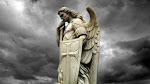
In Eastern iconography, we witness this twofold dynamics. The icon of the Ascension is divided into three sections. In the upper part, we have the ascending or ascended Lord in all His divine glory and below we have the disciples with Mary in their midst. The apostles are shown below in various states of confusion, motion, and conversation, indicating their transition from spectators to missionaries, only Mary remains peacefully calm and poised in a position of prayer. But between these two obvious focal points, we have two angels. The gestures of their hands tell a grand story. The angels point toward Christ while also addressing the disciples, “Why are you men from Galilee standing here looking into the sky?” (Acts 1:11). This gesture acts as a call to action—directing the disciples to stop simply gawking and to start walking, to cease from gazing into an empty sky because the Lord has already departed and to begin the mission to spread His gospel to the ends of the earth as He had instructed.
So, the Ascension by no means concludes the story of salvation as how the curtain falls or the end credits to a movie marks its end. When the story ends, the audience departs in silence or whispers their reviews of what they had witnessed. Not so in the case of the Ascension. In fact, today reminds us that we have been swept into the storyline of our Lord, a story that does not end until He returns in glory. There’s work to be done. Hearts to be touched. Wounds to be bandaged. Souls to be saved. We are our Lord’s proxies. We are His ambassadors. We are His hands and His feet. When people see us, they should see the Risen Lord, despite all our foibles and limitations. We are what we claim to be - “Christians” - a little Christ. That is why even though He is ascended, He is not absent. In fact, His presence has become all the more pervading through us, the Church and the Sacraments.
Finally, today’s feast is not just about a recollection of the story of how the Lord ascended to heaven, which is a nice thing to know, nor that we have been entrusted with a mission, which is something challenging if we truly grasped it. Today’s feast also provides us with the ultimate reason for our hope. Through our Lord’s Ascension, we know for certain that the gates of heaven are opened and He awaits to welcome us to stand before His seat of glory, where He is seated at the right hand of the Father. But His exaltation is also “our exaltation” (collect for the Vigil Mass). As the Preface for the Feast tells us, His Ascension “is not to distance Himself from our lowly state but, that we, His members, might be confident of following where He, our Head and Founder, has gone before.”

No comments:
Post a Comment
Terms of Use: As additional measure for security, please sign in before you leave your comments.
Please note that foul language will not be tolerated. Comments that include profanity, personal attacks, and antisocial behaviour such as "spamming" and "trolling" will be removed. Violators run the risk of being blocked permanently. You are fully responsible for the content you post. Please be responsible and stay on topic.