Showing posts with label Christmas. Show all posts

Tuesday, December 30, 2025

A King to rule, A God to be worshipped, A Saviour to die

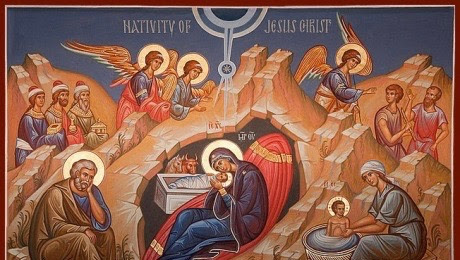
Solemnity of the Epiphany of the Lord


Epiphany is like a riddle that needs unravelling. It gets convoluted when we try to number the kings that make up the story. There is Herod the Great who is King of that time. Though he has self-styled himself with that “Great” appendage, he is a mere vassal, a puppet ruler beholden to the Romans ruling. Then we have Jesus whom the magi declare as “the infant king of the Jews,” a title that is ironically prophetic because it would appear once again under order of the Roman authorities on the plaque or titulus which hung over the head of Jesus on the cross. Finally, we have the unspecified number of wise men or magi from the East who have been immortalised as “three Kings from Orient”, who were most likely astrologers who were experts in magical divination rather than of royal lineage. Over the centuries, the Wise Men were given names–Caspar, Melchior and Balthasar - and they were venerated as saints. In fact, if you go to the Cathedral in Cologne, Germany, you will find relics alleged to be the remains of the Wise Men. How did the wise men of our story become the three kings of song and tradition? Despite what modern people would refute, there may be biblical evidence to support the tradition.


Isaiah predicted that at a time of darkness, the glory of the Lord will shine over Jerusalem. The heavenly light will be a beacon to the pagan nations and even to their kings. The prophecy of Isaiah may be one of the reasons why these Magi are often associated with kings. Despite the regular chastisement on the accuracy of this tradition from the pulpit (that there were an indeterminate number of wise men recorded in the gospel instead of the popular three kings), this has little effect on popular culture such as carols and Christmas pageant plays where children compete to be dressed in the splendorous costumes of these royal figures. As for the number of Magi which traditionally is set at three, no mention of their numbers can be found in St Matthew’s story. The three gifts which they bear may be the reason for concluding that there were three wise men or kings who visited the Christ-child. God forbid if they had to share Christmas or birthday presents.

Now that we’ve uncovered a possible reason for identifying the Magi with the three kings, it would be good to see the difference between Isaiah’s prophecy and the actual fulfilment of that prophecy in the visit of the Magi. It has to do with the number of gifts. On the matter of gifts, I often recall the gifts that were brought by the fairies to the christening of Sleeping Beauty. Each gift was a blessing save the penultimate one - the wicked and vengeful fairy who was not invited to the party, conferred on the child the gift of death. The last fairy, though she could not undo this curse entirely, blunted it by transforming the curse of death into a long sleep that could only be awakened with a prince’s kiss. Doesn’t that sound like the work of Christ in blunting death’s blow through the gift of the resurrection?

I digress. Let’s come back to our story of the gifts in the readings. Isaiah only mentions two - gold and incense - but St Matthew mentions three - gold, frankincense (which is a type of incense) and myrrh. The omission of the third gift in Isaiah’s prophecy and its inclusion in St Matthew’s list, is telling. It serves as a clue and shows that a particular aspect was missing from the Jewish expectation of the Messiah based on the Old Testament but was made clearer in the revelation of the New Testament. And the third gift is crucial to our story.

The three gifts have often been described as symbols - gold for a king and incense for a deity. This child is indeed a King but more than a king, He is God Incarnate, thus deserving not just our adulation but also our adoration. But what about the myrrh, which is mentioned in the gospel but omitted in Isaiah’s prophecy –where does that come from and what does it mean?

Myrrh, an aromatic resin, was used in preparing the dead for burial. It was used to anoint corpses to mask the stench and also served to preserve the body from immediate decay. There we have it - the missing link that completes the prophecy of the future fate of this child. Gold reveals that the babe in the manger is actually a king; frankincense tells us that He is God Incarnate; but myrrh reveals to us that this King, who is in fact our God, has come to die.

That someone would redeem God’s people through suffering and death was never part of the Jewish expectation of their Messiah. They failed to make a connexion between their expectation of a triumphant and glorious Messiah, with the Suffering Servant spoken of by Isaiah a few chapters earlier (Isaiah 53). This was the really hard thing for those living in Jesus’ time to comprehend –that the same person who fulfilled all those prophecies about a glorious new king, also fulfilled the prophecies about a mysterious figure in Isaiah’s prophecy who must suffer at the hands of His tormentors and enemies.

It would be good if we just stuck to the first two gifts. Many would have little to no objections to accept this child as their king. It may be far more difficult to acknowledge His divine nature but we can still work that into our formulae. But perhaps the most challenging aspect of this revelation is that this King, our deathless God, should choose to die. All three gifts of the Magi, however, are necessary to complete the true revelation, the true epiphany of who this child is, and what He is destined to do. We must never lose sight of this; that He is at once our King, our God, and Saviour who dies for us, for if any one of these aspects of His identity is omitted, He ceases to be who He truly is, He will not be the Saviour that we would need.

So, here as we had just heard from the Proclamation of the date of Easter and Moveable Feasts, distant rumblings of the Paschal event: the passion, death and resurrection of our Lord. Here in the gifts presented by the Magi, especially in the last gift, we see the inseparable link between Christmas, Good Friday and Easter.

Tradition gives us the names of the Magi -Caspar, Balthasar, Melchior. But the fact that Matthew gives them no names is telling. They may be kings, but in this story they are merely supporting actors. They follow the true Star, the King of Kings. Only His name is important. The Feast of the Epiphany is not about the Magi–it’s all about Jesus. And just like the Bethlehem star, their very presence and gifts reveal to us who this Child is - He is our King whom we must obey and serve, He is our Lord and God whom we must worship and finally, He is our Saviour who will die for us in expiation of our sins.

Venite Adoremus - Come let us adore Him.

Wednesday, December 24, 2025

Strangers, Pilgrims and Exiles

Solemnity of the Most Holy Family


Last night, His Grace Archbishop Julian officially launched our year long 125th Jubilee Celebration which will conclude on this Feast in 2026. As many of you know, we have received a special decree from the Apostolic Penitentiary on this occasion granting a plenary indulgence to the Christian faithful and all pilgrims during this Jubilee Year. If you feel that you would just need to play host to pilgrims from other parishes, do not fret. You get to be pilgrims yourselves.


What does it mean to be a pilgrim? Many of you would have undertaken pilgrimages to local shrines and some have even visited many international sites. Despite the vast experiences that is available to us, there remains much confusion as to what it means to be a pilgrim. Under the current format for modern pilgrimages, comfort seems to be an essential criterion - comfortable buses, comfortable and moderately luxurious hotels, sumptuous and delicious food selection that suits our local palette and an itinerary that gives value for our money. In other words, most modern pilgrims would only agree to make the journey provided that they can bring the comfort of their homes with them. No sweat, no pain, no sacrifice.

But this is furthest from what a pilgrim is meant to be. St Peter, in his first epistle, tells us that we Christians are meant to be strangers and aliens in a foreign land. There must be a growing sense of disconnect with what is familiar and comfortable to us in order that we may grow in connexion with God. Pope Benedict XVI beautifully describes the process: “to go in pilgrimage is not simply to visit a place to admire its treasures of nature, art or history. To go on a pilgrimage really means to step out of ourselves in order to encounter God where He has revealed Himself, where His grace has shone with particular splendour and produced rich fruits of conversion and holiness among those who believe.” And this is what we witness in the lives of the Holy Family of Jesus, Mary and Joseph.

We Catholics often view the Holy Family as the quintessential model for family life. But I would like to propose to you that the Holy Family is also a model for pilgrims. They teach us how to “step out of ourselves in order to encounter God.” The Holy Family were no strangers to pilgrimages. In fact, they would have been seasoned pilgrims. They would have faithfully made three annual pilgrimages to Jerusalem for the great feasts. You may recall the story of how our Lord was lost and found in the Temple on one of those occasions. Though the synoptic gospels (with the exception of St Luke) did not mention this annual ritual in the life of the Holy Family, St John shapes and structures his gospel around these pilgrimage festivals. One last time during Holy Week, our Lord travelled to the holy city for the great Passover. On this last occasion, His mother travels with Him faithfully, experiencing her true labour pains at the foot of the Cross, as a sword of sorrow pierces her heart, fulfilling Simeon’s prophecy at the Presentation (Lk 2:35).

The observance of the annual cycle of making pilgrimages to Jerusalem thrice a year is not the only reason we can speak of the Holy Family as a model for pilgrims. Each of them had experienced personally and together as a family a spiritual form of pilgrimage that exhibited their deep faith and obedience to God’s will. St Joseph showed unwavering obedience to God when he took Mary as his wife and in today’s gospel, led his family to Egypt to escape the clutches of the cruel King Herod. The dislocation of an entire family in ancient times was no small matter, but the Holy Family was reliving the experience of the patriarch Abraham who ventured far from his homeland and the Israelites who were rescued from slavery as they made their way to the Promised Land. They had to be uprooted from the familiar in order to be rooted in what God has planned for them. Despite all the uncertainties and radical changes they had to endure, God remained their firm anchor. Wherever God was and is and will be, they were “home!”

The Holy Family were not only fellow pilgrims but offered hospitality to other pilgrims. Both Joseph and Mary received pilgrims in the form of the Magi who came to worship the newborn king and offer their gifts of devotion, just as this parish dedicated to the Holy Family opens our arms to welcome pilgrims for this Jubilee Year. The experience of the Magi begs this question: what have we brought along with us on this pilgrimage to offer to God?

Mary after receiving the visit of the Angel Gabriel would make her own pilgrimage to visit her cousin Elizabeth where she would sing of God’s wondrous works and care for His people. St Joseph, at the end of his earthly sojourn on this earth, would make his final pilgrimage to heaven at his death. That is why Catholics should pray to him seeking a happy death. After the death of Joseph, Mary would accompany her Son on a journey of discipleship that will eventually take her to the foot of the cross. She too would make her final journey to be reunited with her Son when she was assumed into heaven, body and soul.

Our pilgrimage of life can become another “school of Nazareth” where human virtues blossom in the deepest love and devotion. The Holy Family teaches us to “step out of ourselves,” trust in God’s plan, cherish our friendships, embrace simplicity, persevere through challenges, prioritise our spiritual lives, and cultivate love and respect in our relationships. A pilgrimage is an occasion of daily faithfulness and kindness, where Christ is always at the centre of our lives, with prudence shaping all the decisions of the day, great and small, and patience in bearing with each other. Despite great hardships, poverty and uncertainty, the Holy Family accepted all suffering with a spirit of faith and filial trust in God. Even the most painful events did not disturb the harmony and peace of the Holy Family, because God always came first and everything is done according to His Will. May this be our response as well when we encounter difficulties along life’s journey.

Friends, we are only passing through this difficult and dangerous world. We are strangers, pilgrims, and exiles far away from home. We are on a journey to our true home in heaven. Constantly remembering this will protect us from falling prey to sins of the flesh and the strongholds of sin coming from an alluring world. Let us learn from the Holy Family to be sufficiently disconnected from this world, so that we may be connected with each other in our families, in our communities, in our Church and with God now and forever in Paradise. Jesus, Mary and Joseph, be with us on this journey. Amen.

The Word broke His Silence

Christmas Mass during the Day


Some of you may be familiar with that poem known as “A Visit from St Nicholas” more popularly known as “the Night before Christmas,” because it begins with this famous opening line: “Twas the night before Christmas, when all through the house not a creature was stirring, not even a mouse ….” The imagery of silence is heightened by another idiomatic expression: “as quiet as a mouse.” In this case, you can’t even hear the squeak or the scurrying of a mouse. Yes, that Christmas night is indeed a Silent Night, a Holy Night!


But the silence of that first Christmas night would have been broken by a new born baby’s crying and that cry did not just pierce the night air but resounded throughout the world and throughout history - past, present and future. As much as we appreciate some quiet alone time after all the partying and carolling last night and the preceding weeks, we must open our ears and hearts to hear the noise of this child, who is no ordinary Child. This morning’s gospel declares Him to be the pre-existing Word. The Word was made flesh, born to break the chaos of silence, to bring order out of nothing. There had to be a birth of the Word at the beginning of time, there had to be a birth at Christmas time, there had to be a birth on Pentecost.

Some would naively argue that the concept of the “Logos,” translated as “the Word” in St John’s lyrical prologue, was something radically new, an appropriation of a Greek philosophical concept. But in the Book of Wisdom in the Old Testament, we find not just a subtle and distant hint but a blaring proclamation of the movement of the Eternal Word:

“For while all things were in quiet silence, and the night was in the midst of her course, Thy almighty Word leapt down from Heaven from Thy royal throne, as a fierce conqueror into the midst of the land of destruction” (Wisdom 18:15).

As with most holidays, Christmas generally tends to be a noisy feast filled with strong, joyful carols proclaiming: “For Unto Us A Child Is Born,” “Joy to the World,” “Angels We Have Heard On High,” “Go Tell It On The Mountain,” etc. And this is all true, and very good, and very beautiful. But there is also a silence to be contemplated, a silence that is often missed and dismissed. The great things that God works within His creatures naturally happen in silence, in a divine movement that suppressed all speech. For what could we say? When God speaks, all voices must remain silent. Thus, God’s heavenly secret is kept under the seal of silence unless He Himself opens the lips and makes the words come forth. And this is what happened as the Book of Wisdom said it would happen: “For while all things were in quiet silence, and the night was in the midst of her course, Thy almighty Word leapt down from Heaven from Thy royal throne.”

The Word Himself, God, the desire of all nations, “leapt down from heaven” in “quiet silence,” physically took on silence, becoming a new born human, an infant. And in the wonderful silence in the stable, Mary and Joseph looked at Jesus for the first time and contemplated the mystery of His birth in silence. Today, in the midst of our revelry and celebration, we are called to adopt an atmosphere of silence if we wish to grasp the mystery of His Incarnation and hear His gentle whispering.

Although the Incarnation took place in silence and the divine movement often takes place in silence, there is also silence which is imposed by force and violence – a silence which seeks to silence God’s Word. St John tells us that “He (the Word made flesh) came to his own domain and his own people did not accept him.” It should come as no surprise, therefore, that Christmas, a reminder of the birth of the Son of God, must be removed from the public square and its message silenced because the message of Christmas, one of life, threatens the prevalent culture of death.

The human race has always known violence to the innocent, evidenced by the actions of Pharaoh and Herod and in the last century, Hitler and Stalin. Today, we have the new enemies of truth, the globalists governments and media that seek to police speech and silence persons who dare to challenge the official version of the truth, their truth. While adults can make their voices heard in protest, the unborn, the sick and the elderly, are easy targets because of their natural silence, if no one speaks for them and on behalf of them. Today, that struggle manifests itself in new and frightening ways - with the proliferation of abortion mills and passing of legislation which legalises the murder of innocents, the sick and the elderly and which seeks to silence dissenting voices. The violence has become customary, normalised, more imaginative and terrifying.

But our Lord shows us that life is ultimately victorious. Life conquers through its ability to empty itself out. The power of the Christian faith manifests itself most especially in being what the world is not. To arrogance it counters with humility. To cynicism it reacts with innocence. To deception it responds with truth. To glamour it demonstrates with simplicity. To death it responds with life. To a cacophony of noise, it offers silence. Christian faith is simply the opposite of everything that the world would expect and want. It offers “mud,” when the world would want “gold and silver.” This is what Christmas is all about. Christmas bears a dangerous message which threatens our world and yet, it carries with it the only message which can save the world.

But there is great irony in the liturgy of the Church. In celebrating a humble birth, we offer our best - we offer our “gold and silver”. To the silent entry of the Word into our world, we offer our voices in songs of praise and wonderment. We enrich the liturgy with the best that we have to offer because the accoutrements of the rituals manifest the beauty of a world that is not ours and thrusts us forward and upward into an unimaginable beauty, a sign of a world to come.

Today, we come to the manger offering our best only because we have acknowledged the worst in us: the noise we make in competition with God’s sublime Word; the “mud” we have covered ourselves in - our sins, our weaknesses and shortcomings. Instead of plugging our ears, we should gladly open them to welcome the Word. We take courage also in knowing that the Word broke His silence and entered into the noisy madness of our world as He stepped into the “mud” of our fallen existence. Yes, the Eternal Word which leapt down from heaven from His royal throne, has stepped into the filthy “mud” in which we are mired. We were once formed from dust, but now our Lord gives us new life by remoulding the “mud” of our being into a new creation. There is every reason for us to break our silence today, to make a joyful noise and announce: “Indeed, from His fullness we have, all of us, received – yes, grace in return for grace.”

Tuesday, December 23, 2025

Wow!

Christmas Mass in the Night


“Wow!” Can you recall the last time you said that, perhaps, involuntarily? "Wow” is often offered with a gasp, a sharp intake of breath, when we can't think of another way to capture the sight of shocking beauty or destruction, of a sudden unbidden insight or an unexpected flash of grace. “Wow” is about having one's mind blown by the mesmerising or the miraculous.


I think most of us would have forgotten our last experience of Christmas that would have earned a “Wow” from us. I guess this would have happened when our walking was still wobbly, where every new discovery, every bright light and colour would have immediately made us wide-eyed with amazement. In other words, when we were still babies or toddlers. But then we grew up, we grew older and everything changed. Our sense of excitement and wander began to dull and languish, and everything became ordinarily commonplace and blasé. Instead of an exclamation of “wow”, we would now choose to sulk in a corner and grumpily complain: “humbug.”

I get a sense that there are more “humbugs” these days than “Wows!” Most people today complain that it doesn’t feel like Christmas for them. I get enough of these complaints during the penitential services in the various parishes where I get to hear hundreds of confessions. What do they mean by that? I guess for most people, there is an expectation to hype up the joy and excitement of Christmas as the day draws nearer, but it’s hard to feel excited or joyful these days because there are too many things on our plate which leads us to feel overwhelmed. And so, they slowly withdraw from social interactions with family and friends, feel exhausted even when they do Christmas shopping, and spend their holidays wallowing in self-pity and depression.

Why does Christmas have this impact on so many people? I guess part of the reason is something which I’ve often highlighted. It’s the pandemic of narcissism that has so afflicted our society. A narcissist is someone obsessively absorbed in himself. “It’s all about ‘Me’.” Narcissists hate Christmas. The Grinch, of Dr Seuss’ children’s poem, is such a creature. His heart is two sizes smaller because he is only capable of “loving” himself, if you could call it love. To say that narcissists suffer from deep anxiety during this season is an understatement. Narcissists love to be the centre of attention, and they will not tolerate any other star who will compete with them for that attention. And who’s the actual star of this season? The Birthday Boy Himself and today all of us here are to celebrate His birthday. And so the narcissist will attempt to deflect our attention by manipulating, trying to earn your sympathy, they will list down a long list of complaints, mostly imaginary, in order to get you to shift your attention to them.

My frequent response to these complaints is this: “What do you mean by saying “it doesn’t feel like Christmas”? Christmas did happen over 2000 years ago. A baby was born in Bethlehem over 2000 years ago. God became man over 2000 years ago. A Saviour has been born to us over 2000 years ago. And nothing you feel or not feel is going to change that!” The truth is a bitter red pill to swallow. Perhaps the person would have been conditioned by years of listening to or singing that popular contemporary Christmas song: “Christmas isn't Christmas till it happens in your heart.” But the truth is that Christmas doesn’t need to happen in your heart before it happens. That’s subjective delusion. Reality does not revolve around your feelings, any more than in your thoughts. Christmas is real because IT IS as the angels declared it to the shepherds: “Today in the town of David a saviour has been born to you; he is Christ the Lord.”

So, the antidote to ennui, to boredom and restlessness is not found in seeking attention or getting people to show sympathy to your condition. It is shifting our gaze from ourselves to the One whom Isaiah describes in the first reading as “Wonder-Counsellor, Mighty-God, Eternal-Father, Prince-of-Peace.” He alone is our “Saviour” and for this reason we should share in the “great joy” which the angels announce that first Christmas night, “a joy to be shared by the whole people.” I want to take up the first name given to this child in Isaiah’s prophecy whom we know to be Christ; "he will be called Wonderful Counsellor."

When we hear the word "counsellor," we shouldn't think "therapist." In fact, one of the clear by-products of the pandemic of narcissism is the proliferation of therapists, psychologists, psychiatrists and counsellors. In the past, when you were troubled, you would go in search of a priest to make your confession or seek spiritual direction. Today, you look out for a therapist to listen to you tell your “stories” about yourselves (which is why so many confessions end up in being storytelling sessions rather than a grace-filled opportunity to confess one’s sin out of genuine contrition).

But here, the title “Wonderful Counsellor” is something quite different from the professional sounding board. Remember, in the ancient world, a counsellor was someone who devised plans to win military victories. This is what we see in the first reading. Jerusalem and the Kingdom of Judea were facing the threat of imminent invasion by the Assyrians. They were literally a people who were walking in darkness as they had exhausted all options and plans to fend off the enemy. It is here that Isaiah speaks to them of assured divine assistance in the form of a child, an heir to the throne of King David. The best strategy belongs to God. The riddle of Isaiah’s prophecy is finally solved with the birth of this child and who else would be the best person or persons to announce this than the angels, the direct messengers of God.

When we see how God has been playing 4D chess, setting up His plans by moving all the pieces on the board, setting history in motion and then directing it in a most inexplicable way and finally revealing that everything is pointing to this moment - the birth of a child in a small obscure town in the greatest empire on earth, we ought to sit back and marvel. His plans should blow our minds; mesmerise us with the miraculous; show us shocking beauty, unexpected flashes of grace; cause us to gasp, with a sharp intake of breath, and say, "Wow!"

So, if you are feeling down, depressed, or dry in your spiritual life, don’t give up, don’t look for distractions, don’t clutch your pearls, don’t seek attention by crying and complaining to others and finally, don’t despair. In fact, it is good to take a step back and take in the entire view. On this night, we remember how God sent us a Saviour to redeem us. He is “Wonder-Counsellor, Mighty-God, Eternal-Father, Prince-of-Peace.” By choosing to unite His divinity with our humanity, He has truly set us free from the invisible shackles of sin, He has brought light into our darkness, He has given us hope in exchange for our despair, He who is God became man so that we humans can become gods. This is so wonderfully astounding that the whole company of heaven had to show up for the announcement of this child's birth because they were so astonished with the plan God had devised to save the world. What an amazing and wondrous gift that should make all of us, indeed the whole creation inhale in wonder and declare: Wow! Wow! Wow!

He weaves all sorts into His story

Christmas Vigil Mass


The story of the birth of Jesus Christ has been told for centuries. The most familiar accounts can be found in Christmas cantatas and children’s Christmas plays, and they usually involve the story of the annunciation to Mary, the birth of the Christ-Child in Bethlehem or the appearance of the angel to the shepherds, yet the liturgy of the vigil Mass begins the story where Matthew begins his Nativity story, that is with the genealogy of Jesus.


I enjoy reading this long list of weird sounding names and love the sound of each rolling off my tongue. I’m quite sure that I would have mispronounced some and butchered most of them. For many the list seems pointless to our Christmas narrative, and many would choose to just skim over or even skip this portion completely, which the liturgy anticipates by offering us the shorter version which includes the last few lines of the text whilst excluding the rest. But I am convinced that our understanding of this vigil liturgy will be impoverished when the genealogical list is missing. And it’s not because I’m a liturgical masochist.

The inclusion of this list in Matthew’s gospel is not accidental. Matthew appears to be teaching us a powerful message about the Messiah by recording His lineage. Matthew divides the genealogy into three main sections of fourteen names each. The first section lists the patriarchs, the second lists kings, and the third lists names of people mostly unknown to us.

The genealogy begins with Matthew stating, "A genealogy of Jesus Christ, son of David, son of Abraham.” Does Matthew wish to present his entire gospel of Jesus Christ as a genealogy? One would imagine that this short line would be an adequately succinct summary of our Lord’s human origins. But then Matthew continues with the list by going into the details starting with the great patriarchs, Abraham, Isaac and Jacob. These were men of great faith who left us heroic examples of righteousness. Right from the start, Matthew appears to be giving us a key to understanding his message. Each of these men were promised that through their seed all the nations of the earth would be blessed, a blessing that would be fully realised only through the birth and coming of the Messiah.

In the second section of the genealogy, we have a list which includes Judah’s kings from David to the Babylonian captivity, emphasising the importance of the dynasty of King David. David was seen by the Jews as their greatest king. Through him the nation of Israel was united. Under his command, the temple was built by his son Solomon. Through his seed the nation was ruled by the line of the kings. One would imagine that his successors would meet up to his legacy. But none of them did, save for two. Only two of the fourteen kings mentioned were considered righteous. Most of them failed to guide their people to the Lord. In fact, they led the people astray with their idolatry and burdened them with social injustices. The true King of Kings in David’s royal line would only be fulfilled through Christ, the Anointed One.

Finally, the last section lists names of those that are otherwise mostly unknown in the Bible. Matthew shows us the critical role these unknown persons played in the story. We can easily view ourselves as nothing special when compared to great spiritual and political leaders like the patriarchs and kings in the previous two sections. But many of us would find good company among those mentioned in this third section, namely the unknowns and insignificant.

From these divisions, we can see that God is able to work through both the spiritually and politically powerful, as well as common ordinary folks that appear to be powerless, unknown and insignificant. And that last part is good news for us because it teaches us that each of us can play a critical role in helping to build the kingdom of God, even if we can boast of no outstanding pedigree or significant influence.

What more, rather than an evolution which leads to the production of a perfect man due to centuries of selection of the fittest over the weakest, the genealogy seems to indicate a regression. What seems more scandalous is that after listing out the genealogy of Joseph which can be traced back to Abraham and David, Matthew makes a simple cursory note that the Saviour is to be born of Mary, but He will not be scion of Joseph. The Saviour is ultimately unconnected to this genealogy of both notables and unknowns. Which leads us to this truth - that though the Messiah is prophesied to be “a son of David, a son of Abraham,” He will not be the product of good genes and an impeccable lineage. The Saviour of the world would come to us as God’s decisive intervention in human history. God will be the cause of this messianic evolutionary leap, not genetics. Through this Saviour, God will inject His genes into the DNA of humankind.

There are four names which stand out in this list, they are that of women. Of all the women ancestors of our Lord, why would these four be named. It was certainly not because they were womanly paragons of virtue since one was guilty of incest, another of prostitution, another was an opportunist and finally, the last mentioned seemed to have willingly committed adultery and tacitly participated in the murder of her husband. Once again, we are shown the subversive side of God and the paradox of God bringing something exceedingly good out of something apparently bad. It is a reminder that, not only do bad things sometimes have good effects, but that in some cases the badness of the cause is essential to the realisation of the good effect. If not for Adam’s sin, our Saviour would not have come. If not for Christ’s death, we will not be saved. If not for these women to continue the line of Abraham and David, our Lord would not possess the messianic title of being called “Son of David” or “Emmanuel.”

After these four female ancestors of questionable reputation, the last woman mentioned stands out. She is Mary. She does not have any illustrious genealogy to boast of. Her origins are unknown. But we do know her as a Virgin who was hailed by the angel as being “full of grace.” Unlike the other women, we finally have a woman untouched by sin, which the Church teaches is not through her own merits but through the merits of her Son. Her place in the story highlights the truth that the Messiah’s true origin is God. Jesus, our Saviour, comes from God and is indeed God because God alone can save us from our sins.

As we read the genealogy of Jesus Christ and consider the people mentioned in His lineage, we learn how God chooses all sorts and weaves them into His story of salvation. Whether a righteous prophet, an imperfect leader, an unknown helper, or someone with a questionable background or reputation, all are known to the Lord. No matter our status, background, gender or station in life, we too can have our name added to the long, beautiful list of those who play a critical role in God’s plan of salvation. During this Christmas and every Christmas, let us not forget that our Lord Jesus chose to be born into our human story, our history, to be “a man like us in all things but sin" (Eucharistic Prayer IV, cf Hebrews 4:15). O Come O Come Emmanuel, and ransom captive Israel!

Monday, December 1, 2025

The Price for Lasting Peace

Second Sunday of Advent Year A


Recently, New Yorkers elected a man as their new mayor, which many hail as their Saviour whilst others accuse as being a communist. Some see him as a future hope for the city while others view him as one of the four apocalyptic horsemen that would bring about its destruction. What endeared him to most of his supporters was his primary campaign promise to dish out “free stuff.” Free bus. Free housing. Free groceries. Now, who wouldn’t like “free stuff”?


Have you ever longed for a place where everything was “free”? A place where people worked together, shared together and genuinely cared for one another? A place where poverty, conflict, rivalry, violence is absent or abolished entirely? Despite best intentions and best efforts, the lesson we learn from the neo-socialists, communists, democratic governments is that mankind is unable to engineer the perfect society. Why have countless experiments failed or have been unsuccessful? The answer can be found in the very name given to these ventures. It’s the word “utopia.” Utopia, a Greek word, literally means “no place.” The reality is that there never has been a place on earth where human beings created a perfect peaceful community. And often it has been the very people who claim to create an earthly paradise that have caused the most devastating brokenness. The good news is that scripture shows us how peace and perfection will arrive on earth.

In the first reading, the Prophet Isaiah, our principal prophet for this season of Advent, shares with us a prophetic dream of a future society, a perfect paradise. All hatreds and hostilities have disappeared, those who hated and killed their victims are now sitting side by side, the lion and the leopard lie down with the lamb and the gazelle, the child plays with the poisonous snake. Nobody is doing any harm, the poor and the weak are no longer oppressed by injustice, all seems lovey-dovey. It is paradise restored. Sounds like Utopia, right? Problem is that this ‘paradise’, this ‘utopia,’ exists in no place. But will this ever take place? Well, the Prophet Isaiah provides the clue – he points to the shoot that will spring from the stock of Jesse.

The stock or the stump of Jesse actually refers to another failed project, the broken line of the dynasty of David. The dynasty of King David had been cut down like a tree by the Babylonians in 587 B.C. when the city of Jerusalem and the Kingdom of Judah was devastated and the ruling class led into exile. The people were shocked to realise that the dynasty was not really eternal. But had not God assured David: “your house and your kingdom shall endure forever before me; your throne shall stand firm forever” (2 Sam 7:16). Isaiah knew that God must always be true to His word; hence the dynasty in some way will revive. The spirit of the Lord will rest upon the stump and the roots of Jesse, and the people of God will bloom again. New life can emerge from what is perceived as a dead tree. But the solution would not be a human one. It is through God’s direct intervention that the dead tree stump would spring to life again. We need a Saviour, not just a charismatic political leader. Christ would be the answer.

The second reading also presents us with a similarly utopian vision, now of the Church. But the realities that plagued the Church during the time of St Paul’s writings were in fact dystopian. There was building tension between two group of Christians within the community. The smaller group, described as the “weak,” liked very much a traditional form of religion, prayed a lot and mortified themselves, and observed a lot of prescriptions. The other group, named the “strong,” did not pay attention to such “small” things, which they considered trivial, and held that one did not have to follow the old law; the only necessary thing was to be faithful to Christ. The two groups abused each other: the weak “passed judgment” on the strong ones, calling them unfaithful and these, in their turn “had contempt” for the weak ones, classifying them as traditionalists and without understanding. Sounds familiar?

St Paul recommends to all to be charitable, to show love and reciprocal respect. He did not need to reinvent the wheel and come up with a new blueprint for this community. Christ is THE BLUEPRINT! Our Lord, who did not seek to please Himself but placed Himself at the service of others, is the model par excellence for the qualities needed for community living. What He gives to us is “free”, salvation is a free gift because it is not something we can ever earn. But it comes at the greatest cost to Himself – He paid the cost through His own life. Harmony in the community could only be assured by the member’s commitment to Christ. St Paul challenged the “strong” as well as the “weak” to “treat each other in the same friendly way as Christ treated” them. Rather than engage in mutual criticism that would only engender hostility, they should learn “to be tolerant with each other, following the example of Christ Jesus, so that united in mind and voice (they) may give glory to God and Father of our Lord Jesus Christ.”

Finally, we come to the gospel and discover the key to Peace. It is to be found in the keynote message of the gospel and that of Advent - repentance. In today’s gospel, we hear the story of how St John the Baptist preached this message, “Repent, for the Kingdom of heaven is close at hand.” What does the word Repentance mean? In Hebrew, the word for conversion (shubh) indicates that one has taken a wrong path, and once he has become aware of his detour, the individual returns to the right path in order to return to God. So too the Greek word, metanoia involves not just a static remorse but a dynamic and determined about-face, a positive commitment to a new way of life. Significantly, conversion is not a purely human decision or endeavour. Rather, conversion is a human response to the prior initiative of God.

Repentance means turning to Christ. Repentance means putting on Christ and becoming Christ. The word “Christian” means “of Christ” or a “little Christ.” It means putting God in the first place in our lives and making sure that everything else finds its rightful places in our lives under God. Repentance means letting go of our own will, in order to follow the things that God wills for us. It means turning away from sin and all rebellion against God, in order to be obedient to God and to follow Him in all that He wants from us. Repentance means owning up to our sin, our human frailties, our fears, our inner hurts and entrusting all these to God’s mercy and compassion. Repentance means knowing our need of God. In turning our lives around, we come to recognise that our self-sufficiency is inadequate and that we need to cooperate with God in our own salvation. Repentance therefore is not a one-time thing. It is a process that goes on for a lifetime. Little by little we orientate ourselves ever more perfectly in God’s love.

So as we continue our journey to Christmas, we need to repent of our comfortableness with sin. This is the only way our society and the Church can be transformed. Various utopian experiments that have sought to improve mankind and create a peaceable environment have failed. Lasting peace would not be found in any peace treaty or socio-political or economic reform. This is because, if God is not part of the equation, Utopia would remain a dream. But God’s effort to bring peace will not fail. It will succeed—through Jesus Christ and the establishment of God’s Kingdom. The Kingdom is both “free” and costly. Free because our Lord offers it to us freely. Costly because He has already paid the price for this gift. So, prepare the Way of the Lord!

Monday, January 6, 2025

The New Adam

Feast of the Baptism of the Lord Year C


The story of the baptism of the Lord is found in all four gospels with tiny but significant differences. In the Fourth Gospel, the account is reported speech or a hear say account by St John the Baptist, whereas Matthew, Mark and Luke record this event directly as if they had witnessed it or received the testimony of other witnesses. But in all three Synoptic gospels, we see both similarities and differences in the basic order. Matthew, Mark, and Luke all follow the same basic order of events: the appearance of St John the Baptist and an introduction to his ministry followed by the Baptism of the Lord.


Although both Matthew and Mark record that the Lord is baptised by John, Luke remains silent on this. We can only assume as the reader and from comparing this text with the other parallel texts, that our Lord was baptised by John. But this omission may in fact be deliberate. In fact, Luke may have wanted to emphasise that Jesus baptised Himself since no one was worthy to do so: “Jesus after his own baptism.” Unlike us who are adopted children of God through baptism, that is being baptised by another person, Jesus who is already the Son of God by nature had no need of such elevation or coronation. In Matthew and Mark, immediately after hearing the voice of the Father, Jesus is led by the Spirit into the wilderness to be tempted.

But Luke uniquely breaks the flow by offering us Jesus’ genealogy between the baptism and the temptation. This is a curious placement for a genealogy, and at first pass, it might seem to interrupt the flow of Luke’s narrative. We might expect Luke to place the genealogy at the beginning of his Gospel (such as we find in Matthew), or perhaps at the end of Luke chapter 1, right before Jesus’ birth. Yet Luke strategically places it here, just after our Lord’s baptism and prior to the episode on how the Lord endured temptations in the wilderness.

The key to understanding the placement of the genealogy is found within the genealogy itself. Unlike Luke, Matthew’s gospel is written to the Jewish community. As such, Matthew’s genealogy (presumably following Joseph’s line) links Jesus to King David, the greatest of the Jewish Kings, and then to Abraham, the father of the Jewish people. And there Matthew’s genealogy stops. But Luke’s gospel is written to a non-Jewish audience, and his genealogy does not focus on Jesus’ relation to Abraham. Instead, Luke (presumably following Mary’s line) traces Jesus all the way back to Adam, and then ultimately to God.

Matthew’s genealogy presents Jesus as the second David, a son of Abraham. Luke’s genealogy presents Jesus as the second Adam, a son of God. This should not come as a surprise to any reader of the Gospel of St Luke, as the angel had already announced to Mary at the Annunciation: “He will be great and will be called Son of the Most High.” But what is more surprising, unlike Matthew, Luke begins his genealogy with Jesus who is described as the Son of God and then traces it back to Adam, another son of God. In fact, the last name in the genealogy is not even Adam, it is God: “Adam, the son of God.” That this genealogy terminates with God Himself is a feature unparalleled in the ancient world, including the Old Testament. Having begun his genealogy with Jesus instead of Adam, Luke wishes to emphasise that Jesus’ identity had no need of validation by tracing his lineage back to Adam. On the contrary, it is Adam who is being validated and confirmed by his descendant, Jesus, the Son of Mary and the only begotten and Beloved Son of God.

And thus, Luke offers us the genealogy — linking Jesus to Adam, and ultimately to God — as a means of introducing Jesus’ temptation. With the placement and nature of his genealogy, Luke intends us to see Jesus’ wilderness temptation as a recapitulation of Adam’s garden temptation. It is Jesus — the descendent of Adam and the Son of God — who will overthrow the devil. Where Adam failed the test, Jesus will endure Satan’s temptations and remain faithful to the Father. Where the first Adam failed, the Second Adam would succeed.

So, what our Lord accomplished by nature, we enjoy through the grace, especially the grace of baptism. Most people often believe that baptism serves as a means of washing away our sins. It does. Others believe that it is a rite of passage which incorporates us into the “club,” the Church. That too happens. But most importantly, baptism incorporates us into the life of Christ. We follow Him into the waters of baptism to partake of His death and to die to our old selves but we also rise from the waters of baptism as a new creation, a Christian, in other words, a little Christ, as we now share in the graces of His resurrection. We cast aside our fallen nature which we inherited from the old Adam so that we may now be adorned with Christ, the new Adam, and because of this ontological or substantial change in us, we have now become sons and daughters of God. As the Catechism teaches: “Baptism not only purifies from all sins, but also makes the neophyte "a new creature," an adopted son of God, who has become a "partaker of the divine nature,” member of Christ and coheir with him, and a temple of the Holy Spirit” (CCC 1265).

Herein lies the deepest mysteries of the Sacraments instituted by Christ for our salvation and growth in holiness. The Sacraments are not just “things” that we do, archaic ceremonies that are performed to appease God. Our Lord Jesus did not come into the world merely to do things for us, but rather He came to open up through His humanity a way to participate in His divinity, to graft ourselves into His very life. So, today as we celebrate the Feast of the Baptism of our Lord, let us remember with ever greater certitude that the heavenly voice that spoke “my Beloved” that day was referring no less to us than to Christ, that it applies in equal measure and with equal intensity to all of you who have been incorporated into Him “through the bath of rebirth.”

Monday, December 30, 2024

The Universality of our Faith

Solemnity of the Epiphany of the Lord


Many have forgotten the ideals that were encapsulated in the rallying cry of the French Revolution, Liberty, Equality and Fraternity, which did not just bring down the aristocracy but also much of the Christian ethos on which Western civilisation was built upon. Today, those ideals have been reduced to ashes like the Cathedral of Notre Dame of Paris, only to have risen like a Phoenix in another form - DEI - Diversity, Equity and Inclusion. Although, some would argue that DEI is just another form of the threefold motto of the French Revolution only differing in minor semantics, DEI has gone beyond what those principles had been espoused to introduce. DEI: the race-and-identity-based ideology has become a core component of corporate or cultural endeavours across the US and even the world. DEI informs how students are taught, workers are hired and governance policies are established and obeyed. DEI are the new gifts offered not at the altar of God or to His infant Son, but to the altar of man.


Long before DEI became a fad, we have the tradition of the magi, often depicted in the Nativity crèche scene as three men hailing from the three known continents of the early medieval period - Europe, Asia and Africa. They perfectly fit the bill of being DEI hires. Recently, Fr Bonaventure and I were doing some Christmas decoration shopping, and we were looking for a new nativity set for the Parish House. Our eyes set upon this beautiful porcelain set which was surprisingly cheaper than all the other synthetic stuff. Our joy was short lived when we were informed by the shop owner that the set was already sold, and the display set was the only one they had in stock. Upon enquiring as to why the price of this exquisite set was far cheaper than the rest, the shop keeper admitted that one piece was missing - “the black king.” Too much “whiteness” (and indeed unlike the other sets, all figures were porcelain white) had rendered it defective and sadly “cancelled.” Christmas was no longer DEI compliant!

Thank God, we don’t need DEI to celebrate today’s feast. Yes, we should respect diversity rather than insist on uniformity. Yes, we need to include rather than to exclude, to build bridges rather than walls. These values are entirely understandable and morally laudable. But we don’t need to force the Church into a DEI box in order to achieve this. Our celebration of Epiphany is already a celebration of diversity, equality of dignity and inclusion.

Epiphany is the celebration of the universality of the Church, the universality of our faith, the universality of salvation and the universality of Christ as Saviour, who came to save not just an elite group of individuals belonging to a particular nation, caste, or race but He came to save all humanity. This universality is manifested in the visit of the magi, these non-Jewish wise men, most likely astrologers, as they came to pay homage to the Infant King in Bethlehem. The visit of the Magi, Pope Francis teaches, shows that Jesus Christ is 'the light of the world that guides the path of all peoples.' The Son of God did not only come for the people of Israel, represented by the shepherds, but also for the whole of humanity, represented by the Magi.

The Magi remind us of the catholicity or universality of the Church. Catholic means universal! We perhaps take for granted the catholicity of the Catholic Church. It is an important “mark of the Church.” We see this universality right here in our own parish. We are blessed with a diversity of races and cultures. We believe that God calls all people to salvation and that the Gospel is meant to be spread to the nations of the whole world. The Second Vatican Council taught that this gift of universality which adorns the People of God is a gift from the Lord Himself whereby the Catholic Church ceaselessly and efficaciously seeks for the return of all humanity and all its good under Christ the Head in the unity of His Spirit (Lumen gentium 13).

That Jesus is a universal Saviour is a great source of comfort and hope to us. But the divisiveness of Jesus, and the opposition that He provokes: that too remains. Right from the very moment of His birth, we see opposition in the person of King Herod. But King Herod would only be the first in a long line of those who would oppose Christ and His followers. Though Christ’s mission was universal, it did not mean that all accepted it universally. Christ is a sign that will be opposed: we see it in the persecution faced by Christians over the centuries and in many parts of the world; we see it in that mixture of indifference and hostility which is largely the default setting of our own secular culture to the Christian faith. The universality of His message of salvation is matched by the universality of opposition and hostility to the Gospel.

But perhaps too we see it even in our own hearts. There may be a part of us that wants to follow Jesus; there may be moments when we recognise that we need a Saviour; there may be times when the illusion that we are in control is shattered, and we want to be able to trust in His rule and in His care. But then, there is also a part of us that is frightened in much the same way that Herod was frightened, a part of us that wants to maintain the illusion of control at all costs. We are unwilling to be like the Wise Men, following the light to who knows where; we are unwilling to leave everything behind, to turn our lives upside down, to take risks and to make sacrifices for the sake of Jesus. We don’t want a King; we don’t think we need a Saviour. It’s our life, we are in control, we think we already have the answers. We turn away from Jesus, or we follow Him only half-heartedly, because we fear the challenge and the loss of control.

Every one of us has felt the sting of unjust exclusion, that sense of being on the wrong side of an arbitrary social divide, not permitted to belong to the “in” crowd. Perhaps, we in Malaysia have felt this more than in any other place on this earth. That entire classes of people, indeed entire races and ethnic groups, have suffered this indignity is beyond question. But the answer is not to hold up Diversity, Equity and Inclusion as the ultimate moral compass of our society. The antidote to our division is not to be found in these values, if they are values that have been cut off from its source, our Lord Jesus Christ, the unique and universal Saviour of the world.

So today we rejoice with the Wise Men in the presence of Jesus our Saviour and King. We rejoice that His salvation and His rule is universal, that His loving redemption extends to you and to me. We pray for the spread of the Gospel in our own generation, for all who have been unable to accept the Lord’s call, for persecuted Christians around the world, and for those who persecute them. And we repent of that fear that holds us back, that fear that prevents us from wholeheartedly seeking the light of Christ, the fear that keeps us separate from others and to view them as inferior to us. Today, we as members of the One, Holy, Catholic and Apostolic Church should double our efforts in reaching out to everyone, by welcoming everyone to bask in the light of Christ, our true star. But it is also important to recall what Cardinal Francis George, the former Archbishop of Chicago, once said when asked whether all are welcome in the Church. He responded, “Yes, but on Christ’s terms, not their own.”

Saturday, December 21, 2024

He has spoken to us

Christmas Mass During the Day


If there is any passage that could rival or at least mirror the beauty and profundity of the Prologue of St John’s gospel, it must be the prologue to the Letter to the Hebrews which we heard in the second reading: “At various times in the past and in various different ways, God spoke to our ancestors through the prophets; but in our own time, the last days, he has spoken to us through his Son, the Son that he has appointed to inherit everything and through whom he made everything there is. He is the radiant light of God’s glory and the perfect copy of his nature …” In this prologue, just as in John’s, we find the theological reason for our celebration - the reason for the season.


Perhaps, the significance of both texts is lost on us because we often take communication for granted. But imagine arriving in a foreign country with absolutely no knowledge of the local language nor are you equipped with any phrase book or translator application or device, you would simply be lost. You can attempt to second guess what the other person is trying to convey to you with hand gestures and other forms of non-verbal communication, but there is no way of verifying your suspicions and speculations. This is why both the author of Hebrews and the evangelist St John uses the analogy of the spoken word to illustrate who God is and how He wishes to relate with us.

We are here on earth, busy living our lives, pursuing our own agendas, but deaf to God's voice. We don't hear what God is trying to say to us. God has been trying to communicate His message to us, we aren't getting it. But rather than give up in frustration, God loves us so much that He desperately wants to reveal Himself to us in ways that we can understand. So, He sends His very own Son to communicate His message in a way that we can understand. God has finally broken through the communication barrier that has separated us from knowing His will. That is the miracle of Christmas. That is the miracle of the message.

There are three points which the prologue of the letter to the Hebrews wishes to communicate to us.

The first point is that God speaks through history to reveal Himself to us. He wants us to know Him, to love Him, to worship Him. For those who complain that God often remains silent when we demand a response or an answer, are obviously ignorant of how God has chosen to reveal Himself to us. God is always speaking but were we listening?

God reveals Himself through His creation, through the sunrise and sunset, through the sun, moon and stars. God spoke to Moses in the burning bush, He spoke to the Israelites from the smoke and fire on the mountain, He spoke to Elijah in a still, small voice, to Isaiah in a vision in the temple. God has been speaking His message through visions and dreams, through angels. There is no lack of variety for God's revelation is not a monotonous activity that must always occur in the same place or in the same way. God has been speaking throughout history in a variety of places through a variety of means in order to make Himself and His will known. But God's revelations in the Old Testament were fragmentary, occasional, and progressive, because no single one of them contained the whole truth. They could not adequately capture the full picture of God's nature.

And so it was necessary to take it up another level, in fact, beyond any level which we would normally expect. God speaks through Christ. At last, God sent His Son to bring His message to us! In the Lord Jesus Christ, God revealed Himself directly to us. Jesus Christ, the living divine Son of God, did more than just proclaim God's message - He is God's message. As St John confidently declares in his prologue: “In the beginning was the Word: and the Word was with God and the Word was God.” But this Word did not just remain invisible like a concept or an idea. Something happened which is at the very heart of Christmas: “The Word was made flesh, he lived among us, and we saw his glory.” The invisible Deity, whom we can never behold, became visible. Jesus came to reveal God, to make Him known to us in ways that we can understand. If you want to know what God is like, look to Jesus!

But why did this happen? Why did the Word choose to become flesh? Why did the Son of God choose to be born in Bethlehem? Why did He choose to speak to us in person? Well, the answer is found in my third point - God speaks to transform. The miracle of the message is not just in the fact that God speaks to us today through His Son, but that the message has the power to transform our lives. Christmas is the celebration of the greatest message ever proclaimed. Emmanuel - God is with us. God came near so that we could draw near to Him. Or as the Fathers of the Church were fond of claiming: God became man so that men may become gods. The miracle of the message is that God was in Christ reconciling the world to Himself, so that we can be set free from sin's hold on our lives.

Why would He do that? Because He wanted us to know how very much He loves us. He wanted us to know that He created us for a reason - that we might know and love Him. He came to proclaim the message that we have been set free. We don't have to live as prisoners to guilt and regret.

In our time, I think, we need to recognise that this is the fundamental message of Christmas. We either recognise our need for a Saviour or we do not. We either yearn for the fulfilment of God’s will or we do not. We either accept the gift of Christ wholeheartedly or we do not. If we really don’t care about our Catholic faith, having exiled it to the periphery of our lives, storing it in a drawer somewhere only to be taken out when needed, then we have rejected this faith. Yet its acceptance—indeed, its very life within us—is the key, amid all the fluctuations and catastrophes of this world.

Through our Lord Jesus Christ, the Saviour King born in Bethlehem, the Son of Mary and the Son of God, the Word made flesh, “the radiant light of God’s glory and the perfect copy of His nature,” let us continually offer up a sacrifice of praise to God. Should not all our festivities and carols be in thanksgiving for the wonder of Christmas? Was it not at Christ’s birth that the silence of the heavens were shattered, that Invisible Deity became visible, that our salvation was first made manifest? So, as we celebrate Christmas, we and all our families ought to know what we are doing, and we ought to know why, and we ought to know all that is at stake. Christmas has changed everything. We should rejoice in it only if we find that it has also changed us—or that it can change us now and continues to change us until we are able to see His glory face to face.

House of Bread

Christmas Mass During the Night


The gospel reading which we had just heard acts like a telescope. It begins by enlarging our field of vision by situating the story of Christmas within the larger story of human history featuring important luminaries, a Roman emperor and a provincial governor. Although, these may have been important figures in history, they are not the focus of our story. The telescope then contracts and becomes a microscope. A tiny place that wouldn’t have appeared on any radar or map is magnified. We are given an ‘up close and personal’ view of the most ground-breaking climatic event in human history - it is the story of how God, the Lord of Lords and King of Kings, is born in an obscure backward village at the fringes of the great and glorious Roman empire.


And then the storyline takes us from this tiny point of space and time, to the fields beyond this village and our vision is expanded once again to take in the whole host of heaven. We suddenly realise that our world and all its inhabitants, even the strongest and most powerful, are tiny specks of space dust in comparison to the immense universe, what more to the Most High God who created the stars and the heavens and who now chooses to hide in the flesh of a human child. No telescope nor microscope can detect, nor genius mind can wrap its head around this amazing phenomenon. You need another set of lenses to perceive and comprehend this. The lens of faith.

This is the mystery of Christmas - that the greatest gifts often come in small packages. Let’s be honest. Our ordinary experience of Christmas is nothing like this. Have you ever looked under the Christmas tree to inspect still-wrapped gifts and assessed the worth of their hidden treasures by size, shape and weight? As a child, I used to think, “the bigger, the better.” But over the years, I’ve discovered the wonderful reality that big things come in small packages. This couldn’t be truer as we celebrate the birth of our great King born as a tiny baby.

Our big story begins in a small place - in Bethlehem. It is understandable why Bethlehem had not appeared on the map of any geopolitical significance due to her size but she had also not been the subject of any major prophecy, with the exception of one. Micah, a contemporary of Isaiah, spoke God’s word to Israel at a time of great danger. Due to the sin of both Samaria (the northern kingdom of Israel) and Judah (the southern kingdom), the Israelites would suffer a devastating attack. Both the North and eventually the South would fall, and the ancient kingdom of Israel would be no more.

Into this dark, dangerous world Micah spoke not only words of judgment but of hope. This hope centres on this humble place: “Bethlehem Ephrathah, you are small among the clans of Judah; One will come from you to be ruler over Israel for Me. His origin is from antiquity, from eternity.” (Micah 5:2) Rather than hailing from mighty Rome, the so-called Eternal City, or Holy Jerusalem, where God’s own House - the Temple - was located, the Saviour-King would come from humble, seemingly insignificant and tiny Bethlehem.

It is in this small, ordinary village that we see the prophecy fulfilled, God’s love is manifested and His plan of salvation is revealed to us. Although, the parents of our Lord lived in Nazareth in Galilee, He was born in Bethlehem, not Nazareth, apparently according to the dictates of Roman rule. By the designs of divine providence, the empire is placed at the service of salvation. Had Jesus been born in a great city, men would have attributed his teaching or his success to his noble birth. But by being born in Bethlehem, He allows us to more easily discern that the power of God, rather than the power of men, is at work.

So, far from the corridors of power, Jesus Christ, descended from David through His adoptive father, Joseph, was born in Bethlehem. God Himself came to rule and rescue. He looked unimpressive. His birthplace was inauspicious. But this is always God’s way: through the weak and foolish message of the cross comes rescue from sin. Notice how God’s majesty and reputation are not diminished or compromised at all by introducing Jesus into the world through such a seemingly small place and inconvenient circumstances. Unlike humanity, God is never tempted to show off. Even in the simple birthplace of the eternal King of the Universe, God has allowed Himself to be approachable by all, especially the ordinary and small.

In Hebrew, Beth-lehem is two words and means “house” (Beth) and “bread” (lehem). Bethlehem literally means “house of bread.” It has this name of its location in the grain producing region of Old Testament times. Because of the fertility of its soil, which in Biblical times produced an abundance of grain and produce, the region surrounding Bethlehem was called Ephrathah. Ephrathah means “fruitful, abundant.” An appropriate birthplace for the One who, in stark contrast to emperors and kings, came to feed His people. Thus, St. Bede says, “The place he was born is rightly called ‘The House of Bread’ because he came down from heaven to earth to give us the food of heavenly life and to satisfy us with eternal sweetness.” The Bread of Life, lying in a manger, a feeding trough, in the House of Bread. It was in this town with such an evocative name that the One was born who said, “I am the bread which came down from heaven” and, “I am the bread of life.”

Our Lord’s birth in the manger of Bethlehem happened only once, but the even more powerful event of His offering of Himself in the Holy Sacrifice of the Mass occurs over and over again, day in and day out, from the rising of the sun to its setting. Once, He hid in “a baby wrapped in swaddling clothes and lying in a manger.” Now He hides in the form of Bread and Wine which we partake at the altar. For this child born in Bethlehem was no ordinary mortal nor even a great hero. The last part of Micah’s prophecy provides us with the clue as to His true identity: “His origin is from antiquity, from eternity.” The prophet is hinting that Jesus’ origins are not just Davidic but divine. He is God the Son, and as God, He has no beginning. He has always existed. His origin is not only from antiquity but also “from eternity.” This is what the angels announced to the shepherds in the fields: “Today in the town of David a saviour has been born to you; he is Christ the Lord,” and with them let us praise God singing: “Glory to God in the highest heaven, and peace to men who enjoy his favour.”

Tuesday, February 6, 2024

We Lepers

Sixth Sunday in Ordinary Time Year B


Leprosy? Most of us have never seen anyone with this debilitating disease. Leprosy seems to have been stamped out in our country and any trace of the colonies, where lepers were hold up, to isolate them from the rest of us healthy folks have been lost to development. But both scripture and the Church’s history refuse to let us forget. The story of St Damien of Molokai, Apostle to the Lepers, must certainly be one of the most inspired hagiographies ever written and one which reminds us of the “lepers” that continue to live among us, though often out of sight.


In 1866, to curb the spread of this virulent disease of leprosy, the Hawaiian authorities decided to consign lepers to an isolated community on the island of Molokai. Once the lepers were out of sight and no longer a threat to the general population, the government turned a blind eye to their basic needs. Where even other missionaries kept away, St Damien, a missionary priest, pleaded with the bishop of the territory to allow him to minister to the needs of these lepers. The bishop kindly accompanied Damien to the colony and introduced him to the 816 community members as “one who will be a father to you and who loves you so much that he does not hesitate to become one of you, to live and die with you”. Little did the bishop realise that his words would prove prophetic.

Damien’s superiors had given him strict advice: “Do not touch them. Do not allow them to touch you. Do not eat with them.” But Damien made the decision to transcend his fear of contagion and enter into solidarity with the Molokai lepers. Other missionaries and doctors shrank from the lepers. What surprised the lepers most was that Damien touched them. But Damien not only touched the lepers, he also embraced them, he dined with them, he put his thumb on their forehead to anoint them, and he placed the Eucharist on their tongues.

One day, while soaking his feet in extremely hot water, Damien experienced no sensation of heat or pain—a tell-tale sign that he had contracted leprosy. The disease quickly developed, causing Damien to write to his bishop with the news. Damian who had not hesitated to become one of the lepers, chose also to live and die with them.

If you find that story amazingly moving, then you should feel the same if not more for what the Lord has done for us. Our Lord approaches a leper in today’s gospel and touches him.

To truly understand the significance of our Lord’s action, we need to understand two important concepts in the mind of a Jew– leprosy and the laws of ritual purity. The idea of leprosy was more than a virulent disease to be avoided. For the Jews, it was a sacrament in reverse - outward sign of inward curse. It was a sign of separation from God. For this reason, both the diagnosis as well as the final assessment that it had been cured, was not left to any ordinary doctor. Since, leprosy was seen as the ultimate punishment from God, only a priest, a minister of God could confirm that this sin was absolved, and the punishment lifted.

How about the laws of ritual purity? Since God is considered holy, anything which is unholy is not permitted to enter into His presence. The rules of ritual purity were designed for this. In the Old Testament law, there were five main ways people became unclean (even if it’s just temporary): eating “unclean animals”; (e.g., carrion-eaters); giving birth; contracting skin diseases; genital discharges; contact with corpse. Leprosy fell under the third category. Coming into contact with an unclean person would also render one unclean. So strict rules like those given to St Damien (“Do not touch them. Do not allow them to touch you. Do not eat with them”) had to be observed to avoid contamination. Instead of doing this, our Lord “stretched out his hand and touched” the leper. In the eyes of the crowd, our Lord had been contaminated.

But instead of being contaminated Himself, He heals the leper. We are reminded that we do not only get infection through close proximity, we can also get saved by it. C.S. Lewis explains this beautifully: “Good things as well as bad, you know, are caught by a kind of infection, if you want to get warm you must stand near the fire: if you want to be wet you must get into the water. If you want joy, power, peace, eternal life, you must get close to, or even into, the thing that has them. They are not a sort of prize which God could, if He chose, just hand out to anyone. They are a great fountain of energy and beauty spurting up at the very centre of reality. If you are close to it, the spray will wet you: if you are not, you will remain dry. Once a man is united to God, how could he not live forever? Once a man is separated from God, what can he do but wither and die?”

The story of Jesus healing the leper ends happily for him but unfortunately for Jesus. At that touch, they were equals. Ironically, this man was now able to enter any town he wanted because he had been healed, but Jesus could no longer enter towns because of the news of this miracle had spread. He had become a social leper.

The healing of the leper was just a warm-up for what the Lord had prepared to do for all of us, a model of what was to come at the cross. When He died for our sins, for as many of us who have been washed in the blood, our sins died as well and Jesus was then able to be reconciled with the Father, from whom we have been separated because of our sins, our spiritual leprosy. By communion with Him, by participation in His cross, we could receive eternal life. He shared His divinity with us as we shared our humanity with Him but without Him taking away our humanity. Our humanity is thus sanctified by His divinity.

In the case of St Damien, although he entered into the most profound solidarity with the lepers by becoming one of them, he was never able to remove this disease from their bodies or the social stigma from their existence, what more his own. But in the case of our Lord Jesus, He has taken us into Himself. In exchange for our flawed and broken humanity, He has exchanged with us His sublime divinity. The Venerable Archbishop Fulton Sheen describes the sublime transaction of the In­carnation in which Christ said to man: "You give me your hu­manity, I will give you my divinity. You give me your time, I will give you my eternity. You give me your bonds, I will give you my omnipotence. You give me your slavery, I will give you my free­dom. You give me your death, I will give you my life. You give me your nothingness, I will give you my all.” So, let us turn to the Lord in confidence, humility and much love and ask: “Lord, if you want. You can cure me.”

Wednesday, January 3, 2024

Light shines brightest in darkness

Solemnity of the Epiphany of the Lord


Imagine that the journey of life was all cozy and rosy. That everything worked out as we wished and there was absolutely no pain. How could you appreciate the presence of something if you have never known its absence? Even a happy life cannot be without a measure of darkness, and the word happy would lose its meaning if it were not balanced by sadness. Sorrow and joy, darkness and light, pain and happiness, these things serve as the lower and upper limits of the scale of life. They enable us to measure situations and moments in our lives. Without one, it becomes impossible to appreciate the other. We need to understand darkness to comprehend the light. To appreciate life, we must accept death as part of the equation. To live is to experience wholeness.


Today’s feast similarly gives wholeness and a necessary balance to the entire Christmas story. Its placement in the calendar positions, Epiphany as the fulfilment of Advent and the climax of Christmas. While in Advent the Church awaits the coming of the light of the Messiah, at Christmas the Church beholds the incarnation of God in flesh, and on Epiphany the Church celebrates that God has come to make His glory known to the world, in and through the Lord Jesus Christ. During Advent, the Church seeks God’s intervention for humanity still covered by darkness. At Christmas the Church declares that God has assumed our humanity, by inserting His light into the darkness. On Epiphany the Church asserts that God has made Himself known to all humanity, the Light now shines in the darkness.

The movement from Advent to Epiphany marks a progression from darkness to light, which is why Epiphany sometimes is called the Feast of Lights. Advent anticipates God’s promised light that will come to dispel the darkness. Christmas praises God for His light that has been born into the darkness. Epiphany rejoices that God’s light has come to the world and has manifest itself to those living in darkness. And so, with Isaiah, on Epiphany the Church proclaims: “Arise, shine out, Jerusalem, for your light has come, the glory of the Lord is rising on you.”

Yes, the feast of Epiphany is rightly called the festival of light, although there are many other contenders for this title. I would like to think of it as more a festival of twilight, rather than a blast of sunlight. The most picturesque scene is never captured when the sun is high in the sky or when the land is covered in the darkness of the night. The most beautiful painting on God’s canvas of nature is often wrought in the twilight hours of sunset and sunrise, where both light and darkness mingle and produce the most amazing myriad of colours. And thus, twilight often marks the significant hours of our Lord’s life: His birth in Bethlehem in the darkness of the night of Christmas; His death on a cross on Good Friday where daylight was darkened by an eclipse; His resurrection in the darkness before the dawn of Easter; and when His birth and presence was manifested by the star which shone in the dark and led the magi to His bedside on this feast.

In Isaiah’s prophecy in the first reading, we witness the intermingling of light and darkness. The prophecy announces that the “light has come” and yet “night still covers the earth and darkness the peoples.” How could this be? How could light coexist with darkness side-by-side? Well, darkness is not a “thing” which exist. Just like evil does not ontologically exist as an entity, evil is the mere absence of good. Likewise, darkness is the absence of light, without it, we would never know what it means to not have light. That is to say, we would take the presence of light for granted, we would never fully see how lucky we are to have light. So anytime you find yourself in a difficult situation, anytime you find yourself in darkness, always remember that brighter days will come, and when they do, you will find and appreciate joy more than you would have if joy had been a simple daily occurrence without interruption.

In the account of the visit of the magi in the gospel, we see the fulfilment of the prophecy of Isaiah: “The nations come to your light and kings to your dawning brightness.” It is this association with the “kings” and “nations” of Isaiah’s prophecy and not from our gospel text, which had inspired the tradition that the magi were three kings representing three continents in the ancient world - Europe, Africa and Asia. Once again in this familiar tale that has been immortalised in Christmas pageants, carols and crèche scenes, we see the intermingling of light and darkness. While the visit of the Magi—representing the nations of the world—is an unmistakable sign that the salvation offered by the newborn King is for all times and peoples, writers through the ages saw the Magi’s journey as a metaphor for conversion and the journey of faith that each of us is traveling, a journey that often passes through the valley of darkness. It is precisely the darkness of antagonists like the politically insecure Herod or the religious leaders of his time which makes the story of Epiphany and our story so much brighter. How could virtue shine more valiantly, if it was not surrounded by the darkness of vice and sin?

Following the inspiration of God, the story of Epiphany and our own story move from the darkness of doubt and sin, entering into the light and freedom of God’s children. This inspired Pope Benedict XVI’s reflexion on this feast, when he wrote: “How important it is that we Christians are faithful to our vocation! Every authentic believer is always traveling his own personal itinerary of faith, and at the same time, with the little light that he carries within himself, can and must be a help to those alongside him, and even help the one for whom finding the way that leads to Christ is difficult.”

The “night still covers the earth and darkness the peoples,” but the light of Christ has come into the world, and that has made all the difference. Our lives may now be covered in darkness, but dawn is on the way, the night of doubt and uncertainty would soon be over. But even in this experience of darkness, even in the dark night of the soul, the heavenly light that guided the Magi still shines in the Gospel, which continues to guide us along our pilgrim way. As we look upon the crèche, we cannot stay there. Like the shepherds and the magi, we too are called to move away and take the light of Jesus with us. We are asked not only to admire the light, but to be people of light. As Jesus Himself tells us, you are the light of the world and your light must shine. The gift of this great Christmas feast reminds us that the Church, and every person of faith, has been entrusted with that same light and we are called to carry that light into the dark places of the world in our prayer, words, and acts of charity.