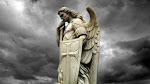
Christmas Mass in the Night
“Wow!” Can you recall the last time you said that, perhaps, involuntarily? "Wow” is often offered with a gasp, a sharp intake of breath, when we can't think of another way to capture the sight of shocking beauty or destruction, of a sudden unbidden insight or an unexpected flash of grace. “Wow” is about having one's mind blown by the mesmerising or the miraculous.
I think most of us would have forgotten our last experience of Christmas that would have earned a “Wow” from us. I guess this would have happened when our walking was still wobbly, where every new discovery, every bright light and colour would have immediately made us wide-eyed with amazement. In other words, when we were still babies or toddlers. But then we grew up, we grew older and everything changed. Our sense of excitement and wander began to dull and languish, and everything became ordinarily commonplace and blasé. Instead of an exclamation of “wow”, we would now choose to sulk in a corner and grumpily complain: “humbug.”
I get a sense that there are more “humbugs” these days than “Wows!” Most people today complain that it doesn’t feel like Christmas for them. I get enough of these complaints during the penitential services in the various parishes where I get to hear hundreds of confessions. What do they mean by that? I guess for most people, there is an expectation to hype up the joy and excitement of Christmas as the day draws nearer, but it’s hard to feel excited or joyful these days because there are too many things on our plate which leads us to feel overwhelmed. And so, they slowly withdraw from social interactions with family and friends, feel exhausted even when they do Christmas shopping, and spend their holidays wallowing in self-pity and depression.
Why does Christmas have this impact on so many people? I guess part of the reason is something which I’ve often highlighted. It’s the pandemic of narcissism that has so afflicted our society. A narcissist is someone obsessively absorbed in himself. “It’s all about ‘Me’.” Narcissists hate Christmas. The Grinch, of Dr Seuss’ children’s poem, is such a creature. His heart is two sizes smaller because he is only capable of “loving” himself, if you could call it love. To say that narcissists suffer from deep anxiety during this season is an understatement. Narcissists love to be the centre of attention, and they will not tolerate any other star who will compete with them for that attention. And who’s the actual star of this season? The Birthday Boy Himself and today all of us here are to celebrate His birthday. And so the narcissist will attempt to deflect our attention by manipulating, trying to earn your sympathy, they will list down a long list of complaints, mostly imaginary, in order to get you to shift your attention to them.
My frequent response to these complaints is this: “What do you mean by saying “it doesn’t feel like Christmas”? Christmas did happen over 2000 years ago. A baby was born in Bethlehem over 2000 years ago. God became man over 2000 years ago. A Saviour has been born to us over 2000 years ago. And nothing you feel or not feel is going to change that!” The truth is a bitter red pill to swallow. Perhaps the person would have been conditioned by years of listening to or singing that popular contemporary Christmas song: “Christmas isn't Christmas till it happens in your heart.” But the truth is that Christmas doesn’t need to happen in your heart before it happens. That’s subjective delusion. Reality does not revolve around your feelings, any more than in your thoughts. Christmas is real because IT IS as the angels declared it to the shepherds: “Today in the town of David a saviour has been born to you; he is Christ the Lord.”
So, the antidote to ennui, to boredom and restlessness is not found in seeking attention or getting people to show sympathy to your condition. It is shifting our gaze from ourselves to the One whom Isaiah describes in the first reading as “Wonder-Counsellor, Mighty-God, Eternal-Father, Prince-of-Peace.” He alone is our “Saviour” and for this reason we should share in the “great joy” which the angels announce that first Christmas night, “a joy to be shared by the whole people.” I want to take up the first name given to this child in Isaiah’s prophecy whom we know to be Christ; "he will be called Wonderful Counsellor."
When we hear the word "counsellor," we shouldn't think "therapist." In fact, one of the clear by-products of the pandemic of narcissism is the proliferation of therapists, psychologists, psychiatrists and counsellors. In the past, when you were troubled, you would go in search of a priest to make your confession or seek spiritual direction. Today, you look out for a therapist to listen to you tell your “stories” about yourselves (which is why so many confessions end up in being storytelling sessions rather than a grace-filled opportunity to confess one’s sin out of genuine contrition).
But here, the title “Wonderful Counsellor” is something quite different from the professional sounding board. Remember, in the ancient world, a counsellor was someone who devised plans to win military victories. This is what we see in the first reading. Jerusalem and the Kingdom of Judea were facing the threat of imminent invasion by the Assyrians. They were literally a people who were walking in darkness as they had exhausted all options and plans to fend off the enemy. It is here that Isaiah speaks to them of assured divine assistance in the form of a child, an heir to the throne of King David. The best strategy belongs to God. The riddle of Isaiah’s prophecy is finally solved with the birth of this child and who else would be the best person or persons to announce this than the angels, the direct messengers of God.
When we see how God has been playing 4D chess, setting up His plans by moving all the pieces on the board, setting history in motion and then directing it in a most inexplicable way and finally revealing that everything is pointing to this moment - the birth of a child in a small obscure town in the greatest empire on earth, we ought to sit back and marvel. His plans should blow our minds; mesmerise us with the miraculous; show us shocking beauty, unexpected flashes of grace; cause us to gasp, with a sharp intake of breath, and say, "Wow!"
So, if you are feeling down, depressed, or dry in your spiritual life, don’t give up, don’t look for distractions, don’t clutch your pearls, don’t seek attention by crying and complaining to others and finally, don’t despair. In fact, it is good to take a step back and take in the entire view. On this night, we remember how God sent us a Saviour to redeem us. He is “Wonder-Counsellor, Mighty-God, Eternal-Father, Prince-of-Peace.” By choosing to unite His divinity with our humanity, He has truly set us free from the invisible shackles of sin, He has brought light into our darkness, He has given us hope in exchange for our despair, He who is God became man so that we humans can become gods. This is so wonderfully astounding that the whole company of heaven had to show up for the announcement of this child's birth because they were so astonished with the plan God had devised to save the world. What an amazing and wondrous gift that should make all of us, indeed the whole creation inhale in wonder and declare: Wow! Wow! Wow!
Showing posts with label narcissism. Show all posts
Tuesday, December 23, 2025
Sunday, October 26, 2025
Turning One's Gaze toward God
Solemnity of All Saints
One of my favourite songs is often described as the epitome of British dark humour. Some of you may know it: “Always look on the bright side of life.” Seems like a good and encouraging piece of advice until you realised that it was sung by a person or persons dying by crucifixion (not Jesus but the movie’s eponymous protagonist, Brian, Jesus’ neighbour) and it comes in the closing scene of the Monty Python movie, with other crucifixion victims joining in the chorus as the credits roll. To declare that one should always look on the bright side of life even as one suffers the excruciatingly slow and painful execution of crucifixion is the height of irony. Is this what our Lord is suggesting in His teaching on the beatitudes? Should we be “happy” or pretend to be “happy” even when everything is going south? Is this the reason why we Christians declare that the Friday where our Lord was betrayed, tortured, humiliated and died, a “Good” Friday instead of a “bad” one?
Perhaps, there is always at least two ways of looking at a bad situation. An old ditty best sums this up: “Two men looked out from prison bars, one saw the mud, the other saw stars." This little ditty highlights that individuals in the same situation can have vastly different perspectives; one sees only the negative, while the other finds hope or the positive, demonstrating how perspective shapes one's experience and can lead to different choices.
Likewise, there are also two different ways of viewing the scenarios described by the Beatitudes. One may see them as misfortunes and even curses from God - poverty, weakness, hunger, grief, loss, persecution - who wouldn’t? But then our Lord invites us to view them as blessings and in fact a source of Christian joy. Which view seems more realistic? If we didn’t know Jesus any better, we would have chosen the former. When faced with difficulties, trials and tribulations, our first reaction would be a negative one, rather than a positive one - we would see mud, rather than stars. But the Beatitudes seek to challenge this world view.
So, how do we make the shift from seeing only mud to seeing stars, even in the most difficult and painful situations of life? The recently canonised Saint Carlo Acutis gives us the answer: “Sadness is turning one’s gaze inward; happiness is turning one’s gaze toward God. Conversion is nothing other than shifting one’s gaze from below to above. A simple movement of the eyes is enough.” The wise words of this young man shows us that the joy described by our Lord in the Beatitudes are not naive or false optimism; instead, they represent a deeper, authentic joy found not in worldly success but in humility, mercy, and aligning one's life with God's will. The Beatitudes overturn worldly standards of happiness, which often equate it with wealth, power, and success. True joy comes from recognising one's spiritual need and emptying the self to make room for God, rather than filling oneself with material possessions or self-sufficiency.
Our modern society is suffering from a pandemic of narcissism, of self-absorption, where we believe that everything revolves around us as the centre of the universe. So, every difficulty or challenge, every hurdle or obstacle we encounter in life, becomes another opportunity to moan our misfortune and decry our victimhood. The situations in the Beatitudes will definitely look like “mud”, like curses, if we are merely focusing on ourselves. Saint Acutis was correct to diagnose the cause of “sadness,” it’s “turning one’s gaze inward.”
Our Lord provides the antidote to this pandemic of narcissism through His Beatitudes. A saint is one who turns his gaze to God or as Carlo Acutis puts it, the secret to happiness is “shifting one’s gaze from below to above.” The saint is not an individual who is insulated from what the world sees as unhappy situations but is one who can shift his or her gaze from his present turmoil and sufferings to the joy of eternal life which God has promised to those who remain faithful and on course in following His Son.
In the first reading, we are given a vision of the host of saints arrayed in heaven. They are not those spared of persecution but rather those who have gone through it. In the gospel, our Lord is speaking to people who for the most part live in poverty, for whom hunger, starvation and death are daily realities. He looks at them and tells them that if they follow the way of the kingdom, they will be blessed. They will be assured of true happiness. If we love God and the things of God as we ought, even in this life, we will consider the suffering we experience in this life as insignificant in comparison to the joys for which we hope. And unless we learn to love God above all things, and all things for God’s sake, we shall never find true happiness. This is the message of the Beatitudes.
So, our Lord invites us who are called to be saints to always reach for the stars instead of grovelling in the mud of despair. To always look on the brighter side of life is not to ignore the issues and difficulties we have to face or attempt to pull the wool over our eyes and pretend these problems do not exist. But we need to remember that concentrating on the problem can make it appear larger and more consuming. Focusing on problems can lead to depression, despair and exhaustion. If problems are the sole focus, God can diminish in your vision, leading to a forgetfulness of His promises and power. Instead, we are called like all the saints to always shift our gaze from below to above, to focus on the Lord even if we are in the midst of pain and distress because as the Psalmist assures us, we “shall receive blessings from the Lord and reward from the God who saves him. Such are the men who seek him, seek the face of the God of Jacob.”
At the end of his homily on the occasion of the canonisation of two amazing men, young saints of our time, Pope Leo XIV said that the lives of “Saints Pier Giorgio Frassati and Carlo Acutis are an invitation to all of us, especially young people, not to waste our lives, but to direct them upward and make them a masterpiece. They encourage us with their words: "Not I, but God," said Carlo. And Pier Giorgio: "If you have God at the centre of all your actions, then you will reach the end." This is the simple but sure formula of their holiness. And it is also the testimony we are called to imitate to enjoy life to the fullest and go to meet the Lord at the feast in heaven.”
One of my favourite songs is often described as the epitome of British dark humour. Some of you may know it: “Always look on the bright side of life.” Seems like a good and encouraging piece of advice until you realised that it was sung by a person or persons dying by crucifixion (not Jesus but the movie’s eponymous protagonist, Brian, Jesus’ neighbour) and it comes in the closing scene of the Monty Python movie, with other crucifixion victims joining in the chorus as the credits roll. To declare that one should always look on the bright side of life even as one suffers the excruciatingly slow and painful execution of crucifixion is the height of irony. Is this what our Lord is suggesting in His teaching on the beatitudes? Should we be “happy” or pretend to be “happy” even when everything is going south? Is this the reason why we Christians declare that the Friday where our Lord was betrayed, tortured, humiliated and died, a “Good” Friday instead of a “bad” one?
Perhaps, there is always at least two ways of looking at a bad situation. An old ditty best sums this up: “Two men looked out from prison bars, one saw the mud, the other saw stars." This little ditty highlights that individuals in the same situation can have vastly different perspectives; one sees only the negative, while the other finds hope or the positive, demonstrating how perspective shapes one's experience and can lead to different choices.
Likewise, there are also two different ways of viewing the scenarios described by the Beatitudes. One may see them as misfortunes and even curses from God - poverty, weakness, hunger, grief, loss, persecution - who wouldn’t? But then our Lord invites us to view them as blessings and in fact a source of Christian joy. Which view seems more realistic? If we didn’t know Jesus any better, we would have chosen the former. When faced with difficulties, trials and tribulations, our first reaction would be a negative one, rather than a positive one - we would see mud, rather than stars. But the Beatitudes seek to challenge this world view.
So, how do we make the shift from seeing only mud to seeing stars, even in the most difficult and painful situations of life? The recently canonised Saint Carlo Acutis gives us the answer: “Sadness is turning one’s gaze inward; happiness is turning one’s gaze toward God. Conversion is nothing other than shifting one’s gaze from below to above. A simple movement of the eyes is enough.” The wise words of this young man shows us that the joy described by our Lord in the Beatitudes are not naive or false optimism; instead, they represent a deeper, authentic joy found not in worldly success but in humility, mercy, and aligning one's life with God's will. The Beatitudes overturn worldly standards of happiness, which often equate it with wealth, power, and success. True joy comes from recognising one's spiritual need and emptying the self to make room for God, rather than filling oneself with material possessions or self-sufficiency.
Our modern society is suffering from a pandemic of narcissism, of self-absorption, where we believe that everything revolves around us as the centre of the universe. So, every difficulty or challenge, every hurdle or obstacle we encounter in life, becomes another opportunity to moan our misfortune and decry our victimhood. The situations in the Beatitudes will definitely look like “mud”, like curses, if we are merely focusing on ourselves. Saint Acutis was correct to diagnose the cause of “sadness,” it’s “turning one’s gaze inward.”
Our Lord provides the antidote to this pandemic of narcissism through His Beatitudes. A saint is one who turns his gaze to God or as Carlo Acutis puts it, the secret to happiness is “shifting one’s gaze from below to above.” The saint is not an individual who is insulated from what the world sees as unhappy situations but is one who can shift his or her gaze from his present turmoil and sufferings to the joy of eternal life which God has promised to those who remain faithful and on course in following His Son.
In the first reading, we are given a vision of the host of saints arrayed in heaven. They are not those spared of persecution but rather those who have gone through it. In the gospel, our Lord is speaking to people who for the most part live in poverty, for whom hunger, starvation and death are daily realities. He looks at them and tells them that if they follow the way of the kingdom, they will be blessed. They will be assured of true happiness. If we love God and the things of God as we ought, even in this life, we will consider the suffering we experience in this life as insignificant in comparison to the joys for which we hope. And unless we learn to love God above all things, and all things for God’s sake, we shall never find true happiness. This is the message of the Beatitudes.
So, our Lord invites us who are called to be saints to always reach for the stars instead of grovelling in the mud of despair. To always look on the brighter side of life is not to ignore the issues and difficulties we have to face or attempt to pull the wool over our eyes and pretend these problems do not exist. But we need to remember that concentrating on the problem can make it appear larger and more consuming. Focusing on problems can lead to depression, despair and exhaustion. If problems are the sole focus, God can diminish in your vision, leading to a forgetfulness of His promises and power. Instead, we are called like all the saints to always shift our gaze from below to above, to focus on the Lord even if we are in the midst of pain and distress because as the Psalmist assures us, we “shall receive blessings from the Lord and reward from the God who saves him. Such are the men who seek him, seek the face of the God of Jacob.”
At the end of his homily on the occasion of the canonisation of two amazing men, young saints of our time, Pope Leo XIV said that the lives of “Saints Pier Giorgio Frassati and Carlo Acutis are an invitation to all of us, especially young people, not to waste our lives, but to direct them upward and make them a masterpiece. They encourage us with their words: "Not I, but God," said Carlo. And Pier Giorgio: "If you have God at the centre of all your actions, then you will reach the end." This is the simple but sure formula of their holiness. And it is also the testimony we are called to imitate to enjoy life to the fullest and go to meet the Lord at the feast in heaven.”
Labels:
Beatitudes,
Communion of Saints,
Feast,
Feast Day Homily,
heaven,
narcissism,
saints,
vision
Subscribe to:
Posts (Atom)