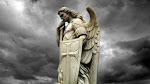
Nineteenth Sunday in Ordinary Time Year C
One of my favourite feel-good go-to songs when I need an emotional uplift is that classic 70s song by Johnny Nash, “I can see clearly now.” For those of you millennials, Gen Z’s and Alphas who do not know what I’m talking about, here are the lyrics: “I can see clearly now, the rain is gone. I can see all obstacles in my way. Gone are the dark clouds that had me blind. It’s gonna’ be a bright (bright), bright (bright), sunshiny day”.
I love the lyrics. Here is a person who has known the wet rainy days of life, when the sun is obscured by the dark clouds of pain, misery and loss. When the “hard rain” is pouring down all around, it’s easy to miss the beauty around you, the opportunities open to you. But everything changes when the rain stops. And there is a certainty that the rain will stop no matter how long we may have to endure it. We have arrived at a moment of clarity. Now that the rain is gone, the fog has dissipated, we can finally see the obstacles preventing us from the goals and dreams we have been pursuing without success.
This is what the faithful men and women of the Bible experienced, and the testimony of their faith is what we heard in the second reading taken from the letter to the Hebrews. It is through the piercing vision of faith that they were able to hope beyond hope, to keep on moving despite all the obstacles and setbacks, to persevere in spite of failure, and to reach their goals and beyond. What set them apart from other men and women were their faith in God. They did not rely on their own strengths or resources or human ingenuity. Rather, their motivation was rooted in a deep trust in a God that they believed would always keep His promises, and He did, even going beyond their expectations. Unsurprisingly the story of Abraham whom we call “our father in faith” has a prominent place. Abraham is proposed as a powerful model of Christian faith because his whole life was lived as a pilgrimage. Even when he was in the Promised Land of Canaan, he recognised that this was not his true homeland, but only a sign of it. It points beyond itself – as all signs do.
What would have made them give up their familiar surroundings, the security of family and kin or even their wealth? The answer can be found in the gospel. These heroes of the Old Testament saw a glimpse of what our Lord clearly promises in the gospel: “Sell your possessions and give alms. Get yourselves purses that do not wear out, treasure that will not fail you, in heaven where no thief can reach it and no moth destroy it. For where your treasure is, there will your heart be also.” They were able to give up what most people would prize and treasure because there was something better awaiting them. Heaven is our ultimate destination and true home. Life may be filled with dark dreary and wet days, but the Lord promises that what is to come is only a never ending “bright sunshiny day.” The dark clouds in our life will disappear. This is not just wishful thinking or false optimism. Faith informs us that things can and will work out in the end. This is what the Book of the Apocalypse (21:23) assures us: “And the city has no need of sun or moon to shine on it, for the glory of God is its light, and its lamp is the Lamb.”
Having such a vision of the future does not mean that we should just sit on our hands and do nothing. Our Lord tells us that we should be like faithful servants who are constantly at work while remaining vigilant: “See that you are dressed for action and have your lamps lit. Be like men waiting for their master to return from the wedding feast, ready to open the door as soon as he comes and knocks.” This sounds like our Lord is imposing a dress code, perhaps the one thing that is most unpopular in any Catholic parish, as I noticed many of you flinch at the mere mention of it. But the reality is that the dress code imposed by the church merely reflects in a sacramental way the proper inner disposition of a disciple. To be “dressed for action” translates to have our “loins girded,” to be dressed for a journey, a new exodus as we follow Christ on the path of discipleship that leads to the cross. You do not have the luxury of dressing down or be in your most comfortable pyjamas. Christian discipleship is a call to action, not a license to loiter on your sofa and wait for others to do the work.
The second metaphor used by the Lord, which is having our lamps lit, makes a perfect segue into the parable of the servants who await their master’s return from a wedding feast. The parable clarifies the meaning of the metaphor. The lamps refer to the constant state of watchfulness and vigilance. No Christian, no disciple of Christ can be caught off guard. I’ve constantly repeated this ad nauseam: there is no sabbatical or ‘day-offs’ for Christians because the Son of Man is already at the wedding feast. When He returns at the unexpected hour, He will introduce the disciples into His banquet, provided that they are awake and ready. As an incentive and motivation for vigilance, the parable promises a reward for the faithful servants: the Master himself will be at their service. But for the steward who has decided to fall asleep on the job and take additional liberties especially in mistreating others, “his master will come on a day he does not expect and at an hour he does not know. The master will cut him off and send him to the same fate as the unfaithful.” Don’t feign ignorance. You’ve been warned!
So, if we find ourselves in this present life, unsettled, uncomfortable, sorrowful and suffering, then we have the assurance that this hardship is part of our journey into joy. We are all on our journey, an exodus from the slavery to sin, to the freedom of becoming heirs of the Kingdom. Of course, it is indeed the task of the whole Church, and of every Christian – to make that hope believable, to make the pilgrimage to God sustainable, to bring into the lives of the sorrowful the authentic joy of Christ’s victory over sin and death.
Christians are called to be pilgrims of hope, more so as we are reminded this year being a Jubilee Year with the above theme. We must be in a constant state of departing. We are people “on the Way.” Thus, our every action and existence in the here and now becomes more urgent when we do not lose sight of the fact that God may call us to account at any moment. Every moment, every deed, every decision ceases to be trivial when our lives are lived and shaped directly in and toward the light of eternity. If we forget this immediacy, we end up abusing our stewardship of this earth; and injustice and oppression becomes staple activities.
Our gospel tells us that the Son of Man will come when we do not expect – He will break into history not when it seems to be finished, nor indeed when all seems hopeless, but at a time that makes sense to Him. The rain will stop, the clouds will disperse, the obstacles will be removed, and the sun will shine brightly once more with no fear of night. But when He does come, He expects to find us working for that Kingdom which He alone can bring to completion. So, with our lamps lit, let’s get working, let’s be dressed for action, so that we can indeed face the future, and the present, with courage and joy.
Every night, as we conclude with Compline, the night prayer, we sing this beautiful hymn, Abide with Me, written by H. F. Lyte. What Johnny Nash merely suggested in his popular song is made apparent in the lyrics of the final stanza of Lyte’s hymn:
Hold thou thy cross before my closing eyes;
shine through the gloom, and point me to the skies;
heaven’s morning breaks, and earth’s vain shadows flee;
in life, in death, O Lord, abide with me.
Showing posts with label vigilance. Show all posts
Monday, August 4, 2025
Sunday, November 24, 2024
The Future is uncertain but the End is always near
First Sunday of Advent Year C
What would your response be if I were to tell you that we are at the cusp of the End Times, especially in view of the escalation of conflict between Ukraine and Russia, threatening to drag Europe, the United States and the whole world into a possible nuclear war?
Firstly, many of you would respond with incredulity and scoff at my announcement, thinking that I am either kidding, overreacting or out of my mind, and then proceed to live your lives business-as-usual.
Secondly, some would take advantage of the limited time still available to fulfil your life-time’s bucket list - eat, drink and be merry. Why waste the final hours, days and months of your life in idle living or useless worrying?
Thirdly, some of you would redouble your effort in putting your life and your household in order. Time to put in more effort in prayer, Mass attendance, and seek to make peace with those who have become estranged in past years.
Before proceeding any further, I would like to assure that I am deadly serious when I say that we are living in the end times. This is no bogey-man created by the Church to scare the unchurched and the nominal Catholics to return to the pews every Sunday. Neither, is this some symbolic event and its content require some form of de-mythologising. The world really will end! As the rock star lead of the Doors, Jim Morrison, assures us: “The future is uncertain but the end is always near.” The “End” did not begin today or in recent times or even in the past century. It began two thousand years ago with the first coming of our Lord. Our Lord’s death and resurrection was the beginning of the end, the sudden unveiling of God’s final purpose for His creation. We have been living in the end times since then.
The problem which many people face is that we tend to lose the momentum and urgency when the climatic conclusion of the end times seems to have been postponed. We start believing that it’s all a hoax, that the Church got it wrong, that Christ didn’t mean this when He spoke of it to His disciples. But the greater problem is that when we lose sight of the end times, we also lose sight of our ultimate purpose and destination in life. A society who has no vision of an eschatology where God would be victorious at the end, where the wicked would be punished and the innocent vindicated, where wrongs would be made right, where present sufferings would be justified, would be a society wrapped in despair and living without hope.
An incorrect eschatology can also lead to incorrect behaviour in the present times. The early Christian community, as evidenced by the writings of St Paul had similar experiences and responses to the end times announcement which they thought to be imminent - something that would take place in their own lifetime. So, some surrendered to an unbridled hedonistic lifestyle filled with “debauchery and drunkenness”, while others pursued an ascetic style of living, abandoning spouses and families whilst quitting their jobs. Both extremes were far from the ideal of Christian living which St Paul desired to instil in them.
St Paul does not suggest that Christians head for the hills, hunker down, adopt a “fortress mentality,” and start stockpiling food and weapons. As Paul sees it, end-time Christians are called to practice holiness and do good to others wherever and whenever they can. They are supposed to work the works of God “while it is day” (John 9:4). And his instructions have not grown obsolete and we would be wise to follow.
Firstly, news of the end times should not coarsen our hearts and lead us to become some stoic loveless persons. Rather, it should motivate us to increase our love for others. “May the Lord be generous in increasing your love and make you love one another and the whole human race as much as we love you.”
Secondly, our contemplation of the end times should also deepen our relationship with God as we strive to grow in holiness. St Paul prays that God may “so confirm your hearts in holiness that you may be blameless in the sight of our God and Father when our Lord Jesus Christ comes with all his saints.”
Thirdly, knowledge of the end times should not lead us to spiritual or intellectual idleness but actually motivate us to make progress in every aspect of our lives. We should always strive to improve ourselves and not settle for mediocrity, “to make more and more progress in the kind of life that you are meant to live: the life that God wants, as you learnt from us, and as you are already living it.”
As for our Lord, He speaks to His disciples about the need for vigilance and prayer as they wait for the coming of the Son of Man in glory. Though our Lord predicts a time of destruction and fear, and He acknowledges that many will be frightened by what they will be witnessing; His disciples are not to fear, but are to stand tall. Note that our Lord does not promise deliverance from anxiety or tribulations. He, however, encourages His disciples to pray for strength.
There are many reasons why it would be easy to feel overcome by the darkness of our present historical moment. At the threshold of global nuclear annihilation, with so many overwhelming unknowns, it is tempting for our waiting to turn to the apathy of despair, which waits because there is nothing else to do, nowhere to go—a kind of resignation that has stopped looking for new possibilities. What should we do and what can we do? Just as the early Christian communities did not find consolation in the promise of a utopia, nor escape through some other-worldly asceticism or hedonistic lifestyle, nor should we. Instead, we find in our Christian faith the means by which we witness to God's unfailing love for us in all circumstances. With His abundant grace, we should keep on loving, keep on living and keep on growing in holiness.
And so, we begin this holy season of Advent on a high note of hope, rather than despair. Our Lord’s predictions about the end times may sound dire, but in His person and in His message, we who hear Him can find strength and consolation. Like the first Christians, we may encounter events and circumstances that could lead us to despair. Through prayer, however, we find strength and consolation in the Lord’s words in today’s gospel: “Stay awake, praying at all times for the strength to survive all that is going to happen, and to stand with confidence before the Son of Man.”
Secondly, some would take advantage of the limited time still available to fulfil your life-time’s bucket list - eat, drink and be merry. Why waste the final hours, days and months of your life in idle living or useless worrying?
Thirdly, some of you would redouble your effort in putting your life and your household in order. Time to put in more effort in prayer, Mass attendance, and seek to make peace with those who have become estranged in past years.
Before proceeding any further, I would like to assure that I am deadly serious when I say that we are living in the end times. This is no bogey-man created by the Church to scare the unchurched and the nominal Catholics to return to the pews every Sunday. Neither, is this some symbolic event and its content require some form of de-mythologising. The world really will end! As the rock star lead of the Doors, Jim Morrison, assures us: “The future is uncertain but the end is always near.” The “End” did not begin today or in recent times or even in the past century. It began two thousand years ago with the first coming of our Lord. Our Lord’s death and resurrection was the beginning of the end, the sudden unveiling of God’s final purpose for His creation. We have been living in the end times since then.
The problem which many people face is that we tend to lose the momentum and urgency when the climatic conclusion of the end times seems to have been postponed. We start believing that it’s all a hoax, that the Church got it wrong, that Christ didn’t mean this when He spoke of it to His disciples. But the greater problem is that when we lose sight of the end times, we also lose sight of our ultimate purpose and destination in life. A society who has no vision of an eschatology where God would be victorious at the end, where the wicked would be punished and the innocent vindicated, where wrongs would be made right, where present sufferings would be justified, would be a society wrapped in despair and living without hope.
An incorrect eschatology can also lead to incorrect behaviour in the present times. The early Christian community, as evidenced by the writings of St Paul had similar experiences and responses to the end times announcement which they thought to be imminent - something that would take place in their own lifetime. So, some surrendered to an unbridled hedonistic lifestyle filled with “debauchery and drunkenness”, while others pursued an ascetic style of living, abandoning spouses and families whilst quitting their jobs. Both extremes were far from the ideal of Christian living which St Paul desired to instil in them.
St Paul does not suggest that Christians head for the hills, hunker down, adopt a “fortress mentality,” and start stockpiling food and weapons. As Paul sees it, end-time Christians are called to practice holiness and do good to others wherever and whenever they can. They are supposed to work the works of God “while it is day” (John 9:4). And his instructions have not grown obsolete and we would be wise to follow.
Firstly, news of the end times should not coarsen our hearts and lead us to become some stoic loveless persons. Rather, it should motivate us to increase our love for others. “May the Lord be generous in increasing your love and make you love one another and the whole human race as much as we love you.”
Secondly, our contemplation of the end times should also deepen our relationship with God as we strive to grow in holiness. St Paul prays that God may “so confirm your hearts in holiness that you may be blameless in the sight of our God and Father when our Lord Jesus Christ comes with all his saints.”
Thirdly, knowledge of the end times should not lead us to spiritual or intellectual idleness but actually motivate us to make progress in every aspect of our lives. We should always strive to improve ourselves and not settle for mediocrity, “to make more and more progress in the kind of life that you are meant to live: the life that God wants, as you learnt from us, and as you are already living it.”
As for our Lord, He speaks to His disciples about the need for vigilance and prayer as they wait for the coming of the Son of Man in glory. Though our Lord predicts a time of destruction and fear, and He acknowledges that many will be frightened by what they will be witnessing; His disciples are not to fear, but are to stand tall. Note that our Lord does not promise deliverance from anxiety or tribulations. He, however, encourages His disciples to pray for strength.
There are many reasons why it would be easy to feel overcome by the darkness of our present historical moment. At the threshold of global nuclear annihilation, with so many overwhelming unknowns, it is tempting for our waiting to turn to the apathy of despair, which waits because there is nothing else to do, nowhere to go—a kind of resignation that has stopped looking for new possibilities. What should we do and what can we do? Just as the early Christian communities did not find consolation in the promise of a utopia, nor escape through some other-worldly asceticism or hedonistic lifestyle, nor should we. Instead, we find in our Christian faith the means by which we witness to God's unfailing love for us in all circumstances. With His abundant grace, we should keep on loving, keep on living and keep on growing in holiness.
And so, we begin this holy season of Advent on a high note of hope, rather than despair. Our Lord’s predictions about the end times may sound dire, but in His person and in His message, we who hear Him can find strength and consolation. Like the first Christians, we may encounter events and circumstances that could lead us to despair. Through prayer, however, we find strength and consolation in the Lord’s words in today’s gospel: “Stay awake, praying at all times for the strength to survive all that is going to happen, and to stand with confidence before the Son of Man.”
Labels:
Advent,
Holiness,
Hope,
Last Things,
Love,
Parousia,
Prayer,
Sunday Homily,
vigilance
Tuesday, November 28, 2023
Stay awake
First Sunday of Advent Year B
I’m a light sleeper. The slightest disturbance, faintest noise, or tiniest sliver of light would usually awaken me. Perhaps, I am suffering from what doctors call “exploding head syndrome”, imagined loud noises in my head when I am transitioning from consciousness to sleep. Or maybe, I’m just wired to expect the Lord’s unexpected arrival, as He Himself had warned: “So stay awake, because you do not know when the master of the house is coming, evening, midnight, cockcrow, dawn; if he comes unexpectedly, he must not find you asleep.”
But let’s be honest, staying awake for most of us can be exhausting. We need our rest. We need to sleep. We need to regenerate. We have seasons of excitement and whole-hearted devotion, and we have seasons where we fall asleep, even in church. And for many, the homily is as good a time to sleep as any. Perhaps, even the most ideal moment. But today, our Lord issues the warning that we should “Stay awake”, or else suffer the dire consequences of our lack of vigilance. And being caught by the priest is the least of your concerns. Life is short so stay awake for it.
The same requests from the Lord would be made on the night of His betrayal, on the eve of His crucifixion and death. In the garden of Gethsemane, our Lord was deep in prayer, anguished by the “cup” of suffering He was about to drink. He took His inner circle of disciples (Peter, James and John) with Him and told them to “remain here and watch.” Then, while the Lord was in agonising prayer, His closest companions couldn’t stay awake. Three times the Lord returned from praying to find His disciples falling asleep. Three times the Lord orders them to “stay awake.” Three times His disciples fell asleep. It may be some weak consolation in knowing that the Apostles were not immune from dozing off on the job. One could only imagine the frustration and disappointment of the Lord.
Of course, the Lord was talking about more than just avoiding falling asleep while praying. He was giving instruction about our spiritual readiness for His coming. With the repetitive command to stay awake, our Lord spoke to all His disciples throughout the ages, including our generation, about the need to remain alert. I think for us it can become easy to lose our spiritual edge and focus. It is easy to grow complacent, lazy and careless. It doesn’t take much of a lapse in alertness to become desensitised to the spiritual reality upon us by the pseudo-comforting distractions around us. Staying awake spiritually involves looking past the clamour of worldly attractions. It’s about perceiving the presence of the kingdom of heaven growing up quietly and silently after the seeds have been scattered in the garden. It’s about resisting the cultural malady of practical atheism – living as if God did not exist or even if we were to accept that He did, it did not matter in our lives. This is what Advent is meant to accomplish for us - to transform us from spiritual sleepy heads to vigilant stewards, always alert and ready for the master’s return. The question left to consider is how: how can we stay awake?
First, we need to take the words of Christ seriously that He is returning. Many don’t believe in the Parousia, in the return of the Lord. Many believe that this is a bogey man invented by the Church to scare her members into submission. Many leave without giving serious thought that there would be a Day of Judgment, a day where we will be called to account for our actions and decisions. To stay awake means to listen to the Lord and His warning and to take Him seriously at His word.
Second, the Apostle Paul tells us to pray without ceasing. This was the Lord’s exhortation to His disciples in the Garden of Gethsemane. Jesus tells us to “watch and pray.” If we are to stay awake in the midst of a world in a spiritual stupour, then we need to be diligent in prayer. No wonder Paul advises to “pray without ceasing” (1 Thess. 5:17). In fact, we should be constantly praying for the Lord’s Second Coming as we do whenever we pray the Lord’s Prayer: “thy kingdom come, thy will be done!” There must be urgency in this prayer as Isaiah expressed with these powerfully vivid words: “tear the heavens open and come down!”
Third, staying awake means faithfulness and commitment to the task that has been placed before us. The second parable in today’s gospel reminds us that readiness is measured by people diligently doing their job. The wisest ones are those who consistently try to seek and serve their Lord at every moment of every day. The familiar Advent message to ‘stay awake’ invites us to live humanly to the best of our ability, continuing to do the necessary mundane things faithfully but always with a genuine care for unexpected surprises. We should be striving and praying, as St Paul did in the second reading, that our Lord will “keep you steady and without blame until the last day.”
The person who stays awake and remains faithful is the one who accepts the invitation to keep watch, that is, not let himself be overpowered by the listlessness of discouragement, by the lack of hope, by disappointment; and at the same time it wards off the allure of the many vanities with which the world is brimming and for which, now and then, time and personal and familial peace is sacrificed. It is the painful experience of the people of Israel, whom the Prophet Isaiah was sent to awaken. We too often find ourselves in this situation of unfaithfulness to the call of the Lord: He shows us the good path, the way of faith, the way of love, but we seek our happiness elsewhere.
Listening, praying and remaining faithful won’t tell us when the Lord is coming again, but they will get us ready to receive Him when He comes. Hopefully none of you out there are asleep yet. Hopefully you’ve managed to stay awake through my homily. But if you are asleep, know that God loves you and has sent Christ into the world to save you all the same. But for those who are asleep, He comes as Judge. And if you are asleep, or falling asleep, or peaceful and secure in your faith life, well, it’s time to wake up and come alive. Because what the Church needs are not people who are sleeping on the job but those who are alive and kicking, ever ready to preach the Gospel of Christ through the testimony of their words and actions. So, stay awake!
Labels:
Advent,
Discipleship,
Morality,
parable,
Sunday Homily,
vigilance,
Waiting
Subscribe to:
Posts (Atom)