Thirty Third Sunday in Ordinary Time Year B
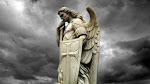
There are too many things happening simultaneously and coincidentally which may lead us to believe that we are living in the end times. We seem to be beset by one earth-shattering, history-setting crisis after another - a worldwide pandemic that brought the entire world to its knees, an economic crisis on an accelerated downward spiral, regional conflicts threatening to become another world war, hurricanes and natural calamities on an unprecedented scale and a polarised Church which seems to have as many enemies on the inside as she has on the outside. For some, the re-election of Donald Trump was the final straw – we are on the threshold of Armageddon.
Whenever some big catastrophe happens, you can be sure that someone will start talking about the “end times.” Both Catholics and Protestants do this. The difference mainly seems to be that Protestants start trying to chart out the apocalypse according to the Books of Daniel and Revelation, whereas Catholics try to chart it out based on various private revelations of the more dramatic and eschatological kind.
But what Christians today often forget is that the Church has been talking about the “end times” since the very first century, when humanity crucified the Son of God which was followed in a few decades by the destruction of the Temple of Jerusalem. Our Lord’s death and resurrection was the beginning of the end, the sudden unveiling of God’s final purpose for His creation. The destruction of the Temple merely confirmed their worst fears as the Temple was regarded by the Jews as the microcosm of the universe. This catastrophe coupled with civil wars fought within the Roman Empire, cataclysmic natural disasters led many to believe that this was indeed the Last Days. But the world did not disintegrate into space dust despite all signs and omens and personal speculations pointing to this.
So, are we overreacting? Have our ancestors been overreacting? Are the end times even real or have we been suffering from some eschatological post-traumatic stress disorder for decades and centuries? I wish to reassure you - Yes, the end times are real! The last things are real: death, judgment, heaven, hell. From a biblical point of view, we have been living in the end times for the last 2,000 years.
We are living in the end times but there is nothing new about this. So yes, the drama is real, but so is the salvation. We should never forget this truth: Evil is real, but so is good. In fact, the good is more real because evil is always destructive, always negative, always corrupting. Whereas the good creates, builds, grows, nurtures, comforts, enhances, heals. That is why we should never be hiding in a bunker, cowering in fear under some rock or burying our head in the sand. The good news of Jesus Christ is that evil does not triumph, cannot triumph, and so we do not have to fear. We can look in the face of evil—as so many Christian martyrs have done and do even today—and persevere in loving the good.
What our Lord tells us in today’s gospel passage is not just an ominous warning of destruction on a global and cosmic scale. Many would be so caught up with the frightening imagery that appears in the first half of our Lord’s prophecy but fail to pay attention to the second half that follows. What comes after the end of the world and the universe, is not defeat but victory. Our Lord assures us that for those who remain resilient and faithful to the end, will get to witness the “Son of Man coming in the clouds with great power and glory; then too he will send the angels to gather his chosen from the four winds, from the ends of the world to the ends of heaven.”
As Christians, we should not be paralysed and stuck in the past, the past of failures, of blunders, of sentimental memories. If there is anything the past can teach us is the lessons which we must take into the present. Remembering the past should lead us to a profound sense of gratitude, to wisdom, to humility and to repentance. We must remember that we can never change the past and therefore, can never choose to live in a time capsule, shielding us from the troubles of the present.
The same could be said of the future. We have limited influence on the future, which in any case doesn’t yet exist. Many feel crippled and immobilised by fear and the uncertainties of the future. But we have a lot of influence on the choices we make and the actions we take, here and now. “Now” matters. It matters because all the “nows” in a lifetime add up to the kind of people we become, and the kind of world we help to heal or degrade. Our power as individuals lies in what we do now; in our willingness to speak and live the truth today, now, whatever the cost. It lies in our refusal to cooperate with a culture of distortion and deceit.
Ultimately, Christians belong to the Church Militant; a Church engaged in a nonviolent struggle for the soul of the world. Our weapons are faith, hope and charity; justice, mercy, and courage. But all those virtues are useless without the men and women to live and witness them and to soldier on . . . because people, not things, are decisive. And it is how we live our lives in the present which will determine the final outcome, with “some (going) to everlasting life, some to shame and everlasting disgrace.”
The Catholic approach may not be the stuff of movies or bestsellers, but it is one filled with hope instead of instilling dread in us. While we may not know exactly what the Second Coming will look like, or when it would happen or how our current world will be reshaped or changed, we have the promises of scripture: “The learned will shine as brightly as the vault of heaven, and those who have instructed many in virtue, as bright as stars for all eternity.” That is what we should hold onto as we live our earthly lives as well as we can in love with hope for the work that is being done in our lives now and for what is being prepared for us in the future.
Showing posts with label Church Militant. Show all posts
Monday, November 11, 2024
Monday, October 21, 2024
Broken but not Beaten
Thirtieth Sunday in Ordinary Time Year B
As much as we hope to see the Church grow in size and influence, Cardinal Joseph Ratzinger, the future Pope Benedict XVI, made this prophecy back in 1969 which has been proven to be true, at least in the West as we have witnessed, a free fall drop in members and vocations:
“From the crisis of today the Church of tomorrow will emerge — a Church that has lost much. She will become small and will have to start afresh more or less from the beginning. She will no longer be able to inhabit many of the edifices she built in prosperity. As the number of her adherents diminishes, so it will lose many of her social privileges (…) And so it seems certain to me that the Church is facing very hard times. The real crisis has scarcely begun. We will have to count on terrific upheavals.”
This prophecy seems to be in the vein of the doomsday prophecies so commonly uttered and recorded in the Old Testament - all fire and brimstone and destruction. On the surface, the words of Pope Benedict do little to inspire but rather can be a cause for despair. Perhaps, this is reflective of the life of the blind Bartimaeus before his chanced meeting with the Lord. Like Bartimaeus, when thinking about the terminal diagnosis given about the Church, it is easy to wallow in self-pity, to complain about our dire situation and view everything around us through the lenses of darkness. And yet the good news is that light shines brightest in the dark.
As much as we hope to see the Church grow in size and influence, Cardinal Joseph Ratzinger, the future Pope Benedict XVI, made this prophecy back in 1969 which has been proven to be true, at least in the West as we have witnessed, a free fall drop in members and vocations:
“From the crisis of today the Church of tomorrow will emerge — a Church that has lost much. She will become small and will have to start afresh more or less from the beginning. She will no longer be able to inhabit many of the edifices she built in prosperity. As the number of her adherents diminishes, so it will lose many of her social privileges (…) And so it seems certain to me that the Church is facing very hard times. The real crisis has scarcely begun. We will have to count on terrific upheavals.”
This prophecy seems to be in the vein of the doomsday prophecies so commonly uttered and recorded in the Old Testament - all fire and brimstone and destruction. On the surface, the words of Pope Benedict do little to inspire but rather can be a cause for despair. Perhaps, this is reflective of the life of the blind Bartimaeus before his chanced meeting with the Lord. Like Bartimaeus, when thinking about the terminal diagnosis given about the Church, it is easy to wallow in self-pity, to complain about our dire situation and view everything around us through the lenses of darkness. And yet the good news is that light shines brightest in the dark.
In the first reading, the Prophet Jeremiah is commanded by God to make the following announcement to the remnant population of a decimated nation: “Shout with joy for Jacob! Hail the chief of nations! Proclaim! Praise! Shout: ‘The Lord has saved his people, the remnant of Israel!’” In the midst of disaster and national tragedy, the prophet declares that God is the father to Israel, and in fact, Israel is His cherished first-born son - the sole heir to His inheritance according to the law of primogeniture. Who are these remnants? The idea of a “remnant” sounds either like the survivors of some Holocaust or a band of puritanical hold-outs who have kept themselves unsullied from the depravity of their present age. But this is not the biblical understanding of the word, even among the Jews.
According to an ancient Jewish tradition, the universe is sustained by the presence of at least thirty-six tzadikim, or “righteous ones”, in every generation. The story of Abraham’s intercession on behalf of the evil cities of Sodom and Gomorrah may have inspired this tradition. Just like any good apocalyptic prophecy which continues to maintain the suspense, no one knows the identity of those tzadikim. They are humble souls who quietly pray and perform good deeds for the benefit of the world. Just like the description given in Hebrews of the role of the High Priest, as someone who “has been taken out of mankind and is appointed to act for men in their relations with God, to offer gifts and sacrifices for sins.” And so, it is believed that God does not judge the world on account of these saintly “remnant” souls.
If the understanding of what a remnant means is connected to the presence of this mysterious group of righteous saints, a pattern seems to emerge here which should allow us to understand the nature and mission of the remnant. The remnant is neither the victim of God’s wrath nor do they delight in it. Quite the contrary: the remnant exists to appease it. They never take advantage of their status as righteous ones in the eyes of the Lord to call fire and brimstone to rain on the sinners’ heads, but they pity the sinners and sacrifice themselves for them, even the unrepentant ones. They are not harbingers of God’s justice, rather they are the emissaries of His mercy. Through them, God’s mercy becomes manifest to all mankind.
Therefore, the mission of a remnant Church is not resignation, nor is she to wallow in self-pity nor should she grow resentful in complaining about her plight. When we do this, we are like the crowd of by-standers and disciples who try to silence the cries of those who cry out like Bartimaeus. Rather than facilitating an encounter with the Lord, we act as His greatest detractors and become obstacles to others to make progress on the path to holiness. No, this is not the mission of the “remnant Church.” Rather than withdrawing into a cocoon of self-pity and safety, we are called to be intercessors and mediators. We should go out and redouble our efforts to share the gospel message and invite others to join the faithful remnant. We are called to uphold the true teachings of the gospel and be a beacon of light in a world seen as darkened by sin and apostasy. To those cowering in fear and shrouded in darkness like Bartimaeus, let us encourage them with this exhortation: “Courage, get up, He is calling you.”
So, let us not perceive the Church’s smallness with fear or reticence, but with faith and courage. Our voice may seem small but it is amplified with the roaring power of the Holy Spirit and Christ’s sanctifying grace working in and through the Church. Salvation will come not from success and efficiency measured by the standards of the world, but from Jesus Christ alone, who has promised never to abandon His Church. We must be joyful and content, for it is only when we’re weak that we’re strong (2 Cor 12:9-10). It is only by being the grain of mustard that we, as a Church, will be able to grow into the greatest tree in the field, where the birds from heaven will be able to roost, rest and sing (Mk 4:30-32).
In an interview, our Holy Father Pope Francis summarised the prophetic vision of Pope Benedict XVI in these words: “Pope Benedict was a prophet of this Church of the future, a Church that will become smaller, lose many privileges, be more humble and authentic and find energy for what is essential. It will be a Church that is more spiritual, poorer and less political: a Church of the little ones.” Rather than bemoan the passing of her bygone glory or seek to insulate herself in bubble-wrapping, we should rejoice at the grace of being tenderly pruned at the hands of a Loving Father, for what would emerge from this “smaller”, “humbler”, “more spiritual,” “less political” church is something that will continually surprise and excite us.
In the visionary words of Pope Benedict: “But in all of the changes at which one might guess, the Church will find her essence afresh and with full conviction in that which was always at her centre: faith in the triune God, in Jesus Christ, the Son of God made man, in the presence of the Spirit until the end of the world. In faith and prayer she will again recognise the sacraments as the worship of God and not as a subject for liturgical scholarship.” This is our conviction of faith and hope – that when we come to our Lord with the enduring faith of Bartimaeus, we are convinced that we will see again, we will be refreshed again, our vigour and excitement will be reignited again to follow Christ once more.
According to an ancient Jewish tradition, the universe is sustained by the presence of at least thirty-six tzadikim, or “righteous ones”, in every generation. The story of Abraham’s intercession on behalf of the evil cities of Sodom and Gomorrah may have inspired this tradition. Just like any good apocalyptic prophecy which continues to maintain the suspense, no one knows the identity of those tzadikim. They are humble souls who quietly pray and perform good deeds for the benefit of the world. Just like the description given in Hebrews of the role of the High Priest, as someone who “has been taken out of mankind and is appointed to act for men in their relations with God, to offer gifts and sacrifices for sins.” And so, it is believed that God does not judge the world on account of these saintly “remnant” souls.
If the understanding of what a remnant means is connected to the presence of this mysterious group of righteous saints, a pattern seems to emerge here which should allow us to understand the nature and mission of the remnant. The remnant is neither the victim of God’s wrath nor do they delight in it. Quite the contrary: the remnant exists to appease it. They never take advantage of their status as righteous ones in the eyes of the Lord to call fire and brimstone to rain on the sinners’ heads, but they pity the sinners and sacrifice themselves for them, even the unrepentant ones. They are not harbingers of God’s justice, rather they are the emissaries of His mercy. Through them, God’s mercy becomes manifest to all mankind.
Therefore, the mission of a remnant Church is not resignation, nor is she to wallow in self-pity nor should she grow resentful in complaining about her plight. When we do this, we are like the crowd of by-standers and disciples who try to silence the cries of those who cry out like Bartimaeus. Rather than facilitating an encounter with the Lord, we act as His greatest detractors and become obstacles to others to make progress on the path to holiness. No, this is not the mission of the “remnant Church.” Rather than withdrawing into a cocoon of self-pity and safety, we are called to be intercessors and mediators. We should go out and redouble our efforts to share the gospel message and invite others to join the faithful remnant. We are called to uphold the true teachings of the gospel and be a beacon of light in a world seen as darkened by sin and apostasy. To those cowering in fear and shrouded in darkness like Bartimaeus, let us encourage them with this exhortation: “Courage, get up, He is calling you.”
So, let us not perceive the Church’s smallness with fear or reticence, but with faith and courage. Our voice may seem small but it is amplified with the roaring power of the Holy Spirit and Christ’s sanctifying grace working in and through the Church. Salvation will come not from success and efficiency measured by the standards of the world, but from Jesus Christ alone, who has promised never to abandon His Church. We must be joyful and content, for it is only when we’re weak that we’re strong (2 Cor 12:9-10). It is only by being the grain of mustard that we, as a Church, will be able to grow into the greatest tree in the field, where the birds from heaven will be able to roost, rest and sing (Mk 4:30-32).
In an interview, our Holy Father Pope Francis summarised the prophetic vision of Pope Benedict XVI in these words: “Pope Benedict was a prophet of this Church of the future, a Church that will become smaller, lose many privileges, be more humble and authentic and find energy for what is essential. It will be a Church that is more spiritual, poorer and less political: a Church of the little ones.” Rather than bemoan the passing of her bygone glory or seek to insulate herself in bubble-wrapping, we should rejoice at the grace of being tenderly pruned at the hands of a Loving Father, for what would emerge from this “smaller”, “humbler”, “more spiritual,” “less political” church is something that will continually surprise and excite us.
In the visionary words of Pope Benedict: “But in all of the changes at which one might guess, the Church will find her essence afresh and with full conviction in that which was always at her centre: faith in the triune God, in Jesus Christ, the Son of God made man, in the presence of the Spirit until the end of the world. In faith and prayer she will again recognise the sacraments as the worship of God and not as a subject for liturgical scholarship.” This is our conviction of faith and hope – that when we come to our Lord with the enduring faith of Bartimaeus, we are convinced that we will see again, we will be refreshed again, our vigour and excitement will be reignited again to follow Christ once more.
Labels:
Church,
Church Militant,
Evangelisation,
fidelity,
martyrdom,
persecution,
Suffering,
Sunday Homily,
Truth
Tuesday, August 29, 2023
Not on the Way, in the Way
Twenty Second Sunday in Ordinary Time Year A
Those who know me well would have heard me sing a parody of that famous song immortalised by Josh Groban, “You raised me up.” In my twisted version, the first line goes like this: “You raised me up and then you slammed me down.” This sounds much like what the Lord does to St Peter in today’s Gospel. Last week, our Lord gave Simon a new name, Peter, the Rock, on which He promised to build His new temple, the Church, and which will stand as a lasting and formidable bastion against the gates of the underworld. No greater honour could be paid to any of the apostles. That was his high point!
But this week, our Lord drastically changes His tune and utters one of the meanest put-downs and aims it like a knife at Peter. Peter’s fortune is reversed - in last week’s passage, he was raised up to the highest heavens and in this week’s episode he is cast down from the heights like Satan. St Peter is now the agent of Satan, the stumbling block to those who might come to profess the same faith. This unexpected transformation from building block to stumbling block, from an instrument to an obstacle, from a lieutenant of Christ to an adversary, comes quickly – so quickly, in fact, that the two passages occur back to back in one continuous narrative.
What brought about this reversal of fortune for Peter? Having been identified as the Messiah, the Lord in today’s passage begins to spell out how He is planning to accomplish His work of salvation. The nature of His mission would entail suffering, rejection and death. It was clear to the apostles that Jesus was the Messiah. The notion that He was the suffering Messiah was much harder to digest. It required frequent repetition from the Lord to make real to their minds the thought that He had to suffer and be killed. It is no wonder that St Peter, who had just confessed that our Lord was the long-awaited Messiah, now pleads with Him to cease His madness, “Heaven preserve you, Lord,” or “God forbids!” “This must not happen to you.” The disciple who is meant to listen to the Master, now seeks to command the Teacher. St Peter found the cross offensive because he could not bear the thought that the Messiah, from whom he expected national deliverance, should be killed.
What Peter failed to realise is that the death of Christ was necessary, as the text tells us that “He was destined to go to Jerusalem.” The words “destined to go” imply a constraint, an imperative, a divine necessity. His death had been planned and willed by God through all eternity. The prophets had predicted it and He must fulfil it. Pope Saint Paul VI wrote: “In a mysterious way, Christ Himself accepts death... on the Cross, in order to eradicate from man's heart the sins of self-sufficiency and to manifest to the Father a complete filial obedience” (Apostolic Exhortation Gaudete in Domino, 9 May 1975). By willingly accepting death, the Lord carries the cross of all human beings and becomes a source of salvation for the whole of humanity. Peter couldn’t quite get it. None of the disciples could at this stage.
Our Lord’s reaction to Peter’s attempt to give Him guidance was as sharp as it was instantaneous: He turned and said to Peter, “Get behind me, Satan! You are an obstacle in my path, because the way you think is not God’s way but man’s!” The Lord notes that unlike last week’s passage, where our Lord affirms that Peter’s confession of faith was revealed by the Father, the source of this week’s statement was from Peter himself. What’s worse, is that this human opinion was being used by the devil to tempt the Lord to turn His back on the cross, to choose safety and honour, over suffering and sacrifice. This was the nature of the three temptations which Satan used on our Lord in the wilderness before He began His public ministry. Satan had returned to tempt our Lord in the person of Peter. Of course, our Lord will have none of it because He knew that glory comes only after sacrifice. As one of my seminary formators once told a group of us, “If you are not on the Way, you are in the way!”
This dramatic exchange between our Lord and Peter would have been accentuated by the stunning backdrop. The town is Caesarea Philippi, a town built and named by an heir of Herod the Great in honour of Great Caesar and yet Philip the Tetrarch arrogantly attaches his name to the title - Caesarea Philippi - Philip’s City of Caesar. The vassal seeks to rule his liege. The arrogance of Philip, a minor ruler, is pretty rich. Similarly, Peter in remonstrating with the Lord, seeks to lord over Him. Instead of renouncing himself and follow the Lord’s lead, Simon Peter seeks to have the Lord follow his instructions and lead.
If you find this parallel coincidental, consider now the geographical location. Caesarea Philippi is in the foothills of Mount Hermon, in a region currently known as the Golan Heights, previously Syrian and then occupied and annexed by Israel after a series of wars. But what was most imposing about this region and city is the enormous rocky outcrop on which the city is built. At the foot of this rock was a natural spring which was considered to be a sacred shrine dedicated to the god Pan, who had the appearance of a satyr - a half goat and half man creature - almost demon-like. So, the words of our Lord spoken here take on another level of meaning when one has a view of the surroundings where He spoke. The rock on which He would build His Church would no longer be this geological rocky formation but a man, a seemingly weak one at that - Simon Peter; and when He subsequently called out Simon Peter as “Satan,” our Lord would not have been referring to the demon-like pagan god Pan, but the very same man whom He had named “rock” just a few minutes earlier.
The passage ends with our Lord spelling out what a disciple of His must do. The fate of the Master must now be the fate of the disciple, for this is what it means to “follow” Christ. “If anyone wants to be a follower of mine, let him renounce himself and take up his cross and follow me.” You see, the cross was not only for Jesus. It is ours too. The cross of Christ means your death and my death.
In the midst of the many voices clamouring for our time, our money, our allegiance and our attention, we are called to choose the cross, we are called to choose Christ, to the complete dispossession of all else. In His call to authentic discipleship, Christ challenges our most precious loyalties. As there can be no other gods before the God of Israel, there can be no other loves before Christ. The life you long for, the changes you want, come only through the cross — no other way! If you will live at the cross, the cross will take care of the rest. This is a great challenge for each of us.
The Cure D’Ars, St John Vianney, leaves us with this wonderful wisdom: “On the Way of the Cross, you see, my children, only the first step is painful. Our greatest cross is the fear of crosses. . . We have not the courage to carry our cross, and we are very much mistaken; for, whatever we do, the cross holds us tight - we cannot escape from it. What, then, have we to lose? Why not love our crosses, and make use of them to take us to heaven?”
Those who know me well would have heard me sing a parody of that famous song immortalised by Josh Groban, “You raised me up.” In my twisted version, the first line goes like this: “You raised me up and then you slammed me down.” This sounds much like what the Lord does to St Peter in today’s Gospel. Last week, our Lord gave Simon a new name, Peter, the Rock, on which He promised to build His new temple, the Church, and which will stand as a lasting and formidable bastion against the gates of the underworld. No greater honour could be paid to any of the apostles. That was his high point!
But this week, our Lord drastically changes His tune and utters one of the meanest put-downs and aims it like a knife at Peter. Peter’s fortune is reversed - in last week’s passage, he was raised up to the highest heavens and in this week’s episode he is cast down from the heights like Satan. St Peter is now the agent of Satan, the stumbling block to those who might come to profess the same faith. This unexpected transformation from building block to stumbling block, from an instrument to an obstacle, from a lieutenant of Christ to an adversary, comes quickly – so quickly, in fact, that the two passages occur back to back in one continuous narrative.
What brought about this reversal of fortune for Peter? Having been identified as the Messiah, the Lord in today’s passage begins to spell out how He is planning to accomplish His work of salvation. The nature of His mission would entail suffering, rejection and death. It was clear to the apostles that Jesus was the Messiah. The notion that He was the suffering Messiah was much harder to digest. It required frequent repetition from the Lord to make real to their minds the thought that He had to suffer and be killed. It is no wonder that St Peter, who had just confessed that our Lord was the long-awaited Messiah, now pleads with Him to cease His madness, “Heaven preserve you, Lord,” or “God forbids!” “This must not happen to you.” The disciple who is meant to listen to the Master, now seeks to command the Teacher. St Peter found the cross offensive because he could not bear the thought that the Messiah, from whom he expected national deliverance, should be killed.
What Peter failed to realise is that the death of Christ was necessary, as the text tells us that “He was destined to go to Jerusalem.” The words “destined to go” imply a constraint, an imperative, a divine necessity. His death had been planned and willed by God through all eternity. The prophets had predicted it and He must fulfil it. Pope Saint Paul VI wrote: “In a mysterious way, Christ Himself accepts death... on the Cross, in order to eradicate from man's heart the sins of self-sufficiency and to manifest to the Father a complete filial obedience” (Apostolic Exhortation Gaudete in Domino, 9 May 1975). By willingly accepting death, the Lord carries the cross of all human beings and becomes a source of salvation for the whole of humanity. Peter couldn’t quite get it. None of the disciples could at this stage.
Our Lord’s reaction to Peter’s attempt to give Him guidance was as sharp as it was instantaneous: He turned and said to Peter, “Get behind me, Satan! You are an obstacle in my path, because the way you think is not God’s way but man’s!” The Lord notes that unlike last week’s passage, where our Lord affirms that Peter’s confession of faith was revealed by the Father, the source of this week’s statement was from Peter himself. What’s worse, is that this human opinion was being used by the devil to tempt the Lord to turn His back on the cross, to choose safety and honour, over suffering and sacrifice. This was the nature of the three temptations which Satan used on our Lord in the wilderness before He began His public ministry. Satan had returned to tempt our Lord in the person of Peter. Of course, our Lord will have none of it because He knew that glory comes only after sacrifice. As one of my seminary formators once told a group of us, “If you are not on the Way, you are in the way!”
This dramatic exchange between our Lord and Peter would have been accentuated by the stunning backdrop. The town is Caesarea Philippi, a town built and named by an heir of Herod the Great in honour of Great Caesar and yet Philip the Tetrarch arrogantly attaches his name to the title - Caesarea Philippi - Philip’s City of Caesar. The vassal seeks to rule his liege. The arrogance of Philip, a minor ruler, is pretty rich. Similarly, Peter in remonstrating with the Lord, seeks to lord over Him. Instead of renouncing himself and follow the Lord’s lead, Simon Peter seeks to have the Lord follow his instructions and lead.
If you find this parallel coincidental, consider now the geographical location. Caesarea Philippi is in the foothills of Mount Hermon, in a region currently known as the Golan Heights, previously Syrian and then occupied and annexed by Israel after a series of wars. But what was most imposing about this region and city is the enormous rocky outcrop on which the city is built. At the foot of this rock was a natural spring which was considered to be a sacred shrine dedicated to the god Pan, who had the appearance of a satyr - a half goat and half man creature - almost demon-like. So, the words of our Lord spoken here take on another level of meaning when one has a view of the surroundings where He spoke. The rock on which He would build His Church would no longer be this geological rocky formation but a man, a seemingly weak one at that - Simon Peter; and when He subsequently called out Simon Peter as “Satan,” our Lord would not have been referring to the demon-like pagan god Pan, but the very same man whom He had named “rock” just a few minutes earlier.
The passage ends with our Lord spelling out what a disciple of His must do. The fate of the Master must now be the fate of the disciple, for this is what it means to “follow” Christ. “If anyone wants to be a follower of mine, let him renounce himself and take up his cross and follow me.” You see, the cross was not only for Jesus. It is ours too. The cross of Christ means your death and my death.
In the midst of the many voices clamouring for our time, our money, our allegiance and our attention, we are called to choose the cross, we are called to choose Christ, to the complete dispossession of all else. In His call to authentic discipleship, Christ challenges our most precious loyalties. As there can be no other gods before the God of Israel, there can be no other loves before Christ. The life you long for, the changes you want, come only through the cross — no other way! If you will live at the cross, the cross will take care of the rest. This is a great challenge for each of us.
The Cure D’Ars, St John Vianney, leaves us with this wonderful wisdom: “On the Way of the Cross, you see, my children, only the first step is painful. Our greatest cross is the fear of crosses. . . We have not the courage to carry our cross, and we are very much mistaken; for, whatever we do, the cross holds us tight - we cannot escape from it. What, then, have we to lose? Why not love our crosses, and make use of them to take us to heaven?”
Labels:
Church Militant,
Cross,
Death,
Discipleship,
Satan,
St Peter,
Suffering,
Sunday Homily
Wednesday, August 14, 2019
Truth draws the line
Twentieth Sunday
in Ordinary Time Year C
I’ve been described as a “pigeon” for good reason. I
think it is fair assessment because I often wish to avoid conflict and keep the
peace. Confrontation drains and sends me tumbling down a rabbit hole of
depression. But, rather than seeing this as a virtue, I have come to recognise
that it is a fault to the hilt. A fault, and perhaps even a vice that I have to
constantly struggle against. Because in wanting to merely “keep the peace”, I
end up sometimes sacrificing the Truth or violating my conscience. This is
especially challenging when my true motivation is not really about finding true
peace, but something less altruistic – in fact, quite self-serving: I just do
not want to lose my friends or my popularity.
Although we acclaim Christ as the Prince of Peace, it
must be stated clearly that peace at any price is not the goal of Christianity.
Where two sides embrace two conflicting “truths,” compromise to attain some
form of uneasy “peace” or to avoid conflict at all cost will descend into an
evil. Peace is not just the absence of conflict. In fact, peace is not the
result of the absence of something or anything, but true peace always entails
the presence of God. It is a Godless society that descends into a violent
society, even when such violence is perpetrated in the name of God and
religion. Peace loving leaders and their proponents may win the accolades of
men for their avoidance of conflict, but if such avoidance of conflict
entrenches evil and deceit, and allows it to continue under the blessing of a compromised
peace, we are in a sense supporting the continuation of evil.
What is required is not reconciliation that allows and
overstates the benefits of a false peace but appropriate confrontation that
ensures, what is God’s remains God’s, and what is man’s or what is usurped by
man, is restored to God. Truth that liberates, that sets us free and that saves
can only come from God. Truth can never be the result of human compromise to
merely “keep the peace” so as to offend no one. The fact of the matter is that
modern man is willing to risk offending God rather than offending man. It
should be the reverse. Give no offence to God, even if it means offending
someone who cannot accept the Truth that comes from God. That which is of God
is the only Truth. No one can add to it or subtract from it, they cannot
improve on it with new human wisdom, nor can they refute it by denial. Anyone
who thinks that they can is arrogant. The best we can do is to have a better
understanding.
Far from the peace-loving, conflict avoiding Messiah
that is depicted by moderns, our Lord in today’s gospel tells us, without
mincing words, that He has come to ‘bring fire to the earth’ and ‘bring
division’. It is important to note that the Lord is not making some broad
statement about His ultimate purpose. Rather, He is pointing to a very real
result of His message and mission. The gospel will effect divisions because the
Lord confronts us with the truth. He is “the Truth” (John 14:6) and all have to
make a response. Our response will ultimately be the point of division. We can
either accept the Truth or reject ‘him’. If we try to ignore, that too is a
form of rejection. As the Lord announced the kingdom of God, calling for
primary allegiance, this will inevitably cause splits and create rifts between
different camps, those who will stand with Him in the Kingdom, and those who
refuse to abide with Him or even choose to stand against the Kingdom. The
family, the traditional central institution that provides protection and social
identity, must also give way to this new relationship with Christ. So, even
though the kingdom of God ultimately establishes God’s peace on earth, the
advance of the kingdom brings division.
The fiery message of this passage is equally crucial
to our times. The challenge thrown by the Lord is contrary to many of the
prevalent values of our age, the two principal ones being inclusiveness and
moral relativity. As a result of this obsession with “inclusiveness,” we are
told that we should accept “alternative lifestyles”, redefinitions of life,
marriage and sex, normalise the abnormal. The catchword is “tolerance”. Some
have almost made a god of tolerance. Yet we find these same people can be quite
intolerant of any other viewpoint that disagrees with theirs. Closely related
to this teaching of tolerance is the concept of moral relativity, which
illogically argues that there are no moral absolutes, except its own claim to
be absolute. We must, however, note that Truth is indeed intolerant but its
intolerance is directed to lies and sin which seek to hide under the cover of
euphemisms. We must remember that Jesus was never tolerant of evil. In the case
of the woman caught in adultery (John 8:11), He reached out to the sinner in
love, but He hated sin. Compassion and acceptance of the sinner have never
meant tolerance of their behaviour. It meant exhorting them to cease that sort
of behaviour. Our Lord drew very sharp lines between what was good and what was
evil, what was moral and what was immoral. When we blur the line between good
and evil, we call destruction upon ourselves.
This unhappy truth does not, of course, imply that
followers of Jesus are to seek conflict or to try to split up families or bring
division. In fact, our Lord makes it clear that we are to be peacemakers and
“to live in peace with each other” (Matt. 5:9; Mark 9:50). St Paul adds: “Do
all that you can to live in peace with everyone” (Rom. 12:18). That is why
Christians are called to be bridge builders and to enter into dialogue with
others. But making peace is not the same as making nice. Being nice just means,
not trying to offend anyone, which often means lying, compromising our values
and giving in to the demands of others and societal pressure to conform.
Sometimes, our efforts to bring genuine peace to a situation or a relationship
will, in fact, lead to conflict. Neither does making peace mean compromising
the Truth. Truth is not the antithesis of love. In fact, love demands truth.
Yes, division is inevitable. As long as the world
continues to resist the life-changing gospel of Christ, as long as the world
continues to attempt to subvert and win us over to its self-serving values,
where man is God and God is not, there will be division and conflict. St
Augustine speaks of this division in terms of, “the City of God”, where love
rules, and the “City of the World” where human greed and lust for power rule.
Our Lord reveals that this division will sever even the closest family ties,
while St Paul depicts this division as splitting apart even the individual
human heart, where the flesh fights against the spirit (Gal 5:17).
There is a battle between good and evil going on in
the world and in our hearts. It is important that we are aware of this. Our
Lord has drawn the lines and calls us to make a stand. All disciples have to
choose where we are going to stand—with Jesus or with the world. Many of us,
well-intentioned Catholics, may honestly believe that we are standing with
Christ but unknowingly, are actually aligning ourselves with the world’s standard.
Our collusion with the world may sometimes be benign and subtle. When we are
afraid to witness to the values of the Kingdom with the excuse that we wish to
be peaceful and respectful, or that we do not wish to offend anyone, we are
actually standing out of line, within the firing range of enemy territory. When
we try to be friendly with the world, we may make the fatal mistake of being an
unwitting Trojan horse within our own ranks. In the heat of battle, where there
is much confusion and the temptation to sound a retreat is great, let us never
forget the advice of the author of Hebrews, “let us not lose sight of Jesus,
who leads us in our faith and brings it to perfection.” He is our victor and we who stand with Him
will be victorious. And He assures us that we can “conquer evil through good.”
(Rom 12:21)
Labels:
Church Militant,
Heresy,
Love,
peace,
Political Correctness,
prophetic,
Sunday Homily,
Truth
Tuesday, May 7, 2019
Shepherd and Warrior
Fourth Sunday of
Easter Year C
Every year, this Sunday’s liturgy offers for our
meditation a passage extracted from the lengthy Chapter 10 of the Fourth
Gospel, where our Lord presents Himself as the “true shepherd.” The four verses
which I just read this year are taken from the last part of the speech and
helps us foster a deeper understanding of this beautiful biblical image. But do
you pay attention to the portrait of the Good Shepherd that is painted here?
Firstly, it dispels a widely held myth about the Good
Shepherd. Whenever we think of this, what does it remind us of? For most
people, the image of Jesus as the Good Shepherd may come from pictures in
children’s books or in stained glass windows: Jesus as a benign shepherd in
long flowing robes, surrounded by cuddly lambs and golden-haired children in a
soft grassy field on a perfect day.
Perhaps, the image painted by St Luke in his parable of the lost sheep
may have something to do with influencing this portrait (Luke 15:4-8).
But the image of the shepherd in St John’s gospel has
nothing to do with this nice and pleasant picture. Our Lord is not presenting
Himself as the one who lovingly caresses and coddles the wounded sheep like a
doting mother whilst giving its ego a therapeutic massage. St John paints a
picture of a seasoned battle-worn shepherd, strong, courageous, who fights off
bandits and wild beasts like David (another shepherd-warrior-king). Here is one
who is not afraid to risk everything and even lay down His life for the flock
He loves. Here is one who stands in the face of danger, holds his ground and
issues this warning, “no one can steal from the Father.”
We tend to overlook the fact that shepherds are also
fighters. Shepherds must be prepared to kill to protect the sheep in their
charge. For of such is the “Good
Shepherd.” The shepherd does not flee the scene at the slightest indication of
danger or risk to himself. The shepherd does not sit down for a meal over
roasted lamb with a bandit who has only one intent in mind – the stealing and
killing of his charges. The shepherd does not hand over his flock to the wild
beasts in order to appease them and to save his own skin. As “nice” as the
image of a benign and friendly shepherd may be, he does not have his sheep’s
best interest in mind. His job is to protect and guard them from their enemies.
His job is not to invite the enemies in, to feast on his flock.
No, the life of a shepherd and his flock is one marked
by danger and strife. In fact, all life is a struggle from start to
finish. At no time is life not in the
conflict of struggle. And the struggle
to survive is a fraction of the total struggle in which life is engaged at all
times and places. The heart struggles to
beat, the lungs to function, families to love, enterprises to exist. Man’s
ineffable, ineluctable and interminable destiny in this world is conflict (war
as Heraclitus puts it). Someone once
said, “Time is war. Space is
conflict. Land is violence.”
And that is the reason why we speak of the Church as
Church Militant, with Christ as our Warrior-King, Shepherd cum General. It is
not our intention to be belligerent, that is to pick fights and to sow discord
and violence. Rather, it is others who often pick fights with us, who sow
discord in our midst and eventually intend our destruction. And so, our destiny
has already been written by the perennial condition of a fallen humanity
hostile to Christ and His mission. The Catechism of Trent, Article IX, puts it
very succinctly: the Church “is called militant, because it wages eternal war
with those implacable enemies, the world, the flesh and the devil.”
It is not un-Christian to fight, on the contrary,
Christians are called to fight the good fight. But how can this spirit be
compatible with the commandment to love? Everything a Christian does should be
motivated by love, but this does not conflict with the spirit to strive and
fight. Rather this spirit should be a fruit of love. Love presupposes sacrifice
for the one who is loved. Without sacrifice, there is no true love – only
sentimentalism. If a man loves his wife and children, he is ready to defend
them. If he loves his country, he must be ready to fight against all attacks. Likewise,
he too must defend his faith and his Church. True love is proven under such
difficult circumstances. Love is ultimately determined when self-sacrifice is
called for. Our Lord who sacrificed Himself on the cross is the greatest
example of the militant spirit as the fruit of love.
But unfortunately, modern society, mistakes our
fundamental convictions as intolerance and extremism which breeds violence. We
live in a society that is more concerned with providing self-help therapies
which affirm us in our error than it is with challenging us with the Truth in
order to change. In fact, this is a generation which can’t handle the Truth.
Living a lie is so much less threatening and comfortable. That is why the world
tries to convince us not to enter into battle. “Do not waste your life fighting
for abstract ideals, enjoy the pleasures life has to offer,” is its message.
Yet the Catholic spirit should be the exact opposite – “Do not waste your life
on the pleasures of this world, fight for ideals that are worth living and
dying for.”
Sadly, the church is too often simply a mirror of the
wider culture on this issue. This plays out in how church leaders sometimes
compromise the most basic values and beliefs of the Church in order to appease
the world. We want to make peace with the world, even at the risk of offending
God. We insist on “listening” to the world and even conforming to the values of
the world, forgetting that the primary duty of the Church is to teach prophetically.
And so we end up dumbing things down in an attempt to be catchy or popular. We fail
to realise that our kids can actually understand the big doctrines of the
Christian faith, if they are given the opportunity and the forum to do so. But
we often believe that they are too dumb to handle these things.
But the Church of the living is ultimately the Church
Militant. This is what the Church is meant to be. Catholicism is meant to be
active and not passive. It's where you are required to adapt to it, rather than
it adapting to you. The longer you are in it, the more you realise its demands
of you. The Catholic Church is not a mall or a spa. No, the Catholic Church is
a gym, a battleship ready for war. Yes. The Catholic faith is difficult. It is
demanding and it’s meant to be so. It is about mercy, but it is also about
overcoming oneself. We are challenged in
a deep way, not just to “feel good about myself” but to become holy.
In times of war and in the heat of battle, obedience
is paramount. That is why the Lord tells us, “The sheep that belong to me
listen to my voice.” This is what ultimately defines us – our obedience. He
makes the judgment call, we merely carry it out. In the midst of a culture of
mass information, relativism and individualism, in which there are so many competing
voices, we must learn to listen to the only voice that matters, the voice of
Christ the Good Shepherd. Failing to listen to His voice only ends in chaos and
conflict within the ranks of the flock.
So who are the sheep of His flock? Are they those
docile, pacifist creatures who only know how to pray, pay and obey? Hardly. His
“sheep” are those who have the courage to follow Him and the humility to obey
Him. His “sheep” are those who are prepared to fight in His army and die for
Him. If our Shepherd King is a Warrior, we His sheep must be ready to wage the
“eternal war with those implacable enemies, the world, the flesh and the
devil.” Indeed, following His example, pious Catholic men and women throughout
the centuries have brought tremendous acts of daring and bravery to the
battlefields of life and steadfastly faced innumerable situations of danger and
conflict. Nothing could be more Catholic than this.
Labels:
Church Militant,
Easter,
Good Shepherd,
Heresy,
peace,
Suffering,
Sunday Homily,
Truth,
Vocations
Subscribe to:
Posts (Atom)