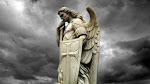
First Sunday of Lent Year A
One of the characteristics of being human is the ability to feel regret for the mistakes we’ve done. If we could only turn back the clock and do it all over again, which is simply wishful thinking. Most of us would have to simply live with our past mistakes and it would be almost impossible to correct them. We end up having to pay for our misdeeds for the rest of our lives.
But the good news is that what is impossible for Man, is possible for God. And so the gospel passage which tells us how our Lord faces off the devil and successfully refuses to succumb to temptation is not just a motivational story that if Jesus can do it, so can we, but a story of how the Lord has rewritten the ending of the story of the Fall of Adam and Eve, which we heard in the first reading. Our Lord Jesus didn’t have to travel back in time to do this, although He could, He simply reversed the outcome of the story of the first temptation and shows us how things could and can turn out differently.
The lectionary, by choosing to juxtapose the two events, the temptation of our first parents and the temptation of Jesus, wishes us to see the stark contrast of conditions, decisions and outcomes. The first story begins in a situation that can only be described as abundance. Adam and Eve were in a lush garden, they were not bereft of food or even choices, they had everything including the friendship and company of God, nothing was lacking, yet they doubted God’s goodness and authority. Despite all that God had given them which would have lasted any mortal being countless of lifetimes, it was just not enough. That famous song from the Great Showman, “Never Enough,” should be humankind’s theme song. Greed and jealousy do not come from a place of scarcity. They emerge from a vacuous heart which is originally made for God but now turned inwards.
On the other hand, the story of our Lord begins in the wilderness, the desert, a place of scarcity. Yet despite that scarcity, our Lord did not hunger for the allures of this world - food, money, power, popularity. The reason being is that His heart was already full, it was filled with the love of God. God was enough, He needed nothing more. Our Lord was in a desolate wilderness, physically weak, yet He trusted the Father enough to resist the lies of the devil. He refused to take an "easy way out" through sin, choosing to fulfill His mission through suffering. For that is what the three temptations He faced entailed - they were easy and convenient ways of getting the job done, “saving” the world, without having to make any sacrifices, lose any friends, or spill any blood. Likewise, Adam and Eve were tempted with an easy path to divinity. They were promised that if they ate the forbidden fruit, they “will be like gods.” They had forgotten that they were already like gods, children of God, living in a home with God.
The threefold temptation of Jesus mirrors that of Adam and Eve in the garden. They follow the threefold nature of the worldly things spelt out by St John in his epistle. In an exhortation to his flock, John warns them: “Do not love the world or what is in the world. If anyone does love the world, the love of the Father finds no place in him, because everything there is in the world - disordered bodily desires, disordered desires of the eyes, pride in possession - is not from the Father but is from the world. And the world, with all its disordered desires, is passing away. But whoever does the will of God remains for ever” (1 John 2:15-17). Doesn’t this passage wonderfully lay out the choice that is before us? We either choose the world that is passing or God who remains for ever. This is the battle we must undergo during Lent.
So, let us have a closer look at the three areas described in 1 John 2:16.
First, we have “bodily desires” or “lust of the flesh.” Eve was tempted with fruit that was "good to eat". In fact, God had pronounced that all fruits of the trees in the garden were “good to eat”, save for the fruit of the tree of knowledge of good and evil which was forbidden. Eve acknowledges to the serpent that God had given clear instructions: “You must not eat it, nor touch it, under pain of death.” And just like how we today can’t resist food that are good to eat but not good for our bodies and health, Adam and Eve also gave in to the temptation of the flesh. On the other hand, our Lord was tempted to turn stones into bread after 40 days of fasting. He reminds us that obeying God’s Word, that is His commands, is far more important and life-giving than giving in to the urges of the flesh. This is why the Church encourages us to fast and perform penances during this holy season to strengthen our resolve, strengthen our self-discipline in order to put a rein on unbridled passions of the flesh.
Next, John tells us to beware of “disordered desires of the eyes” or “lust of the eyes.” Eve saw that the fruit was "enticing to look at". What is denied is often more desirable and pleasurable. This second lust has been compounded in the modern age by the proliferation of pornographic material on the internet, the sexualisation that you see in advertisements and movies. In the past, there were more stringent censorship and you had limited access to printed pornography. But today, this is easily available with little effort with the click of a mouse or the scroll on your phone. Our Lord Jesus, however, did not succumb to this temptation when shown all the kingdoms of the world in a moment. Lent is a good time to bring back the ancient ascetic practice of “custody of the eyes,” which entails intentionally controlling one's gaze to avoid sinful, immodest, or distracting sights, thereby protecting the soul's purity. It involves moderating digital media consumption, avoiding "near occasions of sin," and fostering interior recollection. Instead of looking at the world and all its allures, train your eyes to gaze interiorly to make constant examination of conscience and upwardly to God in prayer.
Finally, John warns us that the world offers “pride in possession,” the mother and queen of vices. The serpent promised Eve she would "be like God". Most people often think that pride is merely a narcissistic character flaw, that is undue estimation with oneself and one’s achievements. But it is so much more. At the heart of this sin, the very sin that made angels into devils and which led our first parents to fall, is a rebellion against God. Every proud man eventually turns his back on God. A god will not tolerate the authority of another god. Power cannot be shared by the proud man. On the other hand, our Lord was tempted to throw Himself from the temple to force God's hand, proving His divinity. Instead, He reminded the devil that we should not test God’s authority. God will be God and not just a pawn to be manipulated by our every whim and fancy. The truth is that we cannot be gods through our own efforts but only by God’s doing. God had to become man, and He did in Jesus, in order for men to become gods.
So, back to our first question? Could things have turned out differently if Adam had obeyed when tempted in the garden? Of course! The Church declares at the Mass of the Easter Vigil, that Adam’s mistake, this fault, was indeed a “Felix culpa,” literally a “happy fault”. The reason being that it is happy and even “necessary” is because it resulted in a greater good: the incarnation and redemption of humanity by Jesus Christ. God can bring a greater good out of evil, He can bring victory out of defeat. Jesus, the New Adam, is proof of this.
And so, we too can reverse the outcome of sin through repentance and obedience to God and His commandments. We are not indefinitely trapped in our past mistakes but can chart a new course forward by following the example of our Lord. We may be victims of the Old Adam, but we can now be victors under the New One, Jesus. Happy Lent!
Showing posts with label Spiritual Warfare. Show all posts
Sunday, February 15, 2026
Monday, October 13, 2025
Spiritual Warfare
Twenty Ninth Sunday in Ordinary Time Year C
The recent assassination of a Christian apologist, political activist and commentator in the United States has exposed how a nation can be divided along deep irreconcilable ideological lines. In the aftermath of the assassination, calls by one side for unity, to tone down the rhetoric, to de-escalate the conflict may actually be insincere and quite hypocritical, for how can one side be asked to disarm while the other side continues to aim their guns at a target on your back. It would literally be suicide. There can be no real peace without authentic conversion on both sides and there can be no conversion if one does not accept the blame.
What has this to do with the readings for today which speak more about prayer then it does about conflict resolution? Most people do not see a connexion but prayer is the foundation of real peace as well as the most potent weapon in spiritual warfare, and believe me, we are at war. The conflict we are witnessing is merely a shadow of the spiritual war that is raging beneath the surface. That is why St Paul, in his letter to the Ephesians, tells us, “Put on the full armour of God so as to be able to resist the devil's tactics. For it is not against human enemies that we have to struggle, but against the principalities and the ruling forces who are masters of the darkness in this world, the spirits of evil in the heavens.” (Eph 6:11-13).
The prevalence and unrelenting force of evil is an important reminder that we Christians should be constantly equipped and prepared for spiritual warfare. Yes, we are called to be peacemakers, not peacekeepers. The former understands that peace can only be achieved by defeating evil and upholding the truth and what is good. Peacekeepers only wish to maintain a semblance of calm by all means necessary, even compromising with evil. Do not be so naive to think that we are in a time of peace, do not be so simplistic as to think that we can simply hold up a white flag and parlay with the enemy. There can be no negotiation or compromise with evil. There can be no unity with those who see no need to disavow evil, but in fact continue to promote it. Evil can only be fought and defeated. You can’t make evil your friend. That would be surrendering to evil, which means acquiescing to evil’s ultimate victory. Any harmony that arises from accommodating evil is not true harmony but subjugation to it. So, what must Christians do in the face of evil? We must fight and our most vital weapon is prayer.
In the first reading, we see how prayer sustained the fight between the Israelites and the Amalekites. In ancient times, conflict of nations was viewed as the conflict of their divinities, and the stronger divinities won. As much as war is a great evil, the Israelites were forced to take up arms to defend themselves and their faith in God. As long as Moses held up the staff in his hand, the Israelites had the advantage. But whenever he dropped his hand, the Amalekites gained the advantage. Note the gesture of Moses - raised hands, the Orans or prayer posture which the priest observed during Mass when he prays on behalf of his people. But those outstretched hands also remind us of our Lord Jesus Christ when He was pinned to the cross. His death would be the final victory God would use to defeat sin and Satan. He raises his hands in surrender to God’s Providence and not as an act of surrender to his enemies. Ultimately, the battle was won not through military strategy but through fidelity and prayer.
The gospel provides us with another lesson of prayer but our Lord frames it in the form of a parable. If the analogy in the first reading seems clearer in terms of spiritual warfare, the parable which our Lord tells seems to place the issue of prayer squarely with God. What if God doesn’t seem to be hearing our petitions or is slow in acting? It sometimes feels that the greater warfare is with Him rather than with evil itself. It does sometimes seem as if we are fighting God.
It is interesting that our Lord frames His lesson on prayer by using the example of an unjust judge, who seems to only dispense justice when he is pestered and pushed to a corner. It is certainly not a very charitable image of God. But it is not the intention of our Lord to compare the unjust judge to God as an equivalent. Rather, the example is meant to show the vast contrast between a self-serving figure and the All-Merciful, Ever-Compassionate and Just God. If such an unscrupulous man could dispense justice to his petitioners when pressed to do so, should we even doubt that we will have a quick answer from the God who always has our back?
Our Lord then turns the table on us. It is not God who is on trial but us. We are the accused, not God. We can now see why our Lord uses the image of a judge in His parable. Unlike this corrupt judicial officer, God is the Judge of both the living and the dead, and His judgment is always fair and just. Our Lord sets out the charge against us with this question, “when the Son of Man comes, will he find any faith on earth?” Prayer is no longer a test of God’s efficacy but rather of our fidelity. Our Lord promises us this: “I promise you, (God) will see justice done to them, and done speedily.” We should never doubt this. Our fidelity will be tested by our perseverance in prayer even when it is difficult to do so.
But prayer is not the only weapon we can avail of in spiritual warfare. We have the Word of God. St Paul in his second letter to Timothy which we heard in the second reading tells us that “all scripture is inspired by God and can profitably be used for teaching, for refuting error, for guiding people’s lives and teaching them to be holy.” And so he exhorts us: “Before God and before Christ Jesus who is to be judge of the living and the dead, I put this duty to you, in the name of his Appearing and of his kingdom: proclaim the message and, welcome or unwelcome, insist on it. Refute falsehood, correct error, call to obedience – but do all with patience and with the intention of teaching.”
Most of us do not like conflict. In fact, many of us choose to avoid it, preferring harmony over open disagreements. “Choose your battles” is generally good advice. But even though we may not go out of the way to look for a fight, living our Catholic faith in today’s world could be summarised in a single word, “embattled.” The fight comes to us whether we like it or not, which means that we must be ready and be prepared for a fight. Perhaps more importantly, we also tend to forget that the battle God calls every one of us to engage in is a spiritual one, fought on the open fields of our hearts. There is a spiritual battle at war within each one of us. Every person is at war against the evil one for their soul, no one is exempt in this battle of human life.
Because prayer is what transforms and guides us, it is the only battle worth fighting, and the only one we must — by God’s grace and our effort — persevere and win. And should our hands grow weary like Moses, though we do not have companions like Aaron and Hur to help us hold them upright, we know that God Himself will give us the Holy Spirit, the sacraments and necessary graces to persevere. For it has been promised that “those who hope in the Lord will renew their strength. They will soar on wings like eagles; they will run and not grow weary; they will walk and not be faint” (Isaiah 40:31).
The recent assassination of a Christian apologist, political activist and commentator in the United States has exposed how a nation can be divided along deep irreconcilable ideological lines. In the aftermath of the assassination, calls by one side for unity, to tone down the rhetoric, to de-escalate the conflict may actually be insincere and quite hypocritical, for how can one side be asked to disarm while the other side continues to aim their guns at a target on your back. It would literally be suicide. There can be no real peace without authentic conversion on both sides and there can be no conversion if one does not accept the blame.
What has this to do with the readings for today which speak more about prayer then it does about conflict resolution? Most people do not see a connexion but prayer is the foundation of real peace as well as the most potent weapon in spiritual warfare, and believe me, we are at war. The conflict we are witnessing is merely a shadow of the spiritual war that is raging beneath the surface. That is why St Paul, in his letter to the Ephesians, tells us, “Put on the full armour of God so as to be able to resist the devil's tactics. For it is not against human enemies that we have to struggle, but against the principalities and the ruling forces who are masters of the darkness in this world, the spirits of evil in the heavens.” (Eph 6:11-13).
The prevalence and unrelenting force of evil is an important reminder that we Christians should be constantly equipped and prepared for spiritual warfare. Yes, we are called to be peacemakers, not peacekeepers. The former understands that peace can only be achieved by defeating evil and upholding the truth and what is good. Peacekeepers only wish to maintain a semblance of calm by all means necessary, even compromising with evil. Do not be so naive to think that we are in a time of peace, do not be so simplistic as to think that we can simply hold up a white flag and parlay with the enemy. There can be no negotiation or compromise with evil. There can be no unity with those who see no need to disavow evil, but in fact continue to promote it. Evil can only be fought and defeated. You can’t make evil your friend. That would be surrendering to evil, which means acquiescing to evil’s ultimate victory. Any harmony that arises from accommodating evil is not true harmony but subjugation to it. So, what must Christians do in the face of evil? We must fight and our most vital weapon is prayer.
In the first reading, we see how prayer sustained the fight between the Israelites and the Amalekites. In ancient times, conflict of nations was viewed as the conflict of their divinities, and the stronger divinities won. As much as war is a great evil, the Israelites were forced to take up arms to defend themselves and their faith in God. As long as Moses held up the staff in his hand, the Israelites had the advantage. But whenever he dropped his hand, the Amalekites gained the advantage. Note the gesture of Moses - raised hands, the Orans or prayer posture which the priest observed during Mass when he prays on behalf of his people. But those outstretched hands also remind us of our Lord Jesus Christ when He was pinned to the cross. His death would be the final victory God would use to defeat sin and Satan. He raises his hands in surrender to God’s Providence and not as an act of surrender to his enemies. Ultimately, the battle was won not through military strategy but through fidelity and prayer.
The gospel provides us with another lesson of prayer but our Lord frames it in the form of a parable. If the analogy in the first reading seems clearer in terms of spiritual warfare, the parable which our Lord tells seems to place the issue of prayer squarely with God. What if God doesn’t seem to be hearing our petitions or is slow in acting? It sometimes feels that the greater warfare is with Him rather than with evil itself. It does sometimes seem as if we are fighting God.
It is interesting that our Lord frames His lesson on prayer by using the example of an unjust judge, who seems to only dispense justice when he is pestered and pushed to a corner. It is certainly not a very charitable image of God. But it is not the intention of our Lord to compare the unjust judge to God as an equivalent. Rather, the example is meant to show the vast contrast between a self-serving figure and the All-Merciful, Ever-Compassionate and Just God. If such an unscrupulous man could dispense justice to his petitioners when pressed to do so, should we even doubt that we will have a quick answer from the God who always has our back?
Our Lord then turns the table on us. It is not God who is on trial but us. We are the accused, not God. We can now see why our Lord uses the image of a judge in His parable. Unlike this corrupt judicial officer, God is the Judge of both the living and the dead, and His judgment is always fair and just. Our Lord sets out the charge against us with this question, “when the Son of Man comes, will he find any faith on earth?” Prayer is no longer a test of God’s efficacy but rather of our fidelity. Our Lord promises us this: “I promise you, (God) will see justice done to them, and done speedily.” We should never doubt this. Our fidelity will be tested by our perseverance in prayer even when it is difficult to do so.
But prayer is not the only weapon we can avail of in spiritual warfare. We have the Word of God. St Paul in his second letter to Timothy which we heard in the second reading tells us that “all scripture is inspired by God and can profitably be used for teaching, for refuting error, for guiding people’s lives and teaching them to be holy.” And so he exhorts us: “Before God and before Christ Jesus who is to be judge of the living and the dead, I put this duty to you, in the name of his Appearing and of his kingdom: proclaim the message and, welcome or unwelcome, insist on it. Refute falsehood, correct error, call to obedience – but do all with patience and with the intention of teaching.”
Most of us do not like conflict. In fact, many of us choose to avoid it, preferring harmony over open disagreements. “Choose your battles” is generally good advice. But even though we may not go out of the way to look for a fight, living our Catholic faith in today’s world could be summarised in a single word, “embattled.” The fight comes to us whether we like it or not, which means that we must be ready and be prepared for a fight. Perhaps more importantly, we also tend to forget that the battle God calls every one of us to engage in is a spiritual one, fought on the open fields of our hearts. There is a spiritual battle at war within each one of us. Every person is at war against the evil one for their soul, no one is exempt in this battle of human life.
Because prayer is what transforms and guides us, it is the only battle worth fighting, and the only one we must — by God’s grace and our effort — persevere and win. And should our hands grow weary like Moses, though we do not have companions like Aaron and Hur to help us hold them upright, we know that God Himself will give us the Holy Spirit, the sacraments and necessary graces to persevere. For it has been promised that “those who hope in the Lord will renew their strength. They will soar on wings like eagles; they will run and not grow weary; they will walk and not be faint” (Isaiah 40:31).
Labels:
counter cultural,
Evil,
parable,
Prayer,
Spiritual Warfare,
Suffering,
Sunday Homily
Subscribe to:
Posts (Atom)