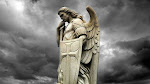
First Sunday of Advent Year B
Advent begins not with sentimental anticipation of a baby in a manger, but with a sober warning: “So stay awake, because you do not know when the master of the house is coming … if he comes unexpectedly, he must not find you asleep.” Rest assured, our Lord is not denying us necessary deep sleep or even the occasional 40 winks or afternoon siesta.
At the heart of His warning is spiritual sleep or sloth, counted as one of the seven deadly sins. What is sloth? Sloth is one of the most misunderstood of the cardinal sins. It’s translated from the Greek word akedia (a = absence + kedos = care), meaning indifference or negligence. So, sloth is not merely laziness; it is more properly understood as sorrow or indifference. St Thomas Aquinas speaks of sloth as sorrow for spiritual good. In other words, we find doing anything good or even doing anything for that matter, as extremely burdensome. It’s no longer the cross when everything feels like a cross, even the simplest of tasks. Some modern commentators have attempted to describe it as the “I could care less” or “I don’t care” attitude or the pandemic of boredom we see so prevalent in our day and age.
And so, what our Lord is warning in today’s gospel is not just sleeping on the job for someone who should be at work. The danger is not merely physical drowsiness; it is the far more deadly condition of complacency and idleness. We can keep busy with a thousand things—work, family, even parish activities—and still be spiritually asleep. We can go through the motions of prayer, Mass and the occasional good deed while the heart has quietly settled into the comfortable assumption that everything is “good enough.” Or we could be doing all these things as mere routine and in fact, a heavy burden. A person could be a workaholic and still be guilty of spiritual sloth. He does everything, including praying, coming for Mass, fulfilling all his obligations and yet feel no joy or fulfilment in any of these. That is the sleep the Lord warns against.
Because sloth leads to the abandonment of God, the blinding of His light in our otherwise darkened world, the solution is to throw ourselves deliberately and consciously into the hands of God, with great humility, recognising our poverty and seeking His miraculous grace to give us grateful, loving, and passionate hearts. The prophet Isaiah gives us the proper posture for this season. It begins with a sincere confession that our sins have cut ourselves from God and then humbly acknowledge: “Lord, you are our Father; we the clay, you the potter, we are all the work of your hand.”
Here is the heart of the matter. God is the potter; we are only the clay. We cannot shape ourselves into holiness any more than a lump of clay can leap onto the wheel and form itself into a vessel. Everything begins with the initiative of the potter. Everything depends on the good gifts and graces He has already poured out. St Paul drives the point home in the second reading: “I never stop thanking God for all the graces you have received through Jesus Christ. I thank him that you have been enriched in so many ways … while you are waiting for our Lord Jesus Christ to be revealed.” God is faithful. He who called us will sustain us to the end—if we do not fall asleep on the job. Even if we do, we fall into the drowsiness which sloth and other sins bring upon us, God does not cease to work to awaken the seed of faith which He has planted in us.
And yet, so many of us resist the work of God. We demand autonomy. We insist on our independence. Spiritual sloth is the refusal to cooperate with the potter’s hands. It is the quiet decision to remain formless clay rather than yield to the pressure that shapes us. Complacency whispers that the vessel is already finished. It sells us the lie that what we are doing now is enough, that there is no need for improvement, there is no further need for growth, there is absolutely no need for repentance because we have bought into the delusion that we are perfect as we are. Idleness leads to passivity. The other day, I heard this simple piece of wisdom, “if you do nothing, don’t expect anything good to be done.”
The antidote to sloth is evangelical watchfulness. If sloth is indifference to God, watchfulness is active fidelity to Him. It is the daily decision to let the potter continue His work—through prayer that is more than routine, through examination of conscience that is honest, through the sacraments that actually convert us, through works of mercy that cost us something. Every flaw, every bubble, every warping or distortion can be reworked if we are willing and humble enough to submit to the loving hands of the potter once again. This may feel uncomfortable. It may sometimes feel painful, but we trust the hands of the Lord and His judgment because no flaw can escape His eyes. In re-forming us, He is making us the best version of ourselves.
It has often been said to the point of sounding cliche that Advent is a season of Hope. But I’m going to say it again. Hope is not trusting that better things are coming, we have no claim on this but that our God will not disappoint us as how He has remained faithful to us in the past despite our waywardness and sloth. We remain clay, not finished pottery. And that is good news. If we were already fired and set, there would be no room left for the Potter’s hands. But because we are still soft, still formable, still unfinished, God can continue to mould us into the image and likeness He intended from the beginning.
Each Advent is precisely such an opportunity: a fresh season in which the Divine Potter takes us once more onto the wheel, presses out the lumps of sin and self-will, and reshapes us according to His design. Let us, then, yield ourselves this Advent—not as finished products proudly displayed, but as living clay, ready to be remoulded by the patient and loving hands of God.
And now a special word to our catechumens who have celebrated the Rite of Acceptance this evening. Dear friends, today the Church formally receives you as candidates for baptism. You are stepping onto the potter’s wheel in a new and public way. Do not imagine that this journey depends on your own strength or cleverness. The catechumenate is a potter’s workshop. The grace you need has already been given; the faithful God who called you will sustain you. But neither may you treat this time as a mere waiting room. Stay awake. Cooperate actively with the graces you receive in the catechumenate. Let the Word and the community shape you. Avoid the sleep of complacency. The Master is coming—and He desires to find you alert, responsive and ready to be formed into vessels of His glory. We, your brothers and sisters, will walk with you and pray for you. With you, we too continue to allow the Divine Potter to reshape us in His image and likeness.
Monday, November 23, 2026
Tuesday, November 17, 2026
Christ is King
Solemnity of Christ the King Year A
Most of us can only dream of being granted an audience before a king. We imagine the careful protocols, the restricted access, the long corridors of power, and the sense that only the influential, the well-connected, or the powerful ever truly stand before the throne. Kings, by their very nature, are distant. They are approached with formality, if they are approached at all. Ordinary people remain outside the gates, content to catch a distant glimpse or to hear official curated reports or read juicier gossip of happenings within royal inner circles from the tabloids.
Yet the King we celebrate today is utterly different. Christ the King does not limit His audience to the mighty. He does not reserve His presence for those who can claim status or influence. Instead, He welcomes all. More than that, He condescends to our lowly state. The One who sits upon the throne of glory is the same One who first emptied Himself, who took the form of a servant, who entered our world not in splendour but in poverty, not in power but in vulnerability. He does not wait for us to climb up to Him; He comes down to us. He makes Himself accessible in the hungry, the stranger, the sick, and the imprisoned. He grants audience not in a distant palace, but in the ordinary and the overlooked places of human need. And it is to this King that the Church turns our gaze today.
This is the King who summons the nations before Him—not to exclude, but to reveal the truth of every heart. He is the Son of Man coming in glory, seated upon His throne, before whom all the nations are gathered. He separates the sheep from the goats. He sees all. He knows all. He judges all. He reigns overall, whether one submits to His authority or not. And in the end, every human claim to power is brought to account before Him.
Such unfettered and absolute power makes many of us uncomfortable. Most of the royals we know bleed like the rest of us. In recent months our own Malaysian state of Negeri Sembilan has been shaken by a painful royal crisis. Certain parties, claiming customary authority, sought to remove the reigning Yang di-Pertuan Besar and install another. What followed has been confusion, competing proclamations, a paralysed state government, revoked appointments, postponed assemblies, and a constitutional limbo that has left ordinary people wondering who truly holds authority. The state has been left in shambles while legal and customary mechanisms grind slowly forward. In a twist of irony, those who sought to usurp power have, in many ways, been disempowered by the very chaos they unleashed. They had forgotten that they serve at the pleasure of their liege and not the reverse.
Does this not sound familiar? Throughout history, whenever human beings—whether kings, chiefs, governments or ideologies—have tried to dethrone God and place themselves or their systems in His place, the result has been the same: disorder, division and eventual collapse. Nations that once proclaimed “God is dead” or that religion must be banished from public life have often found their moral foundations crumbling, their social fabric fraying, and their people searching desperately for meaning. In their hubris they sought to replace the King of kings; in the end they discovered that without Him, even the strongest institutions stand on sand. Monuments to these dictators have been pulled down whereas those which honour God and His Christ have been raised once again from the ashes and rubble.
Yet look at the Church. Across centuries of persecution—from the Roman arenas to modern totalitarian regimes—the Church has been declared finished more times than we can count. Emperors, ideologues and revolutionaries have tried to silence her, confiscate her property, rewrite her doctrines or erase her from memory. And still she stands. Not because of political cunning or military might, but because her King is not of this world. This King deliberately chose to submit to His enemies once but never again. He will kneel to no human power or authority again. Even the gates of hell and the Lord of Hades have not prevailed, and they never will. The Church endures precisely because she continues to acknowledge One who is greater than any earthly power.
Our Gospel today leaves us in no doubt: the One who was judged (and continues to be judged) by the world—mocked, crowned with thorns, crucified between two thieves—is the same One who will return as Judge of all. “In so far as you did this to one of the least of these brothers of mine, you did it to me.” Those who presume to sit in judgment over God, who dismiss His commandments, who treat His authority lightly, will one day stand before the Divine Judge who sees every heart and weighs every action. The measure we use will be measured back to us. Does this sound like a threat? If it is, it is not an empty one.
But this is not a threat meant to terrify, but a truth meant to awaken. And so, it is pastoral and loving call to all who will listen. Christ is King—not merely of the Church, not merely of private piety, but of the entire universe. We can choose to ignore this truth but it is true, despite our protestations. His kingship is not secured by force or by majority vote. It is established by the Cross and confirmed by the Resurrection. Every earthly authority, every traditional institution, every political arrangement is secondary and provisional. They derive whatever legitimacy they possess from the One whose dominion is everlasting.
Therefore, my brothers and sisters, the call of this Solemnity is clear and urgent. True power is found not in seizing thrones or in turning our backs on God, but in kneeling before Him, the one true King. I am reminded of the mosaic icon of the Byzantine emperor, Leon the Wise, kneeling or literally prostrating at the feet of Christ set in the tympanum above the royal doors leading into the great medieval church of Hagia Sophia, reminding all his successors of this truth. The truth is that those who grasp for control and power often lose them; whereas those who surrender to Christ discover a freedom and strength the world cannot give. The sheep on the right are those willing to prostrate their egos to the level of the weak and marginalised and thus discover their Lord in their midst, hidden with those considered the least.
As we celebrate this feast, let us renew our allegiance. Let Christ reign in our homes, our workplaces, our decisions, our politics and our hearts. May every attempt to replace God end in disorder; every humble submission to Him lead to life, every person in need be a sacrament of His presence calling us to offer respect, dignity and love.
Christ is King. Daulat Tuanku. Ampun Tuanku. Beribu ribu ampun!
Labels:
Authority,
Christ the King,
Feast,
Feast Day Homily,
Politics,
Sunday Homily
Monday, November 9, 2026
Fidelity not innovation
Thirty Third Sunday in Ordinary Time Year A
Some of you may have watched at least one version of that iconic mentor-student movie of Karate Kid. What unites the first and re-booted movie is the methodology the mentor uses to train his prodigy. Whether it is enduring the repetitive and mundane work of waxing cars and painting fences in the first movie, or the proper etiquette of hanging your cloak on a hangar in the version 2.0, these actions unbeknownst to the student were really ways of providing him with the necessary foundation to the martial arts. Who could have guessed? One can easily understand the frustration of the student in being asked to do such pointless, demeaning and repetitive actions while he has his sights on bigger things. Eventually, the student finally discovers the wisdom of his master, and his hubris-filled folly. The message is clear: You cannot learn something new if your ego tells you that you are above the menial work, whereas patiently doing the small, uncelebrated steps properly builds a rock-solid foundation for greater things.
This is what we see in our readings today. To be honest, the three readings we have just heard appear, at first glance, to make strange bedfellows. One praises the industrious and virtuous wife who rises while it is still dark, works with willing hands, and opens her palms to the poor. Imagine that - crossing a Stepford wife with Mother Teresa. The second reading warns that the Day of the Lord will come like a thief in the night, so we must stay awake and sober. And then comes the longest parable in Matthew’s Gospel—the story of the talents—which so many of us still hear as a motivational talk about “using your gifts” or maximising your potential.
That popular reading of the parable misses the point. A talent here is not a personal skill or ability; it is a unit of weight and value, an enormous sum of money. Some say that it was equivalent to the value of a tribute from a client state to its more dominant and powerful neighbour. Even the servant who received only one talent was entrusted with a staggering amount. Knowing this little factoid helps us to see that the parable is more than just an exhortation to be productive. Rather, it is eschatological, it is about the end times. It is about the time between the Master’s departure and His return, about how disciples are to live while they wait. And the Master’s verdict for those who had done their duty faithfully is crystal clear: “Well done, good and faithful servant; you have shown you can be faithful in small things, I will trust you with greater; come and join in your master’s happiness.”
Notice what is rewarded - here’s the clue: its mention twice in just one short sentence. This is the secret of success, or in our case, salvation - faithfulness, not brilliance; diligence in the ordinary, not dazzling innovation; simple steadfast perseverance. The first two servants simply went and traded with what they had been given. They did not invent new financial instruments or make revolutionary enterprising investments. They did the straightforward, somewhat mundane work of commerce—buying, selling, investing carefully—and returned a profit. The third servant’s failure was not a lack of enterprising creativity; it was a refusal to act at all. He buried the gift out of fear and laziness and then tried to justify himself by painting the Master as a hard man. He blamed his Master for his own failure.
And so, we can see here that the real secret to Christian discipleship is fidelity, not innovation. We live in an age that idolises the novel, the disruptive, the “game-changing.” Our generation gets bored so easily, failing to recognise that there is nothing new under the sun. Even in the Church we sometimes hear the subtle pressure to reinvent everything, to make the faith “relevant” by constant novelty. Yet the Gospel holds up a different standard. The worthy wife of Proverbs is not celebrated for inventing a new household system; she is praised for the steady, hidden, repetitive work of her hands—spinning wool, rising early, stretching out her arms to the needy. St Paul does not urge the Thessalonians to devise ingenious new strategies for the end times; he simply tells them to stay awake and be sober, living as children of the light in the ordinary duties of each day. This is what our Lord commanded His disciples to do in the Garden of Gethsemane and He will expect to hear from us at the Last Judgment.
The small matters are where faithfulness is proven. The daily examination of conscience. The quiet act of charity that no one notices. The patient listening to a difficult parishioner. The thankless and often painful job of parenting. The faithful attendance at Mass even when one feels nothing. Never underestimate the power of the ordinary especially when done faithfully. The careful stewardship of the ordinary responsibilities of family, work, and parish. These are the “talents” entrusted to most of us. Few are called to dramatic apostolic breakthroughs; but all are called to be good and faithful servants in what has been placed in their hands.
Notice another angle of the parable is that the Master does not demand equal results. It is never a matter of him pitting one servant against the other or where he is creating an environment of competitiveness among his subordinates. Rather, the only thing he demands is equal faithfulness according to the measure given. The servant with two talents receives the same commendation as the one with five. What matters is not the size of the return but the integrity of the heart that sought to honour the Giver. The tragedy of the third servant is that he viewed the Master through the lens of fear rather than trust. He could not see the generosity already shown to him, and so he refused to risk even a small act of fidelity. The greatest tragedy is not in failing, but in never trying.
As we approach the end of the liturgical year and hear once more the warning that the Lord will come like a thief, the question is not whether we have been clever or original or even consistently successful. The question is whether we have been faithful in the small, ordinary, sometimes tedious things entrusted to us. Have we worked with willing hands? Have we used whatever graces or charisms which God has given us, sufficient for the work He has entrusted to us, rather than burying them in the ground of fear or indifference? The Master is not looking for innovators. He is looking for faithful servants. And to those who prove faithful in little, He promises a share in His own joy. “Well done, good and faithful servant; you have shown you can be faithful in small things, I will trust you with greater.” That is the only reward worth seeking.
Labels:
Discipleship,
Last Things,
parable,
Sunday Homily
Tuesday, November 3, 2026
Wisdom which surpasses all human knowledge
Thirty Second Sunday in Ordinary Time Year A
Recently, Fr Bonaventure issued a notice on my behalf informing parishioners of my medical condition after the fall I had sustained at an overseas conference. Immediately, some persons who had received the notice, subjected it to a fact-check verification using AI (artificial intelligence). I found the irony quite amusing. People would rather believe AI, a non-human programming based on data input and algorithms, than an actual human person, who got the information directly from the horses' mouth - me!
Yes, there is certainly a quiet irony in our age. We have built machines that can process more information in a second than a human mind could absorb in a lifetime. Without human ingenuity, these machines would never have been built but without these machines, man would not have been able to discover new knowledge that would have been beyond our normal reach.
I’m sure you’ve all heard of AI, now famously rebranded by Trump as SI - Super Intelligence! They write poems, diagnose diseases, predict markets, compose your presentation and even attempt to mimic prayer. And some priests have even resorted to AI to compose their homilies, which is a blessing, since the quality has exponentially improved! Yet the first reading this Sunday opens with a different kind of knowledge: “Wisdom is bright and does not grow dim. By those who love her she is readily seen and found by those who look for her.” This is not data. This is not computational power. This is the wisdom that sits by the gate at dawn, waiting for the one who rises early to meet her. It is personal, relational, and ultimately divine.
Such wisdom cannot be explained logically. It has to be demonstrated visually. And this is what we see in today’s Gospel which presents us with the parable of the ten bridesmaids —five wise, five foolish—waiting for the Bridegroom. Note the uniqueness of this parable from the other teachings and parables of the Lord about the end-times, all of which exhorts vigilance or watchfulness. But in this parable, all ten bridesmaids, both the sensible and foolish, fall asleep. The difference between the two categories is not intelligence or social status. The difference is the extra supply of oil. The wise have brought extra oil; the foolish have not. When the cry goes up at midnight, “The bridegroom is here! Go out and meet him!”, only those who have prepared can enter the wedding feast. The door is shut on the unprepared. It feels like a cruel and harsh ending, but it really isn’t. The ending depends on whether one is prepared or not, and not on whether they had remained vigilant till the arrival of the Bridegroom.
Although the Bridegroom is delayed and they had no knowledge of the exact time and hour of his arrival; his coming is certain. The foolish ones cannot excuse their own carelessness and unpreparedness by putting the blame squarely on the bridegroom’s delay. They were only prepared for a short wait and dismissed the real possibility of his delay. For this mistake, they had only themselves to blame. Readiness cannot be borrowed at the last moment. You are either ready or you are not. It is a personal choice which no one can substitute for you.
In our time, artificial or super intelligence tempts us to believe that preparation is a matter of better algorithms, faster processing, more complete datasets. We seem to have become more efficient but at the same time, grown lazy and careless. We imagine that if we can only gather enough information, we will never be caught unready. Yet Pope Leo XIV, in his most recent encyclical Magnifica Humanitas, reminds us of a deeper truth: “In the era of artificial intelligence, when human dignity is threatened by new forms of dehumanisation, ours is the pressing duty to remain profoundly human. We must lovingly safeguard the grandeur of humanity bestowed upon us and revealed in its fullness in Christ, the splendour of which no machine can ever replace.” Our reasoning, our ability to think, is what makes us human. With such amazing thinking machines who do all the hard thinking on our behalf, have we become less human since man is defined as a rational being?
The truth of the matter is that no machine can love. No machine can repent. No machine can keep vigil in the night of the soul, trimming the lamp of faith with the oil of charity, prayer, and fidelity. The wisdom of the sensible bridesmaids is not a product of superior calculation. It is the fruit of a heart that has learned to wait, to hope, and to love beyond the horizon of immediate results. It is the wisdom that knows the Bridegroom’s delay is itself a gift—an invitation to deeper trust, to a deeper conversion, to a deeper faith.
Pope Leo’s revolutionary document, Magnifica Humanitas, uses an imagery from the patron of his order, St Augustine, and places before us a decisive choice: “Humanity, created by God in all its grandeur, is today facing a pivotal choice: either to construct a new Tower of Babel or to build the city in which God and humanity dwell together.” The Tower of Babel is the dream of a self-sufficient humanity that needs neither God nor neighbour—only more powerful tools. We feel more emboldened, more empowered, more invincible as we build faster and more powerful machines to think for us. Our greatest mistake is that in our hubris we have forgotten that the city of God is built by those who keep oil in their lamps: the oil of mercy, of fidelity to the small duties of daily life, of silent prayer that no chatbot can generate, of love that refuses to treat persons as data points.
The foolish bridesmaids are not condemned for lacking intelligence. They are shut out because they treated readiness as something that could be improvised when the moment arrived. In an age of AI, the danger is subtler: we may come to believe that wisdom itself can be outsourced, that the oil of preparedness can be downloaded, that the Bridegroom’s coming can be predicted by predictive analytics. But the Gospel is clear: “You know neither the day nor the hour.” The only adequate preparation is to live already as the Bridegroom has arrived, that the wedding feast is underway—keeping the lamp of faith burning with the oil of a life ordered toward Christ.
So, my brothers and sisters, let us not be dazzled by the brilliance of our machines. Let us rather seek the wisdom that is resplendent and unfading, the wisdom that sits by the gate at dawn. Let us keep oil in our lamps—not the oil of mere information, but the oil of charity, of sacramental life, of quiet fidelity. For the Bridegroom is coming. And when He comes, no algorithm will open the door. Only the heart that has learned to wait in love will enter the feast. May the Lord grant us that wisdom which surpasses all human knowledge—and which no artificial intelligence will ever possess. Amen.
Saturday, October 24, 2026
Requiescat in Pace
Commemoration of All the Faithful Departed
As macabre as it sounds, those consoling words of our Lord that we had just heard in the gospel is visualised in our cemeteries. On tombstones throughout the Christian world, carved in stone or etched in metal, we so often find those three solemn words: Requiescat in Pace — “May he (or she) rest in peace.” We see them in Latin, or in their familiar abbreviation, R.I.P. They are spoken softly at the graveside, whispered in the quiet of our hearts, and prayed at every funeral vigil and Requiem Mass. Yet how easily we can reduce them to a polite formula, a conventional closing to a life that has ended.
The abbreviation has been commonly and badly translated into English as “Rest in Peace.” As a statement of fact, it may sound quite presumptuous, underlying a popular belief that our departed loved ones are already in heaven, fully resting in peace. But note that the more accurate translation of the Latin is in the form of an invocation, a prayer: “MAY they rest in peace.” We can only pray and hope that our loved ones have found rest. It is not something which we can presume automatically as if our live decisions have no bearing to what happens to us after death. That is why at every funeral we should pray that the Lord shows His mercy to the deceased by pouring out His forgiveness on a sinner, which may sound insensitive to the modern ear, rather than canonise him or her with a moving eulogy that elevates them to the status of a saint. The Feast of All Saints is what we celebrated yesterday. But today we remember the dead, especially those among us who may have died without fully experiencing the perfection and freedom from sin that is required of divine beatitude and yet remain beneficiaries of our Lord’s mercy shown through the process we call purgatory.
Today the Church invites us to look deeper into these words. Requiescat in Pace is not merely a wish for the body to lie undisturbed in the earth. It is a prayer for the soul’s journey — that long, purifying pilgrimage from the incompleteness of this life into the fullness of eternal rest in God. Let’s be honest, deadly honest - We live, most of the time, with a myopic view of reality. We see only the small picture: the grief of separation, the silence of the grave, the ache of absence. We forget the larger truth proclaimed so beautifully in the Preface of the Masses for the Dead: “In him the hope of blessed resurrection has dawned, that those saddened by the certainty of dying might be consoled by the promise of immortality to come. Indeed for your faithful, Lord, life is changed, not ended.”
“Life is changed, not ended”. How many of us have missed this piece of simple but profound truth? Perhaps, we are too blinded by our grief to pay attention to what Mother Church speaks to us at this very hour of our need. The soul does not cease its journey when the body returns to dust. For the great majority of the faithful departed — those who have died in God’s grace and friendship, yet still imperfectly purified — there remains a final stage of the pilgrimage. The Church calls it Purgatory. It is not a midway point between heaven and hell, nor a temporary hell. It is the place, or rather the process, where souls already destined for heaven are prepared for the Beatific Vision. It is where the work of God, begun in their earthly lives, is brought to completion. It is the hospital where the last infections of self-love are burned away by the fire of divine love, so that the soul may love as God loves.
This is why we pray for the dead. If our loved ones were already in the full glory of heaven, they would have no need of our prayers. If they were lost forever, no prayer of ours could reach them. But because they are still on the way — still being purified, still journeying toward the eternal rest for which they were made — our prayers, our Masses, our sacrifices, our acts of charity offered on their behalf truly help them. As the Second Book of Maccabees reminds us, “It is a holy and wholesome thought to pray for the dead, that they might be loosed from their sins.”
Requiescat in Pace, then, is not a passive hope. It is an active intercession. When we speak those words, we are joining our voices to the prayer of the whole Church — the Church Militant on earth, the Church Suffering in purification, and the Church Triumphant in glory — all bound together in the Communion of Saints. We are asking that the soul may complete its journey, that every remaining attachment to sin and self may be purified, that the last obstacles to perfect union with God may be removed, and that the soul may at last enter into the Sabbath rest of heaven.
And what of us who still walk this earth? The same journey awaits us. We too are pilgrims. We too carry the unfinished business of our lives — the habits of sin not yet fully uprooted, the loves still disordered, the hearts still only partially converted. We too are looking for rest. God knows how weary and tired we are and how much we desire relief. He hears us and He answers us: “Come to me, all you who labour and are overburdened, and I will give you rest.” Every Mass we offer for the dead, every prayer we say, every sacrifice we make on their behalf is also a preparation for our own journey. In helping them toward their eternal rest, we ourselves are being drawn more deeply into the same mercy. Our Lord is teaching us that the path to truly finding rest for our souls is when we diligently shoulder His yoke, learn from Him, imitate Him and finally follow Him on the path to salvation. We won’t find rest when we turn our backs on Him. If Christ is absent from our lives and our hearts, we would only find “unrest.” Only in Him, can we truly find rest as St Augustine once prayed: “Thou hast formed us for Thyself, and our hearts are restless till they find rest in Thee.”
So today, let us not merely remember. Let us pray. Let us offer the Holy Sacrifice of the Mass for those who have no one to pray for them, for our parents and grandparents, for spouses and children, for friends and benefactors, for the forgotten and the abandoned. Let us visit their graves not only to place flowers, but to place our hearts in intercession. And as we do so, may we hear again those ancient words, not as a farewell, but as a prayer of hope:
Eternal rest grant unto them, O Lord,
and let perpetual light shine upon them.
May their souls and the souls of all the faithful departed,
through the mercy of God,
rest in peace.
Amen.
Labels:
All Souls,
consolation,
Death,
Eucharist,
Feast,
Feast Day Homily,
Penance,
Prayer,
Purgatory,
Resurrection
Dies Natalis
Solemnity of All Saints
Today the Church’s calendar does something rather beautiful and rare. All Saints falls on a Sunday. The Lord’s Day and the feast of all the holy ones of God coincide. All Saints and every Sunday ranks as a solemnity, a first class feast in rank. When both days converge, we could call it a double solemnity! A First First! This is no mere coincidence of dates. It is a quiet homily from the liturgy itself.
Sunday is the Day of the Lord—the day of His death and, more decisively, of His Resurrection. Every Sunday we stand again at the empty tomb and proclaim that death does not have the final word. The early Christians called the day of a martyr’s death his or her dies natalis— his day of birth - his birthday into eternal life. What the world saw as an ending, the Church recognised as a beginning: the day a Christian is reborn into heaven. So, when All Saints falls on a Sunday, the liturgy holds two birthdays together: the Resurrection of the Lord and the heavenly birthday of every saint, known and unknown. Our own death, if we die in the Lord, will one day be our dies natalis too.
Most of us can only imagine the day of our death, the exact moment of our expiration. Would we go out with a big bang, or with our loved ones surrounding our deathbed, or would we die an ignoble or lonely death on a hospital bed or home for the aged? No crystal ball or horoscope or Tarot card reading will be able to give us an exact account of how it would all end. But scripture does assure us that it would not be as frightening as we would imagine. St John in his epistle which we heard in the second reading tells us: “what we are to be in the future has not yet been revealed; all we know is, that when it is revealed we shall be like him because we shall see him as he really is.”
The readings today lift the veil. In the vision of John in the Book of the Apocalypse, which we heard in the first reading, we see the great multitude that no one can count, from every nation, tribe, people and language, standing before the throne and before the Lamb, washed in His blood, holding palm branches of victory. These are the ones who have already celebrated their dies natalis. They have passed through the great tribulation and now live in the unending Sunday of heaven.
How did they get there? The mystery of or the secret to their sainthood is found in them living out the gospel values which we had just heard. The Gospel places before us the Beatitudes—the very template of that sanctity.
“Happy are the poor in spirit… the gentle… those who mourn… those who hunger and thirst for righteousness… the merciful… the pure in heart… the peacemakers… those who are persecuted…”
These are not simply nice spiritual attitudes. They are the shape of a life that has already begun to die with Christ so that it may rise with Him. Sainthood is not a sudden overnight success story. It is gain incrementally, a little step at a time, a little dying to our ourselves here and there, and finally bearing fruit in a life of fidelity following Christ. The Beatitudes are the very programme of the dies natalis. They describe people who have learned to lose in the world’s eyes so that they may win in God’s. For example, poverty of spirit is the death of self-sufficiency. Meekness is the death of the need to dominate. Mourning is the death of false consolations. Hunger for righteousness is the death of indifference. Mercy is the death of the score-keeping heart. Purity of heart is the death of divided loves. Peacemaking is the death of the ego that thrives on conflict. Persecution is the final, public death of the self that still seeks worldly approval. Each beatitude promises an aspect of eternal life but demands a willingness to die to some inordinate attachment.
Contrary to popular opinion, the saints are not those who never stumbled. In fact, some have taken a mighty deep tumble in their lives. They, however, are those who allowed the grace of the Cross to turn every fall into a deeper surrender. A saint is simply a Christian who has taken the Sunday mystery—death and resurrection of Christ—and lived it daily until the final Sunday of his or her dies natalis. The Beatitudes are the ordinary path by which that daily dying and rising happens. They are not reserved for the extraordinary. They are the template for every baptised person who wants heaven to be more than a pious hope.
Today we celebrate the unnamed as much as the named. The grandmothers who prayed the rosary through decades of quiet fidelity. The fathers who carried the Cross of family responsibility without applause. The young people who chose purity when the world offered everything else. The worker who chooses integrity over politics or corruption. The sick who offered their suffering in union with Christ. The martyrs whose blood still cries out. All of them have already kept their dies natalis. And they cheer us on from the other side of the veil, because they know the secret: the same Lord who rose on the first day of the week is the One who will raise us on the last.
So, when this Sunday of All Saints comes round, let us hear the double invitation. Live the Lord’s Day every day, the Easter joy that never ends —die a little more to self, rise a little more into the life of grace. Let the Beatitudes shape your ordinary choices. Then, when your own dies natalis arrives, it will not be a strange or fearful day. It will simply be the final Sunday, the Easter that never ends, the definitive birthday into the kingdom where every tear is wiped away and the Lamb is the light forever. May the great cloud of witnesses who already celebrate their heavenly birthday intercede for us, so that one day this feast will be our feast too. Amen.
Labels:
All Saints,
Beatitudes,
Communion of Saints,
Death,
Feast,
Feast Day Homily,
Resurrection,
saints,
Sunday Homily
Sunday, October 18, 2026
Love God above all else
Thirtieth Sunday in Ordinary Time Year A
The Pharisees come to the Lord with a question that sounds pious but is really a test: “Master, which is the greatest commandment of the Law?” This was not a genuine question born out of sincere curiosity. In fact, it is quite likely they know the answer. The truth is that they wanted to catch Him in a debate about priorities—which duty ranks highest, which love comes first. Our Lord answers without hesitation, and His answer holds the whole Law and the Prophets together in two sentences that can never be separated and which every Christian should know by heart: “You must love the Lord your God with all your heart, with all your soul, and with all your mind. This is the greatest and the first commandment. The second resembles it: You must love your neighbour as yourself.”
Notice the order. Notice the force of that word “resemble” (Greek - omoia, from the root “homo”), or in some translations, “like.” The second is not an optional add-on, nor is it a softer version of the first. It resembles the first, it is like the first—because it draws its very life from the first. Any love for neighbour that is not rooted in love for God is no longer the love Jesus commands. It may look generous, it may feel warm, it may even do a great deal of good on the surface—but it is not Gospel love. But one thing is clear - the two parts of the commandment are inseparable, although they sometime seem to pull us in opposite directions.
There is a real tension here, and we must not pretend otherwise. On the one hand, we can become so absorbed in “loving God” or think that we are doing so, that we grow cold toward the people He places in our path—the stranger, the widow, the orphan, the one who inconveniences us. In fact, our Lord tells us that “if we have done this to the least of the brethren, we have done this to Him.” But there is more. The first reading from Exodus is blunt about the consequence of our indifference: the Lord hears the cry of the oppressed, and His anger flares against those who claim to belong to Him while crushing the vulnerable. You cannot love God and treat your neighbour as disposable. Remember what St John tells us: “Anyone who says they love God but hates their brother or sister is a liar” (1 John 4:20).
On the other hand—and this is the subtler danger in our time—we can become so absorbed in “loving neighbour” that God quietly drops out of the picture. We start to think that being a decent person, a helpful person, a socially conscious person is enough. We reduce the second commandment to a programme of social justice or altruism: do good, be kind, make the world better. And we call it Christian love. Loving others becomes purely our effort and ours alone. That is why love can often feel burdensome when it is not reciprocated. This is the problem we see in so many marriages, including those among Catholics. They view the love that they have for each other is purely a commitment they made during the wedding ceremony, not realising that there is a necessary third party to the marriage, One who cements the indissoluble bond between them - it is God. God’s love completes the marriage and brings it to fulfilment.
The second part of the commandment resembles the first precisely because it is an overflow of the first. When the heart is fixed on God—when we love Him with everything we are—then the neighbour is no longer a project or a cause or a way of feeling virtuous about ourselves. The neighbour becomes someone who belongs to the God we love. We see them with His eyes. We serve them with His heart. The love is no longer our own achievement; it is participation in the love that God Himself is.
That is the difference between Gospel love and the altruistic “love” of the do-gooder. The do-gooder acts from a sense of duty, or sympathy, or ideology, or the quiet satisfaction of being useful. All of that can produce real benefits. But it remains horizontal. It does not rise to God, and therefore it does not finally transform the one who gives or the one who receives. It can even become a subtle form of self-worship: I am the one who helps; I am the solution.
Gospel love is different. It begins on its knees. It begins with the confession that we ourselves are the ones who have been loved first—loved when we were strangers, when we were orphans of grace, when we had nothing to offer. Only from that place of having been claimed by God does our love for others become pure. It is no longer about proving our goodness; it is about allowing the goodness of God to pass through us. St Therese spoke of this love which “drove the members of the Church to action, that if this love were extinguished, the apostles would have proclaimed the Gospel no longer, the martyrs would have shed their blood no more”. Without such love, we would be an empty shell.
Saint Paul, writing to the Thessalonians in today’s second reading, shows us what this love looks like in practice. The believers there had received the Gospel “in spite of the great opposition,” and their joy in the Holy Spirit became a living witness. Their love was not a social programme; it was the fruit of having turned from idols to the living God and of waiting for His Son. Their neighbour-love was rooted in God-love, and therefore it had power.
So the tension remains, and it is healthy. If our love of God does not press us outward toward the neighbour, it is incomplete. If our love of neighbour is not continually drawn back into the love of God, it will eventually wither into activism or sentimentality. The two commandments stand together, the second resembles the first, because only when the heart is given wholly to God can it be given freely to others.
Today, then, let us ask for the grace to hold them in the right order. Let us love the Lord our God with everything we are—heart, soul, mind—and from that love, and never apart from it, let us love the neighbour He places before us. That is the whole Law. That is the Gospel. That is the only love that lasts or in the words of St Therese who found her true vocation in love: “that love is everything, that this same love embraces every time and every place. In one word, that love is everlasting.”
Labels:
commandments,
Love,
socialism,
St Therese,
Sunday Homily
Sunday, October 11, 2026
We belong to God
Twenty Ninth Sunday in Ordinary Time Year A
Most people these days seem obsessed with image, that is, how they appear to others and are perceived by the public. Politicians craft carefully curated images. Social media is a gallery of self-portraits, filtered and perfected. We let people see facets of our lives but only those parts which are favourable to us or serve our purpose. Church leaders wish to be perceived as holy and upright. Currency itself bears the face of power. And yet today’s readings confront us with a far more profound question of image and belonging: Whose image do we bear, and to whom do we ultimately belong?
In the first reading, the prophet Isaiah presents us with a startling figure: Cyrus, the pagan emperor of Persia. God addresses him as His “chosen,” literally His “anointed,” His messiah. “It is for the sake of my servant Jacob, of Israel my chosen one, that I have called you by your name, conferring a title though you do not know me.” Cyrus is chosen, not because of his faith, not because he worshipped the God of Israel, in fact, as the prophet noted, Cyrus did not even know the God of Israel. He was chosen purely for the sake of God’s people. He is an instrument in the divine hand, used for a purpose far greater than his own ambitions. He conquers, he opens doors, he restores the exiles—yet he remains largely unaware of the One who grasps his right hand. He seems to be the most powerful figure in the ancient world and yet there is another power far greater than his who is pulling the strings. This is what it means to be chosen by God. We take no credit in us being called and chosen. We did not earn it, we are not deserving of it, we have no achievements to show. And yet, God chooses us, just because He can!
Contrast this with Caesar in the Gospel. The Pharisees and Herodians approach our Lord with flattery and a trap: “Master, we know that you are an honest man and teach the way of God in an honest way, and that you are not afraid of anyone, because a man’s rank means nothing to you. Tell us your opinion, then. Is it permissible to pay taxes to Caesar or not?” Our Lord was not distracted by the seeming flattery and was not naive enough to fall into their trap. Instead, He asks for the coin. “Whose head is this? Whose name?” “Caesar’s,” they reply. Then comes the masterful answer: “Very well, give back to Caesar what belongs to Caesar – and to God what belongs to God.” In some translations it is seen as a debt “repay to Caesar what belongs to Caesar …”
Caesar’s image is stamped on the coin. His claim is political, economic, and, in the imperial cult, quasi-divine. Where local deities used to adorn the coinage of ancient civilisation, Caesar had the audacity to put his own image on the coin. That’s really making a loud statement - Caesar is claiming to be God. He not only demands tribute as a sign of allegiance but also a state-imposed cult that worships him. Yet our Lord quietly demotes him. Our Lord’s actions are clearly treasonous which is one of the objectives of His enemies, to either set Him up for the high crime of treason or place Him with the pagans as an idolater. The words of our Lord are not meant to be construed as a political reasoning that justifies the separation between the power of the State and that of religion or the Church. Rather it is placing Caesar’s authority under that of God’s, the fount of all power and authority. Caesar may have rights over the things that bear his image, but those rights are limited. There is a higher claim, a more fundamental belonging, and even Caesar and all rulers must be subject to that.
Here’s the irony behind these historical figures. Cyrus is the unwitting instrument who does not know the God who chooses him. Caesar is the pretender who claims what does not ultimately belong to him. One is used by God without knowing Him; the other is reminded that even imperial power is subordinate to the God who alone is Lord.
And here the readings turn toward us. St Paul writes to the Thessalonians: “We always mention you in our prayers and thank God for you all … (because) God loves you and that you have been chosen.” We too are the chosen. Not by accident of birth or political fortune, but by the free and loving election of God. And the deepest reason for that choosing is written into our very being: we are made in the image and likeness of God, as we read in the Book of Genesis. This is the clue to unpacking the teaching of our Lord in the gospel. The coin bears Caesar’s image; therefore it belongs to Caesar. We bear God’s image; therefore we belong to God. Everything we are—our intellect, our freedom, our capacity to love, our very existence—is stamped with the divine likeness. To “give to God what belongs to God” is not merely to offer a portion of our time or resources. It is to surrender the entire self - mind, heart, soul and being.
Being chosen is not a privilege that excuses us from responsibility. It is a vocation that calls us to live differently. The chosen are summoned to a life of gratitude and joy. This life of gratitude and joy is sustained and expressed through the three theological virtues: faith, hope, and charity. This is what St Paul tells us in the second reading.
In our current political climate where so many Malaysians have grown disillusioned and disheartened with our political leaders, with our Caesars, it is good to know that we have these three virtues that will provide us with the correct lens to view our future.
Faith is the recognition that God is God, and there is no other. Faith allows us to see beyond the surface of political power and to trust the hidden hand of Providence that can use even unlikely instruments for His purposes.
Hope keeps us from despair when the world seems dominated by Caesars of every kind. Hope remembers that history is not finally in the hands of the powerful, but in the hands of the God who once grasped the right hand of a pagan king for the sake of His people. Hope looks toward the definitive reign of Christ, when every image that competes with God’s will be revealed as temporary.
And finally, Charity—love—completes the triad. Because we bear God’s image, we are called to love as God loves: freely, generously, without calculation. It is the joyful response of those who know they have first been loved and chosen. Cyrus was chosen without knowing the Chooser. Caesar claimed what was not his. We, by contrast, have been given the grace to know the One who has chosen us. We know whose image we bear. And imitating our Creator, we must love as He does.
Therefore we can give to Caesar what is due—respect for legitimate authority, civic responsibility, the ordinary duties of citizenship—without ever surrendering what belongs exclusively to God: our hearts, our conscience, our ultimate allegiance, our very selves. Never forget that when you were created in your mother’s womb, you received the indelible image of the living God. At baptism, you received the indelible mark of Christ, the One who shows us what God’s image looks like. You are chosen. Live, then, in gratitude. Live in joy. Live by faith, hope, and charity. Give to God what belongs to God—and discover that in so doing, you lose nothing but instead, you receive everything.
Labels:
Authority,
baptism,
Church State,
creation,
Discipleship,
salvation,
Sunday Homily,
Vocations
Saturday, October 3, 2026
Eat and Live
Twenty Eighth Sunday in Ordinary Time Year A
There is an old proverb that still cuts close to the bone: “Eat to live, not live to eat.” It used to be the signature response of the late Fr Anthony Chan whenever asked the reason for his choice of a bowl of plain porridge when a sumptuous array of delectable food choices was placed before him. In his signature Kwangtung accent, he will readily chirp: “Eat to live, not live to eat.”
Although most Malaysians would scoff at the wisdom of the saying, many would secretly nod in agreement when we hear it. We may not like it, but you don’t need to like something for it to be true. We know the difference between taking food so that the body can keep going and turning every meal into the purpose of existence. Yet how easily we reverse the order. We live for the next satisfaction, the next comfort, the next distraction, as though the banquet of this world were the final destination rather than a provisional provision for the journey.
Today’s readings refuse to let us settle for mere survival. Our vision should not be so myopic. Our goals should be set higher. The first reading in particular open before us a vision of a feast that is not about filling the stomach but about filling the soul with life that death cannot touch. Isaiah paints the scene with almost embarrassing abundance: on this mountain the Lord of hosts will prepare for all peoples a feast of rich food and choice wines—juicy, rich food and pure, choice wines. He will destroy the veil that covers all peoples, the web woven over all nations; he will destroy death forever. The Lord God will wipe away the tears from every face. This is not a meal to keep us alive for another day. This is the meal that ends death itself. Salvation here is not the clever management of scarcity or the clever avoidance of suffering. It is the definitive overthrow of everything that reduces us to survivors.
The psalmist sings the same truth in quieter tones: “You have prepared a banquet for me in the sight of my foes… In the Lord’s own house shall I dwell for ever and ever.” Just imagine that: even in the dark valley of death, the table is set. The point is not that we never go hungry or never walk through shadow. The psalmist has actually experienced the depths of walking in that valley of the shadow of death. The point he is making is that the Shepherd’s provision is greater than the threat. We do not merely survive the valley; we are led through it to the house where we are meant to dwell forever.
Saint Paul, writing from a place of real deprivation and real abundance, has learned the secret: “I know how to be poor and I know how to be rich too. I have been through my initiation and now I am ready for anything anywhere: full stomach or empty stomach, poverty or plenty. There is nothing I cannot master with the help of the One who gives me strength.” Notice what he does not say. He does not claim that God will always keep the larder full or the bank account healthy. He claims that the One who strengthens him is enough, whether the plate is full or empty. Survival is not the goal. Communion with Christ is. And that communion supplies whatever is truly needed because “my God will fulfil all your needs, in Christ Jesus, as lavishly as only God can.”
Then comes the parable which our Lord tells in the gospel. A king prepares a wedding feast for his son. The original guests treat the invitation as optional, almost trivial. One goes to his farm, another to his business. It is clear where their priorities lie. Survival is far more important than bearing the risk of offending the king. Call it being presumptuous. This is where they make the greatest mistakes of their lives. In wanting survival above all else, they write their own death warrant and script for destruction. The king’s response is severe, yet the feast is not cancelled. The invitation is thrown wide open: go out into the streets and invite everyone you find, bad and good alike. The hall fills. But one man is found without a wedding garment and is cast out into the darkness. How do we make sense of this strange ending?
The answer is found in understanding the very purpose of the telling of this parable. The parable is not primarily about etiquette. It is about the difference between showing up and belonging. Many are invited; few are chosen. The wedding garment is not a fashion statement. It is the disposition of a heart that has accepted the invitation on the King’s terms, not its own. It is the recognition that this feast is not one more social obligation or one more opportunity for self-indulgence. It is the banquet of the Son, the feast of salvation where we “eat to live,” the place where death is destroyed and tears are wiped away.
Here the proverb “eat to live and not live to eat” finds its Christian depth. We are invited to eat so that we may live—not the thin life of biological survival, nor to feed our hedonistic urge for binging, not even the slightly thicker life of moral respectability, but the life that is communion with the Bridegroom. The Eucharist is the weekly rehearsal of that final banquet. Here we put into practice what we profess with mere words: “we eat to live!” The food we receive is not calories for another week of striving. It is the Body of the One who has already conquered death. To approach the altar merely to “get something out of Mass,” or to treat the invitation as one more item on a crowded schedule, is to live to eat. To come hungry for the life that only Christ can give, willing to put on the garment of conversion, is to eat in order to live—and to live forever.
The tragedy of the first guests was not that they were busy. It was that they judged the feast less important than their farms and businesses. The tragedy of the man without the garment was not that he was imperfect, but that he presumed the invitation required nothing of him - it exacted no cost, made no demands, and so “easy come easy go.” Both attitudes reduce the banquet to something manageable, something that fits around our survival strategies. Both of these scenarios serve as warnings to those of us who give excuses when we choose to skip Mass or come spiritually and physically unprepared, just waiting for Mass to end. Some don’t even wait. They are out the door once communion has been received.
So, the question returns to us with quiet force: do we eat to live, or do we live to eat? Do we treat the Lord’s invitation as one more demand on our limited energy, or as the one necessary thing that makes every other effort possible? The table is already set. Not calves and fattened cattle, but the Son of God Himself who has been immolated for our sake on the altar of the cross. Everything is ready. The only question left is whether we will come—and whether we will come clothed in the readiness that the King himself provides. Come to the feast. Not to keep sane or healthy for another day, not doing so grudgingly, but willingly and happily, because you know you are about to receive the life that death cannot touch. Eat, and live.
Tuesday, September 29, 2026
Take down those walls
Twenty Seventh Sunday in Ordinary Time Year A
Before we take a look at the parable of the vineyard in the first reading and our Lord’s version in gospel, we are going to take a little detour into the literary world. Some of you may be familiar with Oscar Wilde’s parable of the Selfish Giant who had this exceptionally beautiful garden. While the Giant was away visiting a Cornish ogre for seven long years, the local children slipped in and played among the peach trees and the soft green grass. The birds sang, the flowers bloomed, and the children sang with delight. Then the Giant returned and the was incensed by what he saw. He roared in rage and drove these little intruders out. He built a high wall around the garden to secure his property. The garden was his, and his alone.
The children were not the only ones whom the wall kept out. From that moment, Spring forgot the Giant’s garden. The trees refused to blossom. The birds would not sing. Snow, Frost, North Wind and Hail made themselves at home. The Giant sat at his window and wondered why the Spring was so late in coming. He did not understand that it was his own selfishness that had locked the seasons out. Only when he finally tore down the wall, helped a little child into a tree, and opened the garden once more did Spring return—and with it, something far greater.
Wilde’s fairy tale is more than a children’s story. It is a mirror held up to the human heart, and it prepares us perfectly for the parable our Lord tells today.
A landowner plants a vineyard. Unlike the selfish giant, this landowner is generous beyond any measure. He digs a winepress, builds a tower, and leases it to tenants. Notice that it is not the tenants but the landlord who did all the hard work. He does not begrudge them the credit which is obviously due to him and him alone. When the time of harvest comes, he sends his servants to collect the produce. The tenants beat one, kill another, stone a third. He sends more servants. Same treatment. The patience of the landowner is staggering. Finally, he sends his son, thinking, “They will respect my son.” But the tenants, who clearly recognises that this last emissary is the landlord’s own heir and not any ordinary servant, and despite this knowledge, proceed intentionally to commit murder, a crime which no court would exonerate.
What were the crimes of these tenants beyond the final most egregious act of murder? They were not just simply selfishly guarding their property like Wilde’s eponymous giant. They had in fact taken the landlord’s generosity for granted and abused his hospitality and patience: The tenants did not simply refuse to pay the rent. They decided that the vineyard belonged to them. They looked at the fruit and said, “This is mine.” They looked at the son and said, “If we remove him, everything is ours.” Their selfishness was not mere greed; it was a declaration of independence from the one who had planted, protected and provided for the vineyard in the first place. They had committed the first sin of Adam and Eve who envied God and wanted to be like him which is the reason why they believed the lie of the serpent and ate the forbidden fruit. In that tale too, God had planted the Garden of Eden and handed it to our first parents without expecting any payment and they too abuse His hospitality and graciousness by wishing to usurp His power and authority. The greatest act of betrayal.
Isaiah sings the same song centuries earlier. The Lord planted a vineyard on a fertile hillside. He cleared the stones, built a watchtower, hewed out a winepress. He expected grapes—justice and righteousness—but it yielded only wild grapes, sour grapes: bloodshed and the cry of the oppressed. So the hedge is removed, the wall broken down, and the vineyard is trampled. The problem was never the soil or the climate. The problem was the heart that refused to acknowledge the Owner.
We are those tenants. We are that Giant. How easily we build walls around the gifts God has given us—our time, our talents, our relationships, our parish, even our faith—and put up the notice-board: Trespassers will be prosecuted. We treat the vineyard of the world or our little corner of it or our parish or ministry or BEC as private property. We resent the Owner’s claim. We grow envious when others seem to receive more of His attention or favour. And slowly, almost without noticing, we exclude God from the very garden He planted.
The tragedy of the Selfish Giant is not merely that the children were locked out. It is that Spring itself was locked out. The Giant’s selfishness created a permanent winter in the very place that was meant to be a paradise. So too with us. When we exclude God—when we reject others, when we silence the inconvenient word of Scripture, when we push the Son out of the centre of our lives—our hearts grow cold. The fruit of the Spirit withers. Justice becomes injustice. Love becomes self-interest. Peace becomes anxiety.
And yet the parable does not end in pure destruction. Our Lord says the vineyard will be given to other tenants who will produce its fruit. There is always the possibility of a new beginning. The wall can still come down. Ironically, it is the stone that is rejected which will become the corner stone, the foundation of a new beginning for us. If we are ready to welcome Christ into our hearts, like how the selfish Giant welcomed the little child into his garden, we will see the garden of our hearts bloom once again and the cold winter of sin, selfishness, ambition and envy will be cast out. St Paul, writing to the Philippians, shows us the way out of that winter. Prayer opens the gate. Gratitude dismantles the wall. Focusing on what is true and good invites the Spring back in.
The Christian imagery in Oscar Wilde’s parable is not just subtle. It becomes obvious at the pivotal point of the story. The little child whom the Giant lifted into the tree bore the marks of nails in his hands and feet. Seeing these wounds, the Giant flies into a rage threatening to destroy whoever did this to a little child. But what were these wounds? Or rather whose were they. “These are the wounds of Love,” the child said. It becomes clear to the Christian, this child is Christ. And it is He who invites the Giant into His own garden—Paradise – at the end of the story. That too, we pray, will be the ending of our story. If we recognise the One who was wounded for our sake and open the gardens of our hearts to Him, we will have a share of rich treasures of the Heavenly Garden which He has prepared for us for eternity.
Brothers and sisters, the wall does not have to stay up. The notice-board, with the warning “Do Not Trespass!,” can be taken down. The garden can bloom again. All it takes is the decision to stop being the Selfish Giant— and to let the Owner back in. Our possessions, our talents, our families, and all the opportunities we have received ultimately do not belong to us. They belong to the Divine Landlord, the Divine Gardener, who lovingly and gratuitously shares them with us. Let us render to Him what belongs to Him and we will witness a hundredfold harvest of blessings in our lives.
Labels:
generosity,
heaven,
hospitality,
Kingdom of God,
parable,
salvation,
Sunday Homily
Sunday, September 20, 2026
How you choose to finish
Twenty Sixth Sunday in Ordinary Time Year A
Many of you will probably know the comic book character Hellboy. Now, if ever there was a walking contradiction, it would be him. He's a demon, but one of the good guys. According to the story, he was summoned by the Nazis during the final days of the Second World War in the hope that he would help them conquer the world. But things did not go according to plan. The ritual was interrupted, the infant demon was rescued, and he was adopted by Professor Trevor Bruttenholm, who raised him as his own son. The story strongly hints that Hellboy was brought up within the Catholic faith. The Christian symbolism throughout the story is difficult to miss.
Near the climax of the film, Hellboy stands at a crossroads. He is tempted to embrace his dark origins and fulfil the destiny for which he was supposedly created. At that critical moment, someone throws him the rosary that belonged to his adoptive father. As he catches it, the crucifix burns into his hand. The image is powerful. It is a reminder of who he is, whom he belongs to, and what he has chosen to become. The symbolism is unmistakably Christian - sacramentally Catholic. The Cross marks him. The Cross saves him. The Cross enables him to reject evil and choose the good. The one who was sent to destroy the world ends up saving it.
Now that may sound absurd. But that is precisely what redemption is all about. The central question raised in the movie is this: What makes a man a man? Is it his origins? Is it his past? Is it the circumstances of his birth? The answer comes only at the end of the story: "It’s the choices he makes; not how he starts things but how he decides to end."
That is also the lesson of today's Gospel. Repentance is the key to redemption. In the parable, the first son is shockingly disrespectful. When his father asks him to work in the vineyard, he bluntly replies, "I will not go." Sounds familiar. Many of you may recall your own bouts of youthful rebelliousness. To Our Lord's audience, it would have been scandalous. A son simply did not speak to his father that way. Yet something extraordinary happens. The son changes his mind. He thinks better of it. He goes. That change is what repentance looks like.
In the New Testament there are different words associated with repentance. One is metanoia, a conversion of heart and mind, a turning away from sin and toward God. Another word, reflected in this parable, describes deep remorse, a painful recognition that one has been wrong. It is not merely feeling sorry. It is a change so profound that it alters the direction of one’s life. True repentance produces action. The son does not merely regret his refusal. He goes to the vineyard.
Both the first son and the character of Hellboy illustrate a profoundly Christian truth: no one is beyond redemption. No one. And therefore, no one can be ultimately written off before their story ends. The Gospel, which literally means the good news, is not a story about people who never failed. It is a story about sinners who allowed God's grace to change them. I’m most fond of this saying and often repeat it: “Every saint has a past. Every sinner has a future.”
Many people carry heavy baggage. Regrets. Failures. Broken relationships. Poor choices. Embarrassing chapters they would rather forget. The world often tells us that we are prisoners of our past. The Gospel tells us otherwise. We are not trapped by our beginnings. We are not defined by our worst mistakes. We don’t have to live in the shadow of our parents or teachers, no matter how flawed they have proven to be. God's mercy can rewrite the ending.
Let us not forget that parable is not only about the first son. There is also the second son. When his father asks him to work in the vineyard, he gives all the right answers. He sounds obedient. He sounds respectful. He sounds willing. But the truth is that he never goes. This son represents the danger of empty promises.
The contrast is striking. The first son says "No" but eventually does the Father's will. The second son says "Yes" but never follows through. And that should make us uncomfortable. How many young people stood before the bishop at Confirmation and said "Yes" to Christ, yet no longer practise the faith? How many parents promised at their child's baptism to raise them in the faith, yet never brought them back to church? How many couples vowed lifelong fidelity before God and His Church, only to abandon those promises when difficulties arose? Good intentions are not enough. Fine words are not enough. It’s not how you start things but you decide to end.
The parable therefore offers both hope and warning. Hope for sinners. Warning for the self-righteous. Those burdened by sin should never despair. As long as there is repentance, there is hope. But those who consider themselves upright should never become complacent. A good beginning is no guarantee of a good ending. Heaven is not guaranteed. That is the sin of presumption. That is precisely the message of the prophet Ezekiel in today's First Reading. The sinner who turns away from sin will live. The righteous person who abandons righteousness places himself in danger.
So, the Church cautions us and teaches us to avoid both despair and presumption, both being sins against the virtue of hope. Instead, she invites us to persevere. If you don’t get it right at the start, don’t despair, give up and walk away. The ending can turn out differently if we accept the opportunity granted by God to repent.
And finally, there is a Third Son hidden within the story. Unlike the two sons in the parable, this Son always says "Yes" to the Father and always does the Father's will. This Son is Jesus Christ. He is the eternal Son who never rebelled. He is the obedient Son who said “Yes” to the Father and entered our history through the Incarnation, took upon Himself our burdens. He did not merely speak about obedience. He lived it. He did not merely promise salvation. He accomplished it through His Cross. He said "Yes" to the Father in Gethsemane. He said "Yes" to the Father on Calvary. He said "Yes" all the way to the empty tomb. Through His death and resurrection, He has made all things new. And because of Him, our failures do not have the final word.
We fail. We fall. We stumble. We sin. Yet never forget that our Heavenly Father never ceases to call us back. Whenever we repent, whenever we turn once more toward Him, He gives us another chance. Repentance moves us beyond good intentions. Repentance liberates us from the tyranny of our past. Repentance opens us to the transforming power of God's grace. With God, even the most broken story can have a beautiful ending. For in the end, what matters most is not how we started. It is how, by the grace of God, we choose to finish.
Labels:
conversion,
Faith,
Grace,
Obedience,
parable,
Repentance,
Sunday Homily
Saturday, September 12, 2026
Mercy and Justice
Twenty Fifth Sunday in Ordinary Time Year A
Many of you will know Victor Hugo’s Les Misérables. An embittered ex-convict, Jean Valjean, is imprisoned for the “piddling” crime of stealing bread for his starving family. After his release he steals again—this time from a bishop—yet is met not with condemnation but with extraordinary forgiveness. In fact, the bishop generously adds to the loot which Jean Valjean had just stolen from him. One immediately sees the vast difference in the way the civil authorities and the Church mete out justice. The bishop’s mercy transforms this man, hardened by the harsh penitentiary system of the state. Jean Valjean spends the rest of his life serving God and neighbour, demonstrating extraordinary mercy where he had been shown the same by the kindly bishop. Arrayed against him is Inspector Javert, the relentless embodiment of rigid justice, who pursues Valjean without rest, unable to conceive that a man once condemned might ever be more than his crime.
The dramatic tension in the tale is clear: mercy versus justice. Bishop Myriel (and later Valjean) personifies a mercy ready to give second chances, to treat persons according to their concrete situations rather than abstract rules. Javert, on the other hand, personifies a justice that is inflexible, harsh, and blind to conversion. Justice, in Javert’s hands, becomes something that looks distinctly less just. One looks to a future of possibilities, what a person can become with repentance and conversion, while the other only looks to the past, incapable of seeing a path out of an irredeemable situation. It is not Jean Valjean who is trapped in his past, the past littered with mistakes, but it is Inspector Javert who is the one who is truly trapped in his inability to forgive and see beyond his prejudices.
Today’s familiar parable of the labourers in the vineyard evokes a similar tension and the same mixed reactions. To those who identify with the latecomers it is pure good news: God’s mercy is so boundless that even those who respond at the eleventh hour are not excluded from the reward of the Kingdom. But I don’t think our Lord was giving permission to those of you who come late for Mass and excusing such behaviour.
Yet the full-day workers feel the sting of injustice. They have borne the heat of the day, put in the greater effort and time, and still receive the same denarius as those who arrived almost at the close of business. From their perspective the landowner—God—appears neither generous nor just, but a capricious taskmaster who fails to honour merit. So, the question arises, as it does in Les Misérables: Is God unjust in seeming to favour the undeserving? Or is this simply mercy at work? How can we speak of a God who is both just and merciful?
The apparent incompatibility dissolves once we clarify what “justice” means. To do justice is to give a person at least what is due. That is precisely what the landowner does. Every worker had agreed to a denarius for the day’s labour. Those hired first received exactly what was promised; they were not short-changed. Justice is satisfied. Mercy, however, goes further: it gives more than is strictly due. The landowner’s generosity to the latecomers does not violate justice; it exceeds it. As St Thomas Aquinas observes, “God acts mercifully, not indeed by going against His justice, but by doing something more than justice; thus a man who pays another two hundred pieces of money, though owing him only one hundred, does nothing against justice, but acts liberally or mercifully… Hence it is clear that mercy does not destroy justice, but in a sense is the fullness thereof” (Summa Theologiae I, q. 21, a. 3). The Apostle James also reminds us that “Mercy exalts itself above judgment” (Jas 2:13).
What most unsettles us is that the parable seems to contradict a hallmark of human justice: impartiality. “Justice is blind,” we say. We cannot play favourites. Our sense of unfairness arises not from any breach of contract between the landowner and the early workers, but from the comparison we ourselves make between the pay and the hours worked. We assume, with the arrogance of our limited perspective, that remuneration must be based on merit, that it should be strictly proportional to effort, and that God must conform to our measures of fairness. We forget that the landowner is free to do what he wills with what is His.
We mortals in our hubris often forget that God is not bound by our human limitations. His justice and His charity coincide. There is no just action that is not also merciful, and no merciful action that is not perfectly just. He is not a detached, blind judge. He is a Father personally invested in each of His children. Love is not blind; love is bound. He gives not merely what we deserve, but what we need. So, the parable should not be interpreted as an indictment of God’s unfairness but rather of us in being envious. We can’t stand it to see others being better off, more successful, experiencing good fortune. The problem is not God’s partiality but rather our jealousy.
As long as we equate fairness with strict equality of outcome, God’s generosity will never make sense. We must move beyond the reflex that interprets another’s gain as our loss. The plain truth is that none of us—early or late, Valjean or Javert—can earn God’s love or salvation by our own efforts. We would be fools to presume that we come anywhere near deserving the generous payment of eternal life offered by the Eternal Landowner. Can we fault Him for lovingly, freely, and mercifully offering the gift of salvation which none of us deserved?
That should be good news rather than an occasion for envy or complaint. The next time we feel God has been unfair or has overlooked us, let us look to the saints who lived the principle that the last shall be first. They were too gratefully occupied in the vineyard to waste energy calculating who received how much for what. They lived for only one purpose: to love and serve God by loving and serving others. Put others ahead of yourself. Rejoice in their good fortune. Give thanks for the abundant generosity and mercy of God, who continues to invite both the Valjeans—and yes, even the Javerts—into His Kingdom, awaiting only our repentance and conversion of heart.
Labels:
generosity,
Grace,
judgmentalism,
Justice,
Mercy,
parable,
Repentance,
salvation,
Sunday Homily
Monday, September 7, 2026
It doesn't take a miracle to forgive
Twenty Fourth Sunday in Ordinary Time Year A
Peter’s suggestion of forgiveness being offered seven times would have already been regarded as generous by any standard. In most of our own experiences, twice is the limit. You may recall the proverb, “fool me once, shame on you; fool me twice, shame on me.” Forgiving the same offence twice only exposes my gullibility and foolishness. But then our Lord issues an answer that takes it beyond Peter’s magnanimity: “Not seven, I tell you, but seventy-seven times.”
The number seven, as many of you know, symbolises completeness. For the Jews, the seventh day was the Sabbath day when they ceased from menial work and recalled what the Lord had done for them in creation and in rescuing them from slavery. The seventh year was a special year of favour to the Lord and the seventh multiple of this period, served as the great jubilee where debts were forgiven, slaves were released and property which were taken were returned. But how about seventy times seven? Was it just merely repeating the above theme and giving it a superlative twist by multiplying it even further?
We turn to Chapter 9 in the Book of Daniel for an answer. The context of this book is the period of Babylonian captivity and exile. Daniel was studying the book of Jeremiah’s prophecies when he came upon the prophecy that Israel would be released from captivity after 70 years. The 70th year of exile was coming, and so Daniel began fasting in sackcloth and ashes, and he began confessing the sins of Israel and pleading with the Lord to hear and restore Israel. While he was praying, the angel Gabriel appeared and told him that the Lord had decreed “70 weeks.” Another period of 70 was going to follow the 70 years of exile in Babylon, and, Gabriel told Daniel, at the end of that 70-week period, that period of 70 x 7, the Lord would finally take care of sin. After 70 x 7, the Lord would “finish transgression, make an end of sin, make atonement for iniquity, bring in everlasting righteousness, seal of vision and prophecy, anoint the most holy” (v. 24). You could just imagine Daniel’s disappointment when nothing happened at the end of this period.
By the time of our Lord Jesus, this prophecy was an obsession for many Jews. From weeks, the fulfilment of the prophecy stretched on for years, and then decades and thereafter, centuries. From the time of Daniel to the Messiah, there would be 70 x 7, not weeks but years, to the Messiah was predicted to come after 490 years. The anticipation of the arrival of the Messiah was heightened by what he was expected to do - he would deal with Israel’s transgressions once and for all. At the end of the 70 x 7 period, there would be a great Jubilee, a release from debt, a manumission of slaves, a return to the land. This would be the fulfillment of the hopes of all faithful Israelites.
Forgiveness often seems … often “feels” … impossible to most of us, especially when we equate forgiveness as no longer remembering the hurt or feeling the sting of the offence. We often feel that if we still feel hurt or upset about an offence that perhaps we haven’t forgiven the offender. Or, that it is somehow unforgiving to hold the offender responsible for healing the wound they caused or fixing the damage they have done. We feel that unless we are ready to give them a free pass and choose to never bring up the issue again, we haven’t really forgiven them. But is this what real forgiveness looks like? You may be surprised to know, happily surprised, I may add, that forgiveness isn’t as hard or as impossible as you think. All of these mistaken beliefs and unreasonable expectations placed on us actually make forgiveness feel like a bigger burden than it’s meant to be.
St Augustine taught that forgiveness simply involved the willingness to surrender one’s natural right to revenge. When you stop wanting to hurt someone for having hurt you, when you choose not to strike back when you are struck or don’t want bad things to happen to them because they hurt you, you have forgiven them. That’s really all forgiveness requires. Easy right? Some of you may protest - easier said than done. Granted, sometimes, that’s hard enough. But the truth is that God doesn’t expect the impossible from us unless He chooses to give us the grace to do what is impossible. You may think that requires a miracle. The good news is that you don’t need a miracle to forgive. The Catechism of the Catholic Church teaches, “It is not in our power to not feel or to forget an offence; but the heart that offers itself to the Holy Spirit turns injury into compassion and purifies the memory in transforming hurt into intercession” (No. 2843).
It is possible to forgive someone — that is, to refuse to wish or inflict pain or insult on them for having hurt you — and still feel pain or anger, or a host of other feelings. It is likewise possible to forgive the offender but still need them to make things right in some way. Forgiveness is a function of love. To love someone is to work for their good. Letting people do bad things without requiring them to learn from their mistakes and heal the damage they have done is not working for their good. It is not love. It is aiding and abetting the offence, the sin. It is keeping the person locked in his or her sin.
Alright, now that you understand that forgiveness is possible, how about reconciliation? The truth is that reconciliation can only happen when there is mutual commitment on the parts of both the injured party and the offender to make things right again. Forgiveness is always possible, but reconciliation is never guaranteed. You need both hands to clap. Forgiveness allows the offended person to extend the invitation to reconciliation, but it is up to the offender whether they are willing to accept that invitation or not. Reconciliation is a gift two people give to each other by committing to the process of healing the damage that was done and for reconciliation to occur, the offender needs to be able to do three things: feel it, own it, fix it. So, even if the other person doesn’t feel your hurt, or refuses to admit his or her fault and therefore, see no obligation in fixing the issue, you can still offer forgiveness to that person which is ironically a gift to yourself because you can now move on in freedom.
Ultimately, forgiveness is not just making things right with our neighbour. It is also making things right with God. Pope Benedict XIV reminds us that “We cannot communicate with the Lord if we do not communicate with one another. If we want to present ourselves to him, we must also take a step towards meeting one another. To do this we must learn the great lesson of forgiveness: We must not let the gnawing of resentment work in our soul, but must open our hearts to the magnanimity of listening to others, open our hearts to understanding them, eventually accepting their apologies, to generously offering our own.”
Labels:
Forgiveness,
Love,
Mercy,
parable,
reconciliation,
Sunday Homily
Subscribe to:
Posts (Atom)