Thursday, February 21, 2013

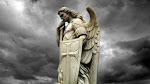
Contemplation of an Infinite glory


Second Sunday of Lent Year C

Last week we got a small dose of hell and the devil in the scene of Jesus’ temptation in the wilderness. This week, its God’s turn – we get a glimpse of heaven in the Transfiguration story. God and the Devil, Heaven and Hell: these used to be the common themes found in almost everything ranging from cartoons, to fiction novels, artistic masterpieces to the Sunday pulpit, as if these two themes are ingrained in the fabric of society. Nearly every human being holds some sort of belief system regarding heaven, hell, or both.  But not everyone does. A scathing judgment came from Stephen Hawking who argued that a belief that heaven or an afterlife awaits us is a "fairy story" for people afraid of death. Perhaps you can recall these words by John Lennon from the song “Imagine": “Imagine there’s no heaven; it’s easy if you try. No hell below us–above us only sky.” Lennon seems to suggest that if we all agreed to imagine away certain unpleasant realities, we could create utopia on earth.

So what happened to heaven and hell? In generations past it seemed the message of salvation could not be preached without the poignant illustrations of the glory of heaven promised to those who remained faithful to Jesus Christ, their Lord and Saviour, whereas the lake of fire reserved for those who refuse to accept him. But heaven’s gotten a bad press lately. We don’t believe in it like we used to. We don’t think about it very much nowadays. We’re all too busy making a living to worry about what happens after we die. We live, interact, work, and fall in love without any second thought of whether we will eventually end up in heaven or hell. Both heaven and hell are now used as metaphors to describe our present state, rather than two states after our death. Belief in heaven has taken a plunge because we are caught up with a utopian dream of establishing an earthly paradise. Salvation is no longer the desired goal. It has been replaced by therapeutic earth-bound substitutes – inner peace, happiness in the present life, longevity, health, wealth, wholeness of being, and solutions to our problems.

Are the likes of Stephen Hawkings and John Lennons of this world right in disbelieving that there is life after death? Is heaven a mere delusion of those who cannot face death or the horror of this present life? Or is the belief in heaven rooted in reality and if it is, what has it to do with our present lives?  Our readings today seem to say so. They partly lift aside the veil that separates earth from heaven and in so doing they reveal the glory of the world as God created it. In the first reading, the ancient Abram who had lost all hope of producing a progeny who will ensure the continuation of his name is provided a glimpse of heaven. In the stars, he is shown the promise of God that his descendants would be beyond his present imagining. In the second reading Paul exhorts the community in Philippi to “not give way but remain faithful in the Lord,” by reminding them that their “homeland is in heaven” and that Christ will “transfigure these wretched bodies of ours into copies of his glorious body.”

Finally, we have in the gospel, Luke’s account of the transfiguration.  The transfiguration occurs in a context where Jesus has just revealed to His disciples that He would be put to death in Jerusalem. Jesus’ prediction of his imminent death was met with denial and even anger. They were shaken by the thought that Jesus, the awaited Messiah, would meet such a horrific fate. This is why Jesus took them up to the mountain where, "he was transfigured before them." This experience of the transfiguration was, therefore, God’s way of delivering the disciples from a crisis of faith by providing them with a glimpse into the glory of heaven. The cause of their crisis of faith was the way in which they saw people and things around them. Death, suffering, separation seems to be defining moments in our lives. The disciples needed a vision from God’s point of view, to see that in spite of the death sentence hanging over the head of Jesus, God was still with him, God was still in control of events, God would see to it that in the end he triumphed over his foes, even death.  In the Transfiguration, Peter, James and John saw that there was more to Jesus than what they could see and hear and touch, they got a glimpse of the future glory of Jesus’ resurrection. His death would not mark the end; it would only inaugurate the beginning of eternal life. It would open the gates of heaven.

An important truth shines forth from the centre of this mystery. Glimpses of this transfigured world are not only good for our mental health but are essential for our salvation. They help us see through the illusions cast by the devil who constantly tempt us to store up treasures in this world and to place our hopes in projects which can only disappoint us. Our dreams of an earthly utopia, where we will be shielded from all pain, trouble, and disappointment is merely delusional. Christians disagree with Hawking’s conclusion – heaven is not “a fairytale”, it’s the Utopian ideal that proves to be so. Heaven makes the journey worth travelling. Heaven provides the strength to bear the weight of our tribulations. Heaven keeps us on course, away from the distractions that tie us to this earthly life and its lies.

Not a week goes by that I don’t talk with someone whose suffering seems to be overwhelming. It may be cancer or some other disease, it may be a broken marriage or a child in trouble, it may be financial disaster or trouble at work or at school. God’s people endure many hardships in this life. Most of the time we can’t fully understand why God allows certain things to happen to us. But we have this promise in Paul’s letter to the Romans, (8:18) that “our present sufferings are not worth comparing with the glory that will be revealed in us.” When the books are opened and the scales are balanced, we will discover that the things we went through in this life are nothing compared with the glories of heaven. No one will ever say to Jesus, “Heaven’s not so great. It wasn’t worth what I went through to get here.” When we finally get to heaven, the glory will be so great that we won’t even remember the things that made us weep in this life.  Heaven must exist, or our present suffering losing its meaning. Someone once puts it this way, ‘For the unbeliever, this life is the only heaven they will ever know. For the believer, this life is the only hell we will ever know.’

Austrian psychiatrist, Viktor Frankl, wrote his masterpiece, Man’s Search for Meaning, chronicling his experiences as an Auschwitz concentration camp inmate during World War II, and describing his psychotherapeutic method involving identifying a purpose in life to feel positively about and imagining that purpose coming to fruition. According to Frankl, the way a prisoner imagined the future affected his longevity. After enduring the unimaginable suffering in these camps, Frankl validated his hallmark conclusion that even in the most absurd, painful and dehumanised situation, life has potential meaning and that therefore even suffering is meaningful. In the most disturbingly beautiful segment of the book where the academician waxes lyrical, Frankl narrates an incident where they were forced marched in the darkness through harsh terrain and how a vision of his wife gave him the needed strength to continue living and surviving:

Occasionally I looked at the sky, where the stars were fading and the pink light of the morning was beginning to spread behind a dark bank of clouds. But my mind clung to my wife's image, imagining it with an uncanny acuteness. I heard her answering me, saw her smile, her frank and encouraging look. Real or not, her look was then more luminous than the sun which was beginning to rise.
A thought transfixed me: for the first time in my life I saw the truth as it is set into song by so many poets, proclaimed as the final wisdom by so many thinkers. The truth – that love is the ultimate and the highest goal to which man can aspire. Then I grasped the meaning of the greatest secret that human poetry and human thought and belief have to impart: The salvation of man is through love and in love. I understood how a man who has nothing left in this world still may know bliss, be it only for a brief moment, in the contemplation of his beloved. In a position of utter desolation, when man cannot express himself in positive action, when his only achievement may consist in enduring his sufferings in the right way—an honourable way—in such a position man can, through loving contemplation of the image he carries of his beloved, achieve fulfillment. For the first time in my life I was able to understand the meaning of the words, "The angels are lost in perpetual contemplation of an infinite glory."

Friday, February 15, 2013

At the end of the Lenten desert


First Sunday of Lent Year C

This week we follow Jesus into the desert, that harsh arid environ, that barren landscape both fascinating and terrifying, and for many of us, the last place on earth we would want to end up in. It lacks the necessary vegetation and foliage that would provide shade from the accursed sun. It lacks water necessary for life. The desert is literally deserted, a place not meant for the living, just for the dead. It is there that the power of death holds sway. And yet, the desert is the perfect place to spend Lent. In the Gospels, Jesus is tempted in the wilderness to be a different kind of Messiah; to take the path of spectacle and power rather than that of humble service. Each year, in imitation of our Lord, we retreat into the desert for the forty days – the liturgical season consecrated for personal conversion and preparation to celebrate the great mysteries of our redemption. Perhaps, our desert experience began much earlier this year, with the announcement of Pope Benedict XIV that he is resigning, just two days prior to the start of Lent on Ash Wednesday.

Both the desert and the Pope’s decision and announcement have left us confused. How could both be good for the Church? Why should our contemplation of the ultimate hope our redemption at Easter be preceded by six weeks in a place without hope? How could such an experience kindle faith? How can the resignation of our supreme spiritual leader excite or even enthuse our faith? In fact, it seems to have the opposite effect. Well, the answer lies in the other mystery that prompted the Incarnation and was overcome at Easter: sin. “The desert,” Pope Benedict has written, “the opposite image of the garden, becomes the place of reconciliation and healing.” Death – symbolised by the desert – is the consequence of sin, the result of choosing ourselves over God. For reconciliation with God to take place, death had to be vanquished, sin had to be expiated. To accomplish this, God himself “became sin” – He entered the desert – “so that in Him we might become the righteousness of God.” (2 Cor 5:21)

Jesus left the opulence and religiosity of Jerusalem and the Jewish community in Galilee to embark on a Lent of his own. He suffered the rugged harshness of the wilderness for forty days and forty nights. He gave up the comforts of societal life and walked among the rocks. Pope Benedict, through his abdication, seems to be following the same path. His is a decision that should not be interpreted as running away from the desert. On the contrary, his abdication is accompanying Jesus into the desert. When Jesus entered the desert, he left behind all the expectations of others, all the illusions. It was just Jesus and the Father, in the Holy Spirit. In an analogous way, the Pope would soon be retiring to a monastery within the confines of the Vatican to be with God in prayer and solitude. But in solitude, demons come. No role is more dangerous than the reformer. The Pope was constantly pressured by society, the media and even those within the Church to bend the message of the gospel to the dictates of man, to soften its edge, and to shape it according to the rules of political correctness. But he has remain faithful to the task entrusted to him, and now he pays the price, albeit willingly.

We are people of illusions. We surround ourselves with the illusions of wealth, power and popularity, believing that these will save us. We think we understand God, we think we know ourselves and those around us. We plan our lives and are shocked when these plans fall through. We impose our wills on God or even say we know His plans. One thing is sure, however: despite its rigours, the desert will reveal to us, if we allow it, how totally God loves us, how utterly favoured, "beloved", we are by God, even as Jesus was God’s “beloved”. At the end of the desert journey there awaits the joy of renewed life, hope, and resurrection. The news of the Pope’s abdication was a painful shock to me because I had been living with the illusion that this 85 year old man would continue to steer the barque of St Peter for many more years to come. But the Pope’s announcement, the harsh reality of the ‘desert’, has exposed this illusion for what it is. Man can never claim to hold the fort for eternity, it is ultimately the task of God; only He alone can accomplish and complete what he has begun. In the desert, Jesus had no illusions of his own to face and destroy: he was tested for our sake, so we would know who he was not. He did not come to bribe us with earthly bread, or astonish us with feats of invulnerability. He did not seek world domination. He simply did the will of the Father. And that is all that is expected of us as it is expected of the Pope.

The desert, with its great emptiness and silence, has long been a symbol of solitude and also of loneliness, especially for those who do understand its hospitality. That is why the Devil came to tempt Jesus at the point where he was weakest, when he was hungry, thirsty, tired but most crucially, alone. The Devil knew about the loneliness of the desert and what hunger and deprivation does to us. But the eyes of faith can transform the desert from a hell hole of loneliness into a paradise of solitude. In our spiritual lives, we sometimes seek such isolation as a means of abandoning ourselves completely to God. At other times, solitude comes upon us uninvited and unwelcome, as we find ourselves totally alone and desolate. Many Catholics would understand the truth of this in the aftermath of the Pope’s decision and announcement. But the Pope’s departure does not mean that he has abandoned us, rather he has entrusted us to the care of One who can do exceedingly better.  God is with us.

The desert is the place of essentials, of the bottom-line. It’s the place where you and I are vulnerable to all our hidden demons and temptations. God bids us to withdraw to this place of spiritual inconvenience, in fact, God woos us to it. It’s the place of the unexpected. God doesn’t tip us off in advance as to what the Lenten desert has in store for us, and perhaps there will be more surprises in store for us apart from the news of the abdication of our Pope. In facing the silence and the vast expanses of loneliness, we test our courage, deepen our faith, and hear the voice of God anew. Here we discover our smallness and dependence. Here is where God can reach us in the silence where we are not assaulted by the cacophony of sounds and demands of modern life. In the desert, we will find the necessary sustenance for our journey of faith: fasting, almsgiving and prayer. In a very small way, they model the rejection of illusions about what we need, who we are, and who God is. By fasting, we are reminded that we are hungry for God. By almsgiving, we are reminded that Christ’s body, the Church, is hungry for God. By praying, we are reminded that we are hungry for eternal life with God. These Lenten practices put us in touch with our existential poverty and our journey in the desert reminds us to turn to God, not the world, if we wish to experience the fullness of life.

This Lent, the Church invites us to enter into the desert as we place our trust in God’s love, aware of God’s deep desire to satisfy our longing hearts and souls. The desert can certainly be difficult: It is never easy to stand alone in the presence of an all-knowing, all-powerful God. And perhaps the experience is so much more heightened this year as Lent would also be the period of the interregnum (the period marking the vacancy of the Papacy between the reigns of two Popes). But Christ reminds us that we are also in the presence of an all-loving God who wants nothing more than to fill us with his undying love. We enter the desert of Lent to become poor so that God can make us rich in his love and grace.  When Jesus had finally driven off the devil, angels came to wait on him. When, through Jesus, we have rejected illusion and self-deception, we can be sure of continued graces from God. At the end of the Lenten desert, we will have a visible sign of God’s love, a symbol of Christ’s Paschal victory over death and sin. At the end of the Lenten desert, we will have a new Pope!

Thursday, February 7, 2013

God's Initiative or Man's Achievements


Fifth Ordinary Sunday Year C

In one of his most provocative and insightful books, Truth and Tolerance, Pope Benedict XVI Ratzinger, or Joseph Cardinal Ratzinger as he was then known, defended the uniqueness of the Christian faith in the face of religious and cultural pluralism. At the beginning of his book, he tackles one of the most difficult questions posed by the presence of diverse religious beliefs and refutes the oft-repeated claim that all religions essentially affirm the same things. According to him, that apart from common and similar elements, there are actually fundamental, non-negotiable differences among religions.

In expounding the history of religion, he distinguishes two main forms of religion. On the one hand, there is a kind of mysticism in which one seeks to merge into or become identical with everything, in an all-embracing, impersonal unity. Many Eastern religions and the New Age movement are religions of that sort. The point of reference is the mystical experience of the mystic – the sage, the monk, the guru who attains enlightenment and perfection. On the other hand, there is a great departure from this understanding in what he calls the monotheistic revolution. This monotheistic revolution provides "a personal understanding of God," in which one is united in love with a personal God and yet remains distinct from him. But this personal understanding of God cannot happen without God taking the initiative. God must reveal himself. The point of reference is no longer man – not the prophet, nor the patriarch, the king, or even the priest. That is why our scriptures are littered with fallible and weak individuals, men who sin. The point of reference is God, the God of love who calls them to his purpose. Christianity, Judaism, and Islam are examples of the latter kind of religion.

Thus we have two structures that right from the start are built up in quite different ways. In mysticism, inwardness holds the first place; spiritual experience is posited as an absolute. That includes the view God is purely passive in relation to man and that the content of religion can only consist of man plunging into God. God does not act; there is only the mystical ascent of man to union. The monotheistic way, on the other hand, starts from a conviction that is the opposite of this; here man is the passive element upon whom God acts; here it is man who can do nothing of himself, but instead we have here an activity on the part of God, a call from God, and man opens himself to salvation through obedience in response to the call. Thus we see the link between revelation and the call. We cannot come to know the inner life of God unless He reveals Himself and God reveals himself in order that he may call.

The readings for this Sunday demonstrate the truth of what our Pope has written. It is God who takes the initiative in calling the apostles; weak, frightened men, men who were sometimes filled with personal ambition, men who also failed the test of discipleship by fleeing the scene of Jesus’ arrest. It is God who calls the prophets, men with unclean lips who require purification and redemption just like everyone else, in order that they may announce his Word to kings and commoners. It is God who selects the weakest, the least fitting, the most unsuitable candidates, even those deemed enemies of the faith, and raises them up to be his messengers, his apostles, his leaders. The Bible does not make any apology for these strange and crude characters; it does not need to cover up their faults and offenses with euphemistic glossing-over. In fact, it celebrates and even holds up as heroes the weakest, the youngest, the least likely to succeed, the pauper, and the sinner in order that may give highlight to one single truth – man’s redemption comes not from man himself, unlike the mythic stories of other traditions. Man’s redemption comes only from the grace of God. Thus the Bible is filled with illustrations of the truth of God’s initiating grace.

It is God who creates and God who calls. God's initiative upends our vaunted selves, for we thought we made things happen. However, the biblical story paints this narrow view as pride, hubris, even idolatry. Then God's initiative goes further. God elevates "the least of these," declaring the weak strong. In the midst of death and exile, God asserts there is life and belonging. And when resources look scarce, God says there is enough. None of this makes sense – according to conventional wisdom. But this is God's subversive, countercultural way that we are invited to trust. God calls his people to have faith, to believe that all is possible with God, even when it seems impossible for men.

Because God is the God of all grace, He does not sit back and wait for us to find our way to Him through our own miserably inadequate means. He does not wait for evolution to produce the perfect man, the perfect hero, the perfect saviour. God takes the initiative to seek us. He enters our domain to become one of us. Indeed he has entered this world to become its Saviour, the only Saviour, indeed the unique and universal of the whole world. Christianity has always held that the revelation of God in Jesus Christ is definitive. According to our Holy Father, the divinity of Jesus is "the real dividing line in the history of religions," which makes sense of "two other fundamental concepts of the Christian faith, which have become unmentionable nowadays: conversion and mission."

Another matter which I would like to address today is the place of culture in relation to our faith. No one needs to alert you to the fact that this Sunday also coincides with the most important cultural festival for our Chinese community, the Lunar New Year. Whereas the signature red seems to adorn the rest of the world, it’s presence during this liturgy seems subdued, even absent. In fact, the servers and I have donned the liturgical green of an ordinary Sunday and the Church seems culturally naked bereft of cultural accouterments. Am I oblivious to what’s happening or does Fr Michael have another piece of catechesis up his sleeve to explain his seemingly cultural short-sightedness? I believe that by choosing to celebrate the Sunday liturgy as a Sunday liturgy instead of substituting it with an alternative Chinese New Year liturgy provides us with the proper orientation with regards to culture, customs and traditions.

We find once again in the book, Truth and Tolerance, the Pope confronting head-on the claim that Christianity has imposed European culture on other peoples. This claim is often used to support a kind of inculturation that seeks to modify the gospel and the tenets of faith through the insertion of cultural elements from the pre-Christian customs and traditions of the peoples. In a way, it is a sort of Christian post-colonial rhetoric which accuses the missionaries of not only having Christianised the peoples of mission lands but had also arbitrarily forced upon them a European culture foreign to their taste. The Pope reminds us that "Christianity … originated, not in Europe, but in the Near East, in the geographical point at which the continents of Asia, Africa, and Europe come into contact." Yes, Christianity undeniably has a European element. But above all it has a perennial message that comes from God, not from any human culture. While Christians have sometimes pushed their cultures on other peoples, as have non-Christians, Christianity itself is alien to no authentically human culture. The gospel is not the creation of men, it comes from God.

Nevertheless, the Church treats culture with great reverence and even sees it as an effective means of transmitting the gospel message. According to Gaudium et Spes n. 53 (The Pastoral Constitution of the Church in the Modern World), one of the four key documents of Vatican II, ‘the word “culture” in the general sense refers to all those things which go to the refining and developing of man’s diverse mental and physical endowments.’ In other words, culture refers to man’s greatest and most refined achievements. But in spite of the lofty place given by the Church to human customs, nothing replaces worship of God, man’s primary activity.  So we do not put aside our duty to worship God even in the face of an opportunity to show reverence to our customs and traditions.  Often by over-emphasising the cultural element to the detriment of distorting and eclipsing the spiritual, we give in to the narcissistic temptation of worshipping man above God. The liturgy is always the worship of God, not of man.

This year is dedicated to the zodiac creature that seems least favourable to Christians, the snake. For many Christians, the symbolism of a snake is obvious – it represents evil, in fact the incarnation of the devil. In common parlance, when a person is described as a snake, it means that he or she is cunning, or someone capable of harming you. But for Chinese, the zodiac snake has a more positive meaning – it symbolises intelligence and good fortune (which explains its inclusion in the zodiac horoscope). We Christians also have an alternative image of the snake. You remember the story of the bronze serpent placed on the cross by Moses? In that story, the bronze serpent is a source of healing for those who had been bitten by poisonous snakes. When the people, stricken by malady, cried to God for a solution, He provided the answer. The source of their suffering will become the source of their redemption. This story is also an appropriate reminder that unless our customs and traditions are subjected to the authority of God and transformed by the gospel, they too can be harmful and dangerous.

Culture provides people with a common identity; it provides them with a rallying point, a reason for unity. But sometimes, culture can also divide, especially when culture become more important than our faith. We fight over them and begin to exclude others who do not share the same customs. It is only when customs are brought into harmony with gospel values, that they are transformed, transfigured. Culture then expands its horizons – it no longer merely communicates human traditions from one generation to the next, it also serves to communicate the perennial message of the gospel in the language of the present. Custom no longer celebrates man’s accomplishments but more importantly God’s blessings. Tradition then becomes a source of healing and in fact a great source of blessing.

Saturday, February 2, 2013

This is Unacceptable!


Fourth Ordinary Sunday Year C

If Jesus had lived today, he could have saved himself from a lot of bad press by listening to some useful advice from pundits of political correctness – the art of not offending the sensitivities of his audience. But I guess, if this was true, Jesus would have equally stayed on course and perhaps gotten himself into the same kind of trouble, if not worse. Last week, we saw Jesus begin his public ministry by preaching in the synagogue of Nazareth. He stacked up brownie points for his gracious and inspiring words, words that promised healing and liberation. Things rapidly and dramatically changed when he began to challenge their ideas and convictions. Jesus reminded them that God’s salvation is accorded to Gentiles too, not just Jews. They were not so elite, not so chosen, and not so exclusively special. Their prideful expectations were subjected to a humiliating reality check and this enraged them, so much so that they wanted to throw Him headlong over a cliff. No sweet comforting words here, just the plain painful Truth.

This reaction is to be expected. Isn’t it quite natural that when we hear words pleasing to us, we accept them, but when they disturb our consciences we might well dismiss them as worthless. There are people who choose a church where they can experience good feelings from warm and fuzzy words, nothing disturbing nor demanding should pass the lips of the pastor. Today, we are reminded that it is true that the gospel of Jesus Christ is a great word of consolation and refreshment, but it can also be harsh and demanding, as Jesus himself could be harsh and demanding. Our “precious” Saviour is also the unpopular Prophet who confronts sin and challenges our preconceived notions of salvation and prejudices.

Many, including leaders in the Church, are subjected to the temptation of preaching the gospel shaped by political correctness. We shy away from making difficult gospel-based demands of the people while choosing to tamper not just their words but inevitably the values that underlie those words. Political correctness always seeks to preserve a good image whilst attempting not to offend anyone. And it is never too difficult to offend someone in today’s age. When we speak of Jesus as the Son of God, we risk offending the Muslims; when we quote from St Paul we risk being labeled a misogynist (woman-hater); when we refer to ourselves as the People of God we risk being accused of being religious bigots; when we rail against abortion, we risk being judged as being unsympathetic to the plight of the women; and when we speak of the institutions of marriage and family, we risk excluding those who practice alternative lifestyles. The end of this ideology is that there are no absolutes, no absolute moral norms, no absolute Truths. In fact, political correctness seems to be the antithesis of truth. Political correctness seeks never to offend, while Truth always carries with it the potential for offense. But the truth is that Jesus did offend many people. He offended his hometown, he offended his family, he offended the leaders, he offended the crowds, he offended his own disciples. Too often we are so preoccupied with trying to avoid offending anyone, we end up offending God. Jesus once taught, “Blessed is he who does not take offense in me” (Luke 7:23). Looks like the pundits of political correctness had forgotten this last bit in trying to please the whole world, all and sundry, except the only one who matters.

Proponents of political correctness would often argue that Truth is divisive, in that divides the community. They feel that many well intentioned Catholics, though divorced and remarried, living in irregular unions, dissenters of Church teachings, should not be made to feel as if they are excluded and isolated. Truth is perceived as intolerant and a serious barrier to community cohesion and inclusiveness. They are convinced that love includes and should never exclude. But if the Church is to make room for everyone, it may mean having no room for the Truth. By definition, truth does separate – it separates the truth from falsehood. It divides those who want to know the truth from those who do not want to know. Thus, Jesus sitting in judgment divides the goats from the sheep. Truth is indeed intolerant but its intolerance is directed to lies and sin which seeks to hide behind the cover of euphemisms. In fact, Truth in itself is not divisive. It does not spell the absence of love. It is people who become divisive when they are unwilling to accept the truth.  

Many would lament that the Church is losing many of its members because they feel that her demands are too rigorous and her teachings too hard. This is a common argument cited in favour of greater accommodation – making Christianity softer and its message more palatable for a wider consumption. The myth is that people will stay with the Church if she makes it easier for them to do so, which means amending not just Church laws but even gospel values and teachings so that the Church can be seen to be more inclusive. But statistics of membership patterns among liberal Protestant denominations show otherwise. Some Protestant denominations like the Anglicans have been making accommodations over the years, but they have not been able to stem the trend of decline. In fact, these politically correct churches have been accused by their own members of being so busy in accommodating other people’s views they have forgotten to put forward their own claim, which is the gospel of Jesus Christ. In their obsession to be politically correct, they have forgotten what it means to be Christ-correct. When we sacrifice truth at the altar of popularity, we risk not only losing our edge and identity, but also damning ourselves and others to perdition.

Today, political correctness has become a substitute for God in unbelievers and a poor substitute of the gospel to those who truly require liberation from a culture of half-truths, manipulated information and outright lies. What is more worrisome is that there is an inherently religious aspect to political correctness. It reduces everything to human accomplishment whilst downplaying and even disregarding the sacred. In other words, political correctness substitutes man for God. Many, if not most of the problems in this world today are the results of people rejecting the true God and replacing Him with a false god of good feelings that Political Correctness gives them. The antidote for Political Correctness is the Real Thing, Jesus Christ. Christ is not some esoteric good feeling we get from politically correct words; He will actually fill the yearning we have for God.

There is an urgent need to recover our nerve as Christians. We do not need to be obsessed with walking on egg-shells in attempting not to offend others, especially when this means offending God and betraying the Truth which he wishes to communicate to the world. Christians, who hold firm the gospel of Christ, are bound to offend others. We don’t have to feel embarrassed about our faith. We do not need to apologise for being Christians or for believing that Jesus is the unique and universal Saviour of the World and that He is the Truth, the Way and the Life. Although apologies are not needed, apologetics is most necessary – we need to give a reasonable explanation for our faith; we need to defend Jesus not just with reasonable arguments but also with our lives. We must never mistake our witnessing of Christ for arrogance. It is a demand of faith and love. It is time to step out of the shadow of political correctness and speak the Truth with Love. The Pope reminds us that Love and Truth are not antithetical but rather Love or charity is always in service of the Truth and that Truth springs from the well-spring of Love. To separate the two would only spell disaster – it could lead either to a politically correct gospel devoid of its essential truth or its opposite, a harsh demeaning religion that does not know the meaning of love nor compassion. We must, therefore, never forget that on the Last Day, we will be judged by Christ, who is both the Saviour and Judge of the world, guided by what is acceptable to God and not by the common vote of a jury of peers dictated by what is acceptable to man.