Thursday, June 9, 2022

The Paradox of Love

Solemnity of the Most Holy Trinity


St Augustine once wrote this about the Most Holy Trinity, that “in no other subject is error more dangerous, or inquiry more laborious, or the discovery of truth more profitable.” Yet, the Most Holy Trinity is not some obscure concept which is alien to us. On the contrary, it pervades every aspect of our faith life - from the sign of the cross made in the name of the three persons of the Triune God, to the Trinitarian Pauline greeting which the priest uses at the beginning of the Mass and the blessing at its end, to how prayers (especially liturgical ones) are formulated, to the Creed which we profess, and to the formula used when we were baptised. And yet, it’s one of those topics which many, including us clergy, would attempt to avoid talking about, because it’s one of those things that we find most challenging to explain. Of course, to be honest, the greater challenge is for us priest, to wrap our heads around it before attempting to unpack it for others.


The Catechism of the Catholic Church speaks of the doctrine of the Most Holy Trinity as the central mystery of our faith, which is a huge claim. The doctrine of the Most Holy Trinity is not just one teaching among many. It is the Christian teaching of the very nature of God … the core belief and the essence of our Christian faith. Everything a Christian does, flows from this teaching, is centred upon this teaching and leads back to this teaching. Yet, we have to acknowledge that this mystery seems to be the most mysterious among the hierarchy of truths which the Church professes and teaches. But how should we understand it as a mystery?

There is a misconception that the mystery of the Trinity is difficult to understand and therefore difficult to teach. We have to get past that. The “mystery” is no mystery in the sense of a puzzle – it isn’t like an impossibly complex mathematical riddle to be solved. Rather, it is a mystery in the same way love is a mystery. We all understand love. Yet, love is inexplicably hard to describe without resorting to metaphors, analogies or symbolic and poetic language. And like love, we don’t need to be able to fully articulate it before we can grasp it. While I can never fully comprehend the incomprehensible, I can be loved by it. The mystery of love is that it is a paradox—the more we give of ourselves to another, the more we receive; the more we unite ourselves to another, the more we become our true self. The Trinity is a mystery in the very same way.

Some may argue that if our Lord Jesus truly wanted us to understand this profound concept, which is the mystery of the inner being and relationship between Him and the Father and the Holy Spirit, He should have spelt it out clearly leaving no room for ambiguity. But He did not do so because as pointed out in today’s Gospel passage, Christ still has “many things to say to you but they would be too much for you now.”

But this would change with the coming of the Holy Spirit at Pentecost, because when “the Spirit of truth comes he will lead you to the complete truth, since he will not be speaking as from himself but will say only what he has learnt…” Our Lord knew that the Church had to do more than repeat His words and tell stories about His deeds and the adventures of the early community. That is why He gave His apostles and their successors “the Spirit of truth” to guide them as they sought to make His saving truths known in every time and place.

What is this “complete truth” which our Lord is referring to? For one, it is objective and eternal. In other words, truth is not a matter of consensus. We don’t fashion truth to suit our opinions or desires. It is common today to speak of “your truth” and “my truth,” and that is instead of looking at objective facts, we often hear people speaking of their “lived experiences,” suggesting that every person’s truth is unique and irreplaceable and therefore, infallible and unchallengeable. The complete Truth of the Lord, however, cannot be something malleable, easily moulded according to our personal agenda, our likes and dislikes. Rather, it is we who must conform to the objective Truths revealed to us by God; and if we are humble and strive to be faithful, then the Holy Spirit will gently lead us and transform us with that Truth, into God’s own likeness.


But the most complete Truth is not like any other objective truth which we can speak of. The self-revelation of God is in fact that “complete truth,” for above the Truth of God, there can never be any other truth, and all truth found in the created world is only a shadow and a reflexion of His Truth. The inner Truth of God is this: that the most original and unconditional love of the Father is matched and answered by the equally absolute reciprocal love of the Son. We can understand and participate inwardly in this mystery of love, if the Spirit, who is both the mutuality and fruit of this eternal love, is made to penetrate us. The Spirit binds us to divine love itself. Indeed, this is what St Paul proclaims to the Romans in the second reading, that “the love of God has been poured into our hearts by the Holy Spirit which has been given us.”


It is an undeniable reality that we who believe in the primacy of the Truth revealed to us by God, are now engaged in a direct confrontation with the greater culture which denies the existence of objective truth, what more the doctrine of the Most Holy Trinity that finds no equivalent correspondence in this life. Perhaps, the world continues to reject the revelation of the Trinity, precisely because we have been bad witnesses - our lack of love or care for others, our penchant to be selfish and individualistic, our tendency to pander to the maddening crowd, rather than stand up to defend the Truth. How wonderful it would be if we could just reflect the life of the Most Holy Trinity in our own lives? That would be our most convincing and effective way of evangelising - not just with eloquently profound theological explanations (which are undeniably necessary) but, simply through the way we live our lives.

And so on this day, we affirm once again the truth of the One True God in three persons, co-equal in dignity and substance, we recognise that it is less important to focus on the math of the Trinity and more important to focus on the why. Why would God go to all the trouble of creating the world, creating us, and then sending His Son to save us and His Holy Spirit to guide, inspire and sanctify the Church? We arrive at the same answer as the early disciples. God is love. “God has no other reason for creating than his love and goodness: ‘Creatures came into existence when the key of love opened his hand’” (Catechism of the Catholic Church, 293). That is the complete Truth, and nothing less than the complete Truth. That is the mystery of the Most Holy Trinity. May His Holy Name be praised!

Thursday, June 2, 2022

Earth Wind Fire Water

Pentecost Sunday


The Holy Spirit, the Third person of the Most Holy Trinity, being pure spirit, would be the hardest member to picture in our mind’s eye since He, unlike the Second Person, was never incarnated in human form, or like the First Person, the Heavenly Father, has no equivalence in our human experience. Cardinal Ratzinger, who later became Pope Emeritus Benedict XVI, would, therefore, write, that we “cannot reveal the Spirit directly, so all we can do is try, by means of images, to lead toward what is meant.”


The most common symbolic depiction of the Holy Spirit would be that of a dove, since it has a strong scriptural basis in the event of the Lord’s Baptism. But the first reading, which gives us the sole account of the event of the Pentecost, provides us with four elemental symbols: earth, wind, fire and water. Fans of the eponymous soul funk band of the 70s would be thrilled to know this. If you are from a different era, ignore my digression.

Earth. Wind. Fire. Water. The four classical elements of the universe were originally conceived by the ancient Greek philosopher Empedocles, five hundred years before Christ, and popularised by Aristotle. Of course, we are not going to dispute the error and the naïveté of the ancients in postulating this simplistic explanation that the entire universe is made up of these basic building blocks. We are not going to split hairs, or to be more precise, split atoms to refute this ancient science. On this feast of Pentecost, we are invited to consider them as entry points into the story of divine love and presence, that encompasses all creation.

The association of these four material elementals with the ephemeral Spirit, points to something foundational to our Catholic perception of the universe - we speak of the Sacraments as outward signs of inward grace; the invisible spiritual realm hidden within and being expressed through the visible and material realm.

The first element is earth. At first appearance, this seems to be the furthest idea from the Spirit since earth is the most solid of the four elementals. But earth is the first element the Creator used as He conjoined Himself with His creation to produce His greatest masterpiece - man. The word “human” comes from the Latin word “humus,” and is a direct reference of how God formed man from the earth, and breathed life and His Spirit into this lifeless clay, to create man. Each of us, members of the human race, earthy beings and yet privileged creatures because we are endowed with an immortal soul, are indeed fitting temples of the Holy Spirit. Just as God breathed life into earth to make man; at Pentecost, God breathes His Spirit into the earthen hearts of the disciples, infusing them with new life and making them into His new creation.

The element of earth also reminds us that the Jewish festival of Pentecost or Weeks (since it is made up of seven weeks, a sabbath of a sabbath) predates our Christian celebration. The three great pilgrimage festivals were all harvest festivals and Pentecost was the thanksgiving for the grain harvest. The feast also commemorated the giving of the Law or Ten Commandments to Moses at Sinai. But now, instead of the gift of Law, God has given us a far greater gift, that of the Holy Spirit who writes His law, not on tablets of stone (earth) but in our fleshy hearts. Instead of thanksgiving for a harvest of grains, today is a day of thanksgiving for a harvest of souls incorporated into the Body of Christ, the Church.

The next element is wind. There is nothing subtler than the wind, which manages to penetrate everywhere, even to reach inanimate bodies and give them a life of their own, as we see in the vision of the valley of dry bones (Ezekiel 37). In Hebrew, the word for Spirit, Ruach, could also be translated as breath and wind. The first mention of Ruach in the Bible is in the very first chapter of Genesis (1:2): “And the earth was a formless and desolate emptiness, and darkness was over the surface of the deep, and the Spirit (Ruach) of God was hovering over the surface of the waters.” In the theophanies of God, reference is often made to wind - either as in the form of a storm, a strong gale or even a gentle breeze. Our Lord in speaking to Nicodemus about the Spirit tells him: “The wind blows wherever it pleases. You hear its sound, but you cannot tell where it comes from or where it is going. So it is with everyone born of the Spirit” (John 3:8). And then “when Pentecost day came round, they had all met in one room, when suddenly they heard what sounded like a powerful wind from heaven …”

After the wind, came the fire, produced by the confluence of matter and energy: “something appeared to them that seemed like tongues of fire; these separated and came to rest on the head of each of them. They were all filled with the Holy Spirit, and began to speak foreign languages as the Spirit gave them the gift of speech.” The liturgical colour for Pentecost is red, the colour of fire and blood and the symbol of love. This is also reflected in the traditional prayer to the Holy Spirit, “Come Holy Spirit, fill the hearts of thy Faithful; and enkindle in them the fire of Thy love…” It is a dangerous prayer, if we stop to think of it, because the Spirit’s fire is pure energy that melts the alloyed heart and purifies it for love.

The final element is water. Water holds such rich symbolic meaning and purpose for us. It strikes the balance in life like nothing else—too little is parched desolation, too much is drowned destruction, but in its fullness, water offers a life-force. In the Gospel for today’s Vigil Mass, our Lord says “Rivers of Living Water shall flow from within him” who believes in me. After they were filled with the Holy Spirit, the disciples left the Upper Room and began to proclaim the Gospel. And on hearing their words, 3000 were baptised that day. From the very day of Pentecost, the Church has celebrated and administered holy Baptism. Indeed St. Peter declares to the crowd astounded by his preaching: “Repent and be baptised every one of you in the name of Jesus Christ for the forgiveness of your sins; and you shall receive the gift of the Holy Spirit.” With every baptism comes the reminder of the first Pentecost.


The Spirit comes to us today as wind, fire, and water, seeking to shape the earth that we are, into a new creation which we became at our baptism. But our earthen hearts are dry due to sin, resistant to God’s re-shaping, and need a little erosion through the water of the Spirit. Too often, we are consumed by a life that is not of the Spirit. We are fleshly creatures possessing a fleshly mind, meditating on the things of this world while attempting to justify our disordered love for them. Rather than hardening ourselves, trying to become what we want to be, we must remain pliable, open, and responsive to the creative activity of God: we must learn to ‘relax in the hands of God, to let God be the creator. For as we yield to God and allow the Spirit to wash over our muddied self with His divine wind, fire, and water, we will be shocked to find that the deeper He works to erode us, the stronger the rivers of living water will flow through us.


Earth, wind, fire, water. Four elements to ground and inspire and transform and mediate the grace of God for the people of God. For the gift of new life on this feast of Pentecost, for the gift of creation and our participation in it, for the gift of connexion as with one another, and with God who suffuses the whole of creation and community with the divine spirit of Love, for these gifts, may God’s holy name be praised. Come Holy Spirit, Come!

Thursday, May 26, 2022

May they all be One

Seventh Sunday of Easter Year C


I’m often asked if I have a KPI for my leaders, and my answer is “Yes. He or she has to be a unifier.” It would be good if I could have a skilful, talented and super-efficient leader who can multi-task, but I would rather live with mediocrity and even incompetency, than to have someone who ticks all the boxes but has a penchant for sowing discord in the community. If I had a second criterion for my leaders, what would it be? And my answer is “integrity.” A unifier without integrity would be an oxymoron. You can’t have unity at the price of forgoing truth and honesty; and you can’t truly speak of Truth, without wanting to deepen the bonds of unity.


William Wallace, the leading character in the movie “Braveheart” chastised his fellow Scots for allowing minor issues, internal strife, and power struggles to stand in the way of their fight for independence from the English. “We have beaten the English, but they’re back because you won’t stand together.” I feel that is what is happening far too often in the church.

Since last year, our Holy Father Pope Francis has been calling all of us to get on board his initiative of moving the Catholic Church on the path of Synodality. If you still haven’t heard of this, you must have been living in a bomb shelter or a Soviet era gulag in Siberia for the past year. The word “Synod” comes from two Greek root words which mean “common path” or more popularly translated as “journeying together.” This should be good news. We should be starting to see how unity within the Church is being strengthened by leaps and bounds with such a focused project and theme. And yet, sadly, it is quite the opposite.

What we witness today, is not a single global Catholic Church with all one billion of her members happily and willingly “journeying together,” but quite the opposite. Nobody can turn a blind eye to the fact that divisions you normally witness in secular political discourse, have now become staple within the Church. Catholics within the same sheepfold often demonise others across the ideological divide. The teachings of Vatican II are being denied and subverted in open contradiction to Vatican II by many Catholics, not only by ultra-traditionalists but also by those who hide behind the banner of being hard-line defenders of Vatican II.

And despite all the apparent enthusiasm proponents of Vatican II express for Pope Francis, they flatly deny the authority conferred on him by Christ, as the successor of Peter. They just agree with him because it is convenient to do so: they think he agrees with them. Call it theological projection: you see what you want to see when you are enclosed in an echo chamber. The moment the Pope takes a different position, they are most ready to throw him under the bus. On all fronts, there seems to be so many factors which are tearing at the Church’s fabric of unity and threatening permanent rupture.

Could our Lord have foreseen all these when He first composed this prayer to the Father? “Holy Father, I pray not only for these, but for those also who through their words will believe in me. May they all be one. Father, may they be one in us, as you are in me and I am in you, so that the world may believe it was you who sent me.” In Jesus' last words in the Gospel of John, in His dying wish expressed in His Priestly Prayer to the Father, He asks that we may all be ONE as the Holy Trinity is ONE. The unity of the Church should reflect the unity of the Father and the Son. Our unity is our most evident proof of the Truth about the Lord’s identity and mission.

When the Church is divided by conflict, we not only hurt our witness in the world, but we also cast doubts on the Lord’s identity and mission. If many continue to reject that our Lord is the only begotten Son of the Father, sent into the world to save us by His death, we have only our poor witness to blame. Our internal fights and disagreements make our words and testimony weak and unbelievable. Our disunity is doing the work and mission of Christ a disservice.

Our Lord must have understood that disagreements are very much part of the fabric of relationships and community living. That is why He prayed for unity just before His own death and why when He returned to His disciples after His Resurrection, the first gift He conferred upon this community is the Holy Spirit tied with the authority to forgive sins. This is at the heart of the Sacrament of Penance.

It is clear that unity within the Church is not just conformity or affability among her members. To be one is not the absence of opinions. Opinions are healthy. But since we can hold differing opinions, our unity must go beyond just mere good intentions and platitudes. Unity in the Church consists in the visible incorporation into the body of Christ (Creed, Code and Cult - doctrinal, sacramental, ecclesiastical-hierarchical communion) as well as in the union of the heart, i.e. in the Holy Spirit. Without these visible and invisible bonds, any man-made unity remains tenuous and susceptible to fraction. This is the reason why this visible communion with the Church (that we are in agreement with the teachings, the discipline
s and liturgical tradition of the Church) must be a prerequisite for us receiving Holy Communion. We RECEIVE Communion only because we are IN Communion.


Finally, truth, not the threat of violence, holds our Lord’s sheepfold together. “I am the way, and the truth, and the life; no one comes to the Father, but by me.” (Jn. 14:6) Living His truth does not enslave, it liberates: “You will know the truth, and the truth will make you free.” (Jn. 8:32) The freedom of love does not come with mere compliance. It comes with the realisation that truth, liberty, and God’s commandments are inseparable: “If you love me, you will keep my commandments.” (Jn. 14:15) Because of its foundation in truth, Christian Unity is not populism. Unity cannot be manufactured by our efforts to accommodate, to compromise, to get along and fit in—and then, feel good about it. We cannot put unity above truth because it seems more comfortable to do that.


Unity is not just a public-relations exercise for public consumption. It is a call to conversion and repentance. If sin, whether in the form of envy, selfishness, pride, hostility, prejudice, resentment, is what divides us, then only repentance and conversion can lead us back to authentic unity. In a world which is fractured and polarised along ideological, sectarian and ethnic lines, the Church provides us with a radical model of community, which transcends such distinctions and divisions. So, let us not just pay lip service to unity. Let us constantly and fervently pray for it, work at it and allow ourselves to be transformed, so that we may be fruits of our Lord’s dying wish and prayer: “May they all be one.”

Wednesday, May 25, 2022

Be His faithful witnesses

Solemnity of the Ascension of the Lord


It is significant that St Luke tells the story of the Ascension twice, and we have the benefit of hearing both accounts today – the account from the Acts of the Apostles in the first reading, and a second account in the Gospel. Each narration brings out a different aspect of the truth but the theme of witnessing seems to bind both Lucan accounts. For St Luke, the Ascension was a significant moment in the disciples’ personal transformation. It marked a critical turning point, the passing of the Lord’s message and mission to His disciples.

In the Acts account, just before He ascends, the Lord promises His Apostles, “you will receive power when the Holy Spirit comes on you, and then you will be my witnesses not only in Jerusalem but throughout Judaea and Samaria, and indeed to the ends of the earth.” Similarly in the Gospel, having reiterated the kerygma, the kernel of the Christian faith, that “Christ would suffer and on the third day rise from the dead,” the Lord gives them this commission: “In His name repentance for the forgiveness of sins would be preached to all the nations, beginning from Jerusalem. You are witnesses to this.” In other words, when Christ ascended, He left with the intention that the Church takes up where He left off.

The Acts version of the event also paints a rather comical scene. The disciples are standing there, first looking at the Lord ascending and then, they continue staring at the clouds. They are then shaken out of their stupor by the question posed by two men in white, presumably angels: “Why are you men from Galilee standing here looking into the sky?” The question could be paraphrased, “Do you not have something better to do than to stand here and gawk?”

Here lies one of the greatest challenges to Catholics – our inertia to engage in mission. We seem to be transfixed firmly in our churches but feel no need or urgency to reach out. We Catholics have been “indoctrinated” to attend mass every Sunday and on holy days of obligation. The Liturgy is supposed to be the “source and summit of the Christian life.” So, we should see it not just as an end but also as a starting point for mission. Yes, worship is our primary activity, as witnessed by the Apostles at the end of today’s Gospel. But what about mission? It is a false dichotomy to pit worship against mission. It’s never a hard choice between the two. Both worship and mission are part of the life of a Christian. They feed off each other.

The Ascension reminds us that the Church is an institution defined by mission. Today all institutions have a statement of mission; but to say the Church is defined by mission is to say something more. The Church is not an institution with a mission, but a mission with an institution. As Pope Francis is fond of reminding us - the church exists for mission. To be sent, is the church's raison d'être, so when it ceases to be sent, it ceases to be the Church. When the Church is removed from its mission, she ends up becoming a fortress or a museum. She keeps things safe and predictable and there is a need for this – we need to be protected from the dangers of the world and from sin. But if her role is merely “protective” she leaves many within her fold feeling stranded in a no man's land, between an institution that seems out of touch and a complex world they feel called to understand and influence.

On the other hand, the Church cannot only be defined by her mission alone, but also by her call to worship the One who has sent her on this mission. If this was not the case, she would be no better than a NGO. But the Church of the Ascension is simultaneously drawn upward in worship, and pushed outward in mission. These are not opposing movements and the Ascension forbids such a dichotomy. The Church does not have to choose whether it will be defined by the depth of its liturgy or prayer life, or its faithfulness and fervour in mission. Both acts flow from the single reality of the Ascension. Both have integrity only in that they are connected to one another.

At the end of every mass, the priest dismisses the faithful with one of these formulas, “Go forth, the Mass is ended!” “Go and announce the Gospel of the Lord!” etc. Mission is at the core of each of these formulas. The Sacrifice of the Mass is directed and geared towards this purpose – the continuation of the mission of Christ. The Eucharistic Lord invites us, He commands us, to share in His mission, and to preach the Gospel everywhere.


If worship is the beginning of mission, then mission too must find its ultimate conclusion in worship – for the liturgy is the “source and summit of the Christian life” as taught by the Second Vatican Council. Worship must be at the heart and the soul of mission. This is beautifully depicted in the Novgorod School’s icon of the Ascension. The apostles are excited and ready to carry out the mission entrusted to them by the two angels at the scene of the Ascension. And yet, the Blessed Virgin Mother stands serenely in the middle of this icon, with her hands raised in the traditional gesture of prayer (orans). She seems to be the sturdy anchor that holds them rooted to the Ascension event, reminding them that their mission must always be anchored in Christ through prayer. So, the more authentically missionary a church becomes, the more profound will be its life of worship, since mission always ends in worship.

Those first Apostles took seriously our Lord’s command that they preach the Gospel to all nations, and the fact that we are Christians here today centuries later and thousands of miles away from the birth of Christianity, is positive proof of how seriously they heeded His command. From its very origins, then, the Church has had an outward missionary thrust. The work Christ began here on earth, He has now entrusted to us so that we may continue. If we have truly caught on to the message of the risen and ascended Christ, we should not just stand here looking up into the skies, waiting for an answer. We are called to get going and do the job our Lord has given us to do, never forgetting that we must remain connected to Him through our worship and prayer. With the help of the promised Holy Spirit, you will be His faithful witnesses “not only in Jerusalem but throughout Judaea and Samaria, and indeed to the ends of the earth.”

Tuesday, May 17, 2022

If you love Me, keep my word

Sixth Sunday of Easter Year C


I’m really tired of hearing people justify their disobedience to Church teachings and disciplines by saying that they are fundamentally being faithful and obedient to Christ and that they are listening to the Holy Spirit. It’s one thing to disobey and then take responsibility for your actions and decisions; it’s another thing to blame God for it. What they are suggesting is that, either the Church is not being faithful to Christ or obtuse to the promptings of the Spirit OR that Christ gives them an example of dissent and that the Spirit is leading them to “make a mess” of things? Both conclusions are not just faulty but ludicrous.


It’s easy today to justify and believe someone when he tells you that Jesus came to teach us that love is at the heart of our Christian Faith, whereas the Law isn’t. Put it another way, Jesus broke the Law for love. The conclusion is that people who insist on following Church laws are not very loving and in fact, going against the spirit of what our Lord taught. In fact, the Spirit is often cited as the basis of disobedience, that is, disobedience is justified if you are obedient to the Spirit. On the other hand, if you are not bound by those rigid laws meant for narrow-minded people, you are being as loving as Jesus. Sounds right? Well, here’s news for you. Today’s passage shows us how terribly wrong these propositions are.

Our Lord tells us, ‘If anyone loves me he will keep my word, and my Father will love him, and we shall come to him and make our home with him. Those who do not love me do not keep my words.’ Hold on a minute. Did our Lord just say that those who keep the Law actually do love Him whereas those who break His law, in all honesty, don’t?

Yes, that’s what our Lord said exactly. This is because love and obedience go together. The disciple’s personal love for the Lord should lead him to obey His commandments. Love and obedience open the door for God to dwell in the disciple. Disobedience is not evidence of one’s superior love. On the contrary, disobedience is evidence of one’s lack of love for the Lord and proof that one only loves oneself more than anything else, including God. The root of disobedience is not love, it’s pride.

Love is tied to obedience because a discipleship’s relationship to Jesus mirrors Jesus’s own relationship with the Father. Just as the Son loves the Father and obeys His will, so too must the disciple love Jesus and obey His will, which is the same as the Father’s will. To claim otherwise would be a blatant lie.

So, the next time you hear someone say that Jesus came to show us an example of being loving, believe him. But if he were to say that Jesus is the model of disobedience, the exemplary model of someone who breaks the law, call him out as a liar. We are not here to rewrite the gospel so that it can become more palatable to the masses. Our Lord said many things, but that’s one thing He never said and will never say.

What about the Holy Spirit? Today, we are introduced to the Third Person of the Most Holy Trinity, the Advocate. We will be hearing more about Him in the coming weeks leading up to Pentecost. Most people often associate the Holy Spirit with unbridled freedom, “the Spirit blows where it wills.” It is no wonder, that the Spirit is often cited as the justification for disobedience, freedom from regimented structures and protocols and rigid rules. It must be clear that the Holy Spirit is the Spirit of the Father and the Son. He is sent by the Father to teach us and remind us of what our Lord has taught. He is not a spirit of innovation, to constantly teach new things in contradiction with what the Lord has taught.

Secondly, He is the Spirit which bequeaths peace. He is not a spirit which causes confusion and conflict between the members of the Body of Christ. In fact, those who cause dissension within the Church work against the mission of the Spirit and are motivated by the spirit of the world and their own pride. So, don’t push the blame on the Spirit. The Spirit helps us to love the Lord by keeping His commandments, not by breaking them. The Spirit builds and strengthens the visible bonds of communion – of belief, of worship and submission to apostolic hierarchy – and not by causing division and schism within the Church.

The first reading gives us an example of a controversy arising in the early Church which was officially resolved in the council of Jerusalem by a consensus of the apostles and elders. St Luke, the author of Acts, specifically, writes that it is not just the decision of men, but “it has been decided by the Holy Spirit.” This story provides us with a model of community discernment and decision-making: in the awareness of the Spirit, the leaders heard the facts of the case, listened to the opinions on both sides of the question put forward by experienced leaders, and then made their decision in the Spirit. Both the human and the spiritual dimension were not neglected.

Today, we acknowledge that it is easy to walk away from a discussion and take matters into our own hands, when our opinions and ideas are not accepted. We may even justify our actions by calling it fidelity to Christ and the Spirit. But the truth is that, it is pride which often makes us take our own path, no matter how well-thought out we may imagine this path to be. At the end of the day, it is not about the agenda of the leadership or that of the larger community or ours. It is about the agenda of the Lord. Our Lord has made several promises to us. He is not a liar. He is not a propagandist, He does not have any political agenda to push. The only agenda He has is the salvation of souls, our souls. He is only concerned with the Truth and the Truth is that obedience, to the Father’s will and to His commandments, is the only sure path to salvation. The bottom line is this, if you profess to love the Lord, keep His commandments.

Wednesday, May 11, 2022

Love one another

Fifth Sunday of Easter Year C


The 4th-century Father of the Church who has left us with the Latin translation of the Bible and commentaries on almost every book in the Bible, St Jerome, tells a story about the Apostle and evangelist St John. Having been the only apostle to be spared martyrdom, St John lived to a ripe old age. According to St Jerome, John, when he was old and frail and unable to walk, had to be carried by his disciples into the Christian assembly on the Lord’s Day. Every week, when asked to impart his wisdom onto the community, these were the same words he repeated to his congregation: “Little children, love one another.”

This went on week after week, until at last, more than a little weary of these repeated words, his disciples asked him, “Master, why do you always say this?” “Because,” John replied, “it is the Lord’s command, and if this only is done, it is enough.”

To say that this commandment is “enough” or sufficient may seem strange. The new commandment to “love one another,” seems overly horizontal and humanly limited. Our Lord must have known of the great commandment, quoted in the Synoptic Gospels, which is to love God and to love neighbour, and you can’t have one without the other. In fact, the Lord says, this love of God and others sums up everything else God commands. All Scripture hangs like a seamless coat on this single hook: love God by loving others.

For this reason, many Christians would believe that the commandment to just “love one another” seems too naively pedestrian and insufficient. It places too much responsibility on our moral strength and we could easily fail and collapse under the weight of its demands. The reason for thinking like this is that, we often equate this love with something wishy-washy. Just loving one another is too simplistic, too impractical. The world is far too complicated for mere human love, especially once we get beyond the one-on-one relationships.

I think much of the problem is that we don’t really know the love that Jesus taught, the love that Jesus lived. Many imagine this love to be mere tolerance. They imagine “love one another” to mean “live and let live,” a sort of “Whatever rocks your boat, as long as you let me rock mine.” Tolerance has led to moral relativism and this has devolved into normalisation of immoral behaviour - sodomy, adultery, multiple sexual partners, incest and even paedophilia. The tragic irony is that the tagline “love wins”, has come to be used so frequently to justify these abnormal sexual aberrations; and those who uphold traditional monogamous marriages and chaste relationships are labelled bigoted and judgmental.

Others imagine this love to be a kind of affection, good feelings toward others. “Love one another,” then, means “Get rid of all that negativity—good vibes for everyone!” Still others imagine this love to be basic decency. “Be nice to each other, use your manners, be polite”—this is what “Love one another” means, or so people claim.


Now there’s nothing wrong with tolerance, or affection, or basic decency. In fact, these are the bare minimum for being human together. They’re bottom-line attitudes and behaviour for a functioning human society. But these, in themselves, are not the love that our Lord taught, the love He lived. His love transcends mere feelings of affection, and it’s exponentially harder than simple kindness or even basic tolerance. People don’t get crucified for being nice.


So, what is this love that the Lord says is the be-all and end-all of human living? This is a kind of love, in the words of Pope Benedict, is a love that “seeks the good of the beloved…ready, and even willing, for sacrifice.” Love is giving one’s very self freely to and for the other, even when it hurts the giver. This is the love the Lord taught. This is the love He lived, all the way to the cross. Make no mistake: there’s nothing wishy-washy or mushy about this love.

What the world calls love today, is a counterfeit of love. What passes as love today, is another euphemism for sin. But the truth is that sin has nothing to do with love. In fact, sin is the exact opposite of authentic love. True love is in no way soft on sin—but it can turn our “sin lists” upside down. In a world of authentic fraternal love, then, sin and evil still exist—if anything they are even sharper, more pungent. In a world of authentic fraternal love, sin and evil are things to be actively resisted, even if this means you getting cancelled. In a world of authentic fraternal love, your own personal sins are for you to repent of, others’ personal sins are for you to forgive, and the world’s public sins are for you to resist.

So, we must be like the missionaries St Paul and St Barnabas in the first reading – we must never tire of putting “fresh heart into the disciples, encouraging them to persevere in the faith.” Love compels us Christians to preach the Good News in and out of season, even when it is unpopular to do so. We do so by reminding each other of the words of our Lord's commands: "Love one another" as our Lord has loved us. Seems simple enough but you and I know how challenging it is to live out the demands of love, which call us to not only pay lip service but sacrifice for the one whom we profess to love. So, love one another as how the Lord has loved us, "because it is the Lord's command, and if this only is done, it is enough." 

Wednesday, May 4, 2022

The Shepherd who is a Lamb

Fourth Sunday of Easter Year C (Good Shepherd Sunday)


Frandishek Gasovnachek may not be a name which rings a bell for most people. He was one of the few lucky Jews who survived the infamous death camp of the Nazis in Auschwitz, Poland. The surviving inmates of those gruesome camps were finally liberated by the Allied forces in 1941. Every day Gasovnachek lived after 1941, he lived with the knowledge, "I live because someone died for me." Every year on August 14, he travelled to Auschwitz in memory of the man who took his place. We know that man as the Franciscan priest, St Maximilian Kolbe. This holy priest, a shepherd of souls, gave up his life to save Gasovnachek.


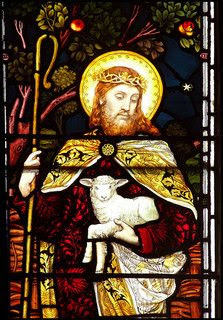
Similarly, this is what we must affirm every day of our lives: “I live because someone died for me.” It is Jesus the Good Shepherd who died for me. He is the Shepherd who sacrifices His life so that His sheep may live. Ordinarily, the shepherd’s calling was not to die for the sheep but to live for the sheep. In fact, when his own life was threatened, the shepherd may even be prepared to sacrifice one of his wards to escape the jaws of death. The life of the sheep was dispensable but not that of the shepherd. But our Lord Jesus’ charge was different and unique. He is the One who “lays down His life for the sheep” (John 10:11). His blood is spilt for the forgiveness of our sins. He sacrificed His own life so that His sheep may live.

The secret of this Shepherd’s willingness to die for His sheep is to be found in the second reading. The Book of the Apocalypse tells us that this Shepherd is also a lamb that has been sacrificed. We often fail to recognise the theological profundity of this switch. The Shepherd becomes one of the sheep whom He leads, the Creator chooses to become one of His creatures, God becomes man. And it is in this form which He chooses to save humanity.

And this is no ordinary lamb or cute cuddly pet which He becomes. This is a special type of lamb which is meant to be offered at the Temple as a sin offering. It is interesting that this discourse on the Good Shepherd takes place within the Temple where animal holocausts were offered to atone for the sins of the petitioners. The mystery of the atonement is that Jesus uses the sacrificial system to defeat the sacrificial system. He lets Himself be a victim but He goes willingly, thereby showing humanity that the sacrifice system is powerless. Thus, we are saved through the one sacrifice which alone can atone for our sins, the sacrifice of the Lamb of God who takes away the sins of the world; the Lamb who is also a Shepherd.

This incredible transformation takes place on the cross. It would appear that on the cross, life is taken, victory is defeated, God is crucified. But our Lord did not stay on the cross. God died, but He rose again. The devil did not have the final say. Loss was thwarted. Victory reigned. The Lamb that was slain became the Shepherd again. The Book of the Apocalypse provides us with this amazing vision that the slain Lamb rules again, arrayed in glory and surrounded by His subjects who had also followed His path of sacrificing their lives, washing themselves in His blood, and now share in His glory. That's the message of Easter.

We also see how this beautiful title which we accord to Jesus has two sides to it. It does not only acknowledge with the Psalmist in Psalm 23 that “the Lord is my shepherd,” but also acknowledges as in today’s Psalm 99, that “we are His people, the sheep of His flock.” Notice the symbiotic relationship between the sheep and their shepherd. The shepherd lived and died for his sheep, likewise the sheep must do so for the shepherd. This relationship is marked by certain essential characteristics.

Our Lord makes it very clear that the first identifying mark of His sheep is that, they hear His voice. “Hearing” is not merely auditory perception in scriptures but a spiritual understanding that responds in faith. “The sheep that belong to me listen to my voice; I know them and they follow me. I give them eternal life; they will never be lost and no one will ever steal them from me..” On the other hand, those who are not His sheep do not believe, they do not listen to His voice. One cannot claim to be a sheep that belongs to the Lord if one refuses to obey and submit to His authority.

But, it is not enough that the Lord’s sheep should “listen” to His voice. He also calls them to follow, wherever He lovingly leads them. The mark of true disciples is that they follow their shepherd. This theme is sounded in the call of the very first Apostles. He said to them, “Follow Me, and I will make you fishers of men” (Matt. 4:19). Our Lord also emphasised that “if anyone wishes to come after Me, he must deny himself, and take up his cross daily and follow Me” (Luke 9:23). We begin to see that the cross is not just something which the Good Shepherd embraced for the sake of His sheep but also something which the sheep must be willing to accept, if they truly wish to belong to Him. Where the Shepherd goes, the sheep must follow.

It is here that we come to realise that being a sheep of the Good Shepherd is no benign image exuding cuteness and cuddliness. Rather, it carries a highly subversive connotation which may end in rejection, alienation and persecution from those who oppose the Shepherd. Some have the privilege of being called to die, as testimony of their faith or love for others, as in the case of St Maximilian Kolbe, while others are called to take the unpopular path of swimming against the mainstream current which is anti-Christian. St John Vianney once said, “Do not try to please everybody. Try to please God, the angels, and the saints—they are your public.” And often when we choose to please God, we end up displeasing others. But Christians are not called to be popular. We are called to be faithful.

Easter is about life that died to live again. It's about victory succumbing to defeat, only to be victorious again. It's about a God who left heaven to live on earth, to return to heaven again. It's about the Shepherd, who became a Lamb who became a Shepherd again. So, this is what we celebrate today, not just a Shepherd who guides and cares for His sheep, or gazes softly at us as if we were little teddy bears and cuddly lambs, but the One who became the sacrificial Lamb that took away our sins by dying for us in our place. He becomes the victim for all of us. And if we profess to be His sheep, then we must listen only to His voice in the midst of the confusion caused by a cacophony of worldly voices, and follow Him alone who can give us Eternal Life.

“Eternal Shepherd, thou art wont
To cleanse Thy sheep within the font,
That mystic bath, that grave of sin,
Where ransomed souls new life begin.”
(5th century Hymn used at Vespers, Eastertide)